English
 Español
 中文简体
中文简体
Home / News / Industry News / Amplifier Classes Explained: Class A, B, AB, D, G, H and How to Choose Right
Putting a 500-watt subwoofer into a cabinet forces one specification decision before anything else: which amplifier class will drive the output stage. That single choice determines heat sink mass, power supply weight, enclosure volume, and how much headroom remains before distortion becomes audible. The practical conclusion for system builders: Class D dominates new professional audio module designs because it converts 85-95 percent of supply power into signal. Class AB remains the analog reference for transparent sound and predictable servicing. Class G and Class H deliver a middle path for high-power linear stages that need less heat. Class A and Class B matter mainly as concepts today, but their conduction-angle behavior explains every class that followed.
Content
- 1 What Defines an Amplifier Class?
- 2 Class A: Linearity at a High Operating Cost
- 3 Class B: The Push-Pull Origin
- 4 Class AB: The Analog Workhorse
- 5 Class D: Switching for Efficiency
- 6 Class G and Class H: Smarter Supply Rails
- 7 Comparing Amplifier Classes in Real Modules
- 8 Anatomy of a Power Amplifier Module
- 9 Frequently Asked Questions about Amplifier Classes
- 9.1 Which amplifier class is best for professional audio?
- 9.2 What is the difference between Class AB and Class D amplifiers?
- 9.3 Are Class D amplifiers good for live sound?
- 9.4 Which amplifier class is the most efficient?
- 9.5 Do Class D amplifiers sound as good as Class AB amplifiers?
- 9.6 What does amplifier class mean for speaker design?
What Defines an Amplifier Class?
Every amplifier class is defined by the conduction angle of its output devices - the portion of each input cycle during which the transistors pass current. A device that conducts for 360 degrees stays on continuously; a device that conducts for 180 degrees handles only half of the waveform. The conduction angle sets a theoretical efficiency ceiling, because a conducting device that is not contributing signal still dissipates power. It also predicts the distortion signature of the stage.
The classes below cover everything an audio system designer will encounter. Class C appears for reference only: operating below 180 degrees raises efficiency above 70 percent, but flattens the output so badly that it is restricted to radio-frequency transmitters rather than audio. Efficiency values are practical ranges cited in established electronics references and module datasheets; exact numbers depend on supply voltage, load, and operating level.
| Class | Conduction angle | Typical efficiency (audio) | Main trade-off |
|---|---|---|---|
| Class A | 360 degrees | 20-30 percent | Lowest distortion, highest heat |
| Class B | 180 degrees | 55-65 percent | Crossover distortion without bias |
| Class AB | 180 to 360 degrees | 50-65 percent | Balance of linearity and heat |
| Class C | Under 180 degrees | Above 70 percent (RF) | Not usable for audio quality |
| Class D | PWM switching | 85-95 percent | Filter and EMC design needed |
| Class G | Switched supply rails | 65-80 percent | Multi-rail supply complexity |
| Class H | Modulated supply rail | 65-80 percent | Tracking supply cost |
Class A: Linearity at a High Operating Cost
Class A output stages conduct for the full 360 degrees. A single device, or a pair running in single-ended mode, stays in its active region even when no input signal is present. That makes Class A the most linear topology of the analog families: there is no handoff between devices, so crossover distortion is absent by definition. The price is enormous idle dissipation. Practical single-ended Class A efficiency sits between 20 and 30 percent, so a 100-watt amplifier discards 200 to 300 watts as heat. Heat sinks grow, transformers grow, and running costs become permanent. In professional audio modules, full Class A output stages exist only at preamp level; within power amplifiers, Class A survives as the small-signal bias region of a Class AB input stage.
Class B: The Push-Pull Origin
Class B splits the waveform into two halves: one transistor pushes the positive half-cycle and the other pulls the negative half-cycle, so each device conducts for exactly 180 degrees. Theoretical efficiency rises to 78.5 percent, but the transition at the zero crossing introduces crossover distortion when neither device is fully in control. No serious audio output stage runs in pure Class B because the discontinuity is audible at low signal levels. Designers add a small bias current so both devices stay slightly on at the zero crossing, and that adjustment is what defines Class AB.
Class AB: The Analog Workhorse
Class AB adds controlled quiescent bias to the push-pull structure. Both output devices conduct a little at the zero crossing, eliminating the crossover notch, then step back toward cutoff as the signal grows. Efficiency settles between 50 and 65 percent in practical audio designs. A 600-watt Class AB module still throws off 200 to 300 watts when driven hard, so heat sinks with deep fins and sometimes forced air remain part of the design.
Engineers choose Class AB when tonal behavior is the priority and enclosure size is permissive. The relationship between bias current, distortion, and thermal load is so delicate that manufacturers calibrate it over years of production refinement. That is also why engineers spend as much time on the output stage as on the drivers, because the amplifier module's contribution to sound quality is easier to hear than to measure.
Class D: Switching for Efficiency
Class D abandons the conduction-angle model completely. The output transistors alternate between full saturation and full cutoff at a carrier frequency well above the audio band, usually 400 kHz to 1 MHz, and the audio signal rides on the duty cycle of the resulting pulse-width-modulated waveform. An LC filter reconstructs the audio band at the output. Because a saturated switch drops almost no voltage and a cutoff switch passes almost no current, theoretical efficiency approaches 100 percent; real modules deliver 85 to 95 percent.
The consequences for loudspeaker design are immediate. A 500-watt Class D stage keeps heat sinks small enough for a die-cast chassis, while an equivalent Class AB stage needs a heavy extruded profile and a larger transformer. Modern post-filter feedback corrects the distortion mechanisms of early switching designs, and well-implemented Class D modules pass blind listening comparisons against good analog amplifiers.
The real engineering effort sits in the output filter, the EMI behavior, and the dead-time management of the switching stage. Suppliers who specialize in this area typically pair the switching core with a resonant or power-factor-corrected front end instead of treating the filter as an afterthought.
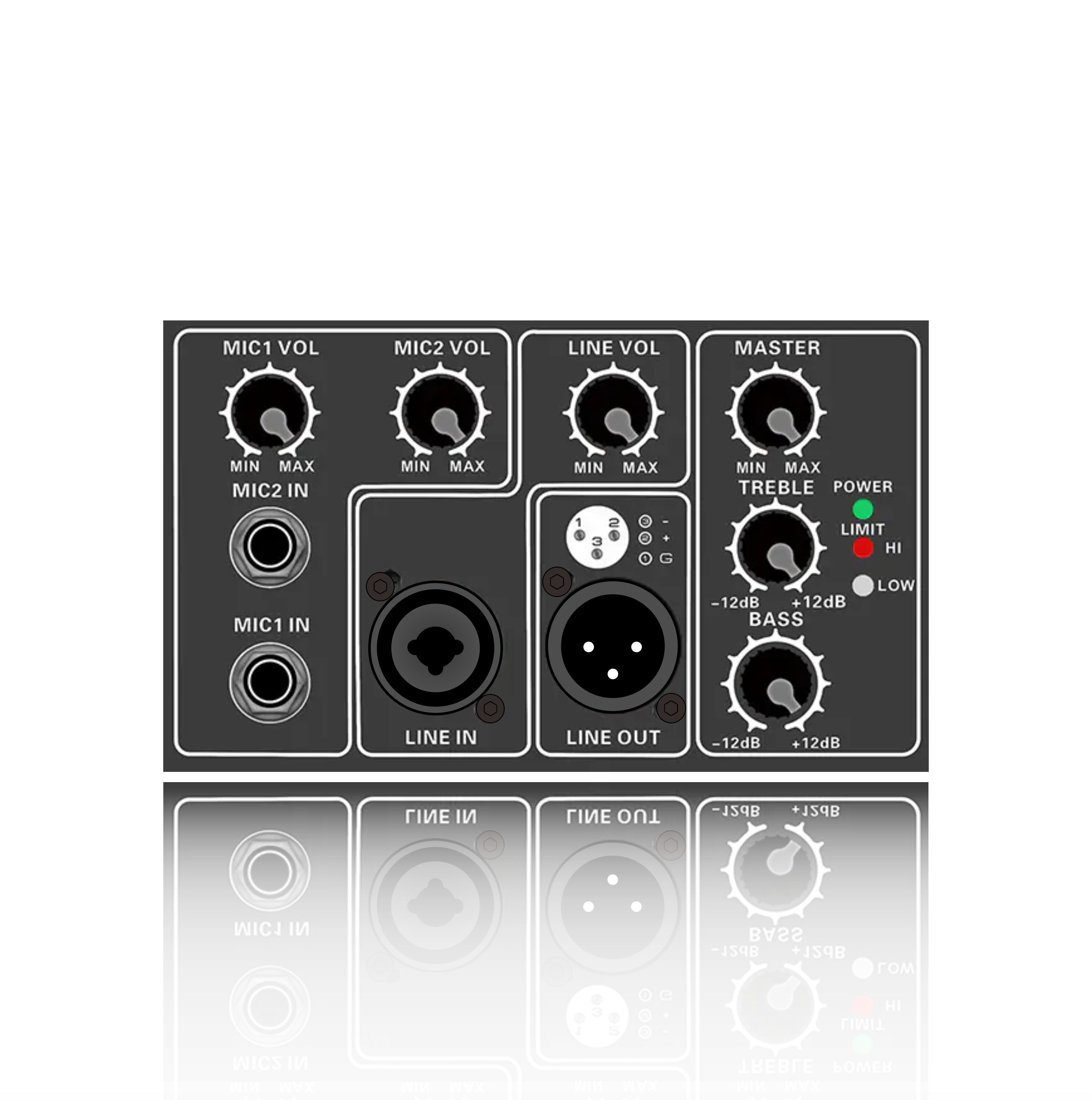
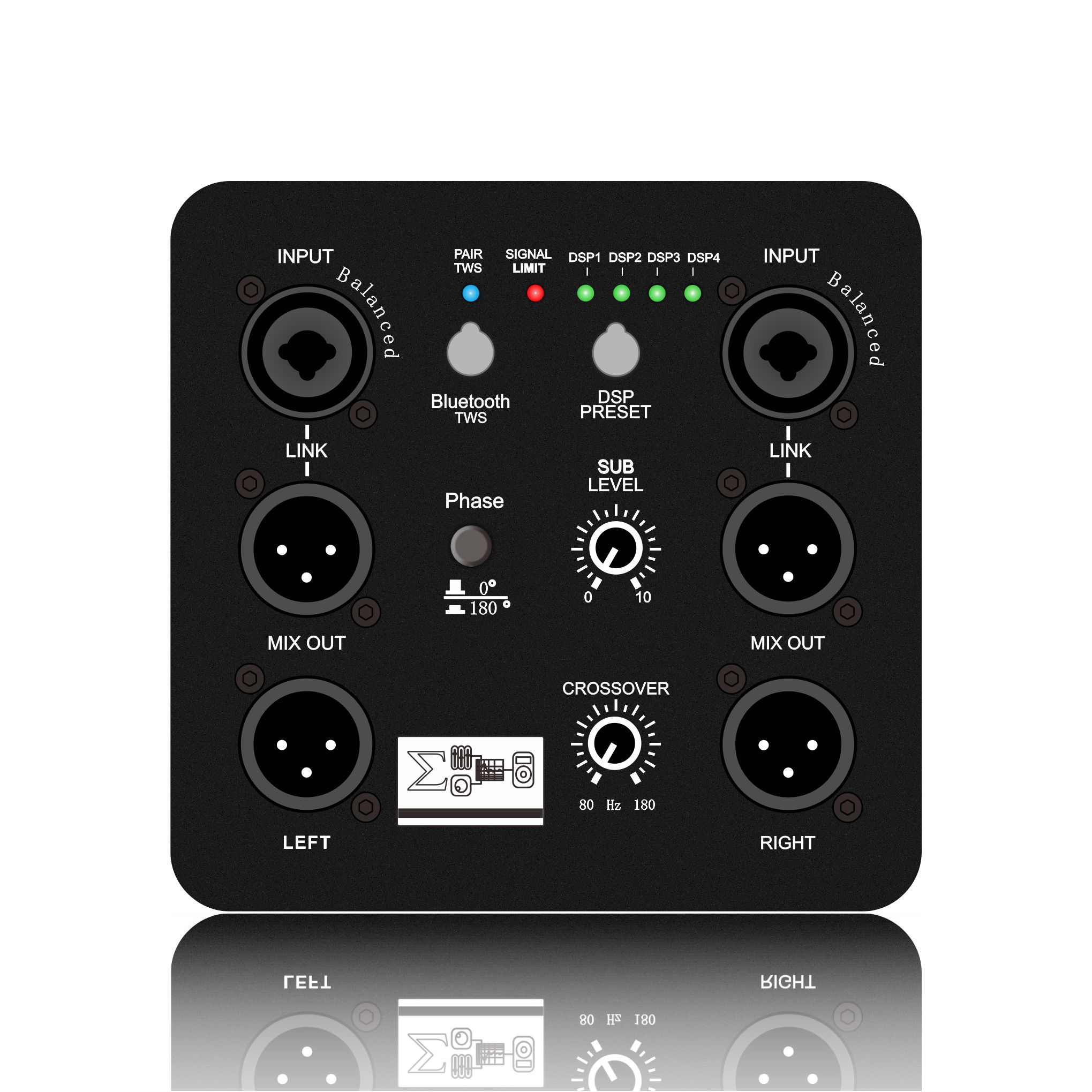
 EON522SUB Active Subwoofer Amplifier Module with LLC Resonant SupplyThis 500W Class D subwoofer module pairs an LLC resonant 800W supply with overload, short-circuit, and thermal protection, making it a practical fit for high-efficiency bass applications discussed in the surrounding text.View Product →
Class G and Class H: Smarter Supply Rails
Class G and Class H keep the linear output stage of an AB amplifier but feed it with a supply rail that adapts to the signal. Class G maintains two or more fixed rails, switching to the higher one only when signal peaks require it. Class H modulates the rail voltage continuously, tracking the signal envelope with a few volts of headroom. Output devices remain linear in both cases, so the distortion profile resembles Class AB, but the average voltage across the devices is lower. That reduces waste heat and pushes efficiency into the 65-80 percent range.
The cost moves into the power supply: multi-rail transformers with switch-over logic for Class G, or fast tracking regulators for Class H. These classes suit subwoofer and line-array modules, where music with a high crest factor means the higher rail is active only for short peaks. The H-class approach is a common choice for bi-amplified enclosures with a linear transformer supply, which is why module suppliers list this combination as a standard configuration.
Comparing Amplifier Classes in Real Modules
The class decision is never made in isolation; it interacts with the power supply, the enclosure, and the duty cycle of the music program. The chart below shows why Class D is so attractive in portable and compact systems.
Class D maintains high efficiency over most of its output range, while Class AB efficiency collapses at low listening levels. A 50-watt average output from a 500-watt Class AB module may sit at about 25-30 percent efficiency; the same condition keeps a Class D module above 75 percent. Over a touring season, that difference shows up in electricity cost, rack heat, and how often thermal protection triggers.
| Application | Preferred class | Reason |
|---|---|---|
| Battery-powered portable speaker | D | Efficiency extends runtime and shrinks heat sink |
| Mid-power PA monitor | AB | Predictable analog tone and simple supply |
| Multi-channel line array | D | Low heat and compact PFC/LLC front end |
| Subwoofer with heavy bass program | D or H | D for power density, H for linear feel |
| Fixed installation | AB, H, or D | Depends on service familiarity and rail cost |
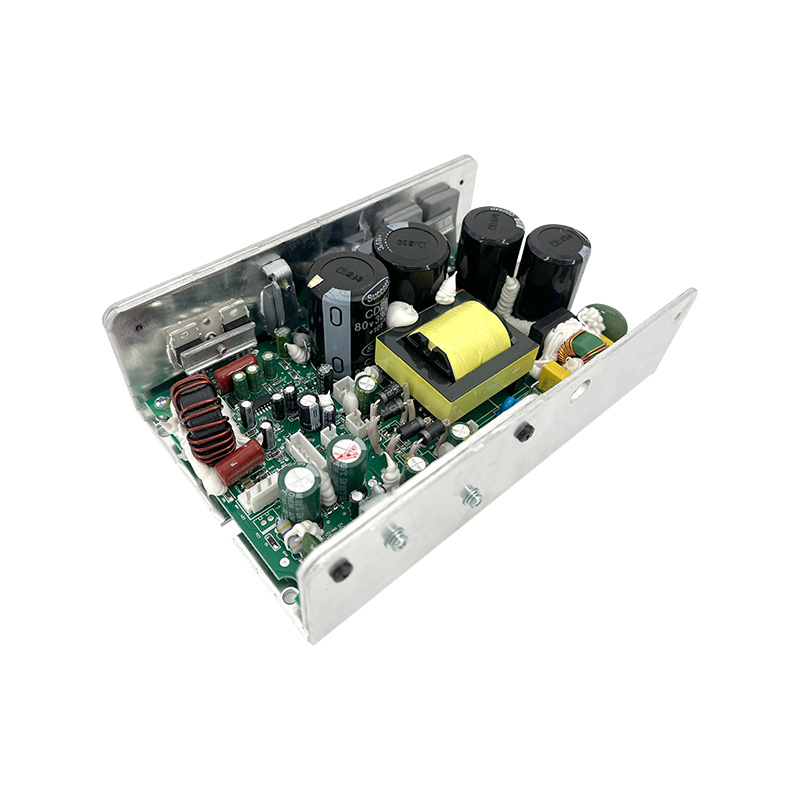
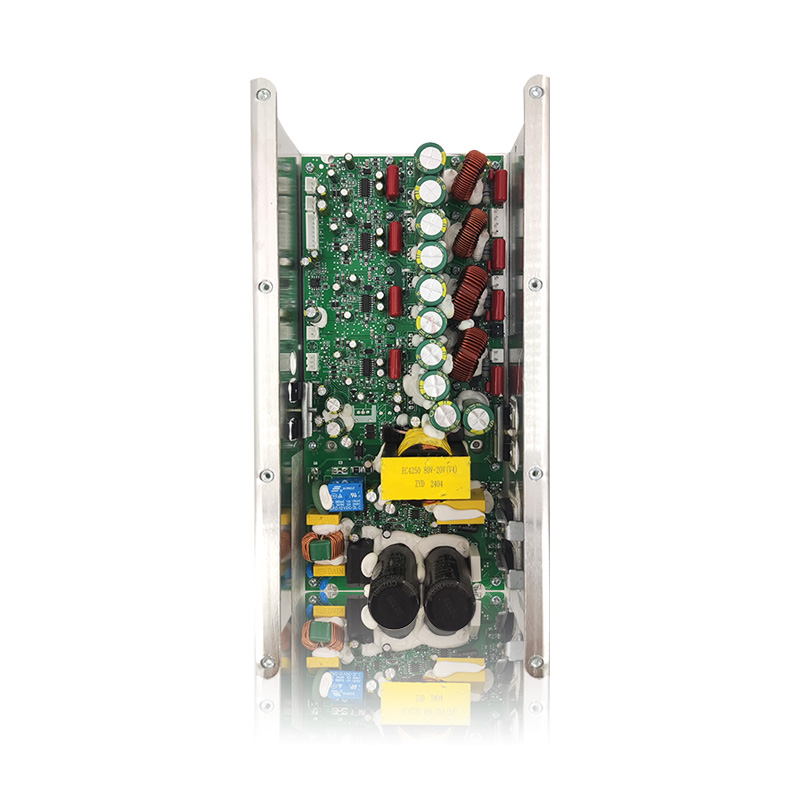
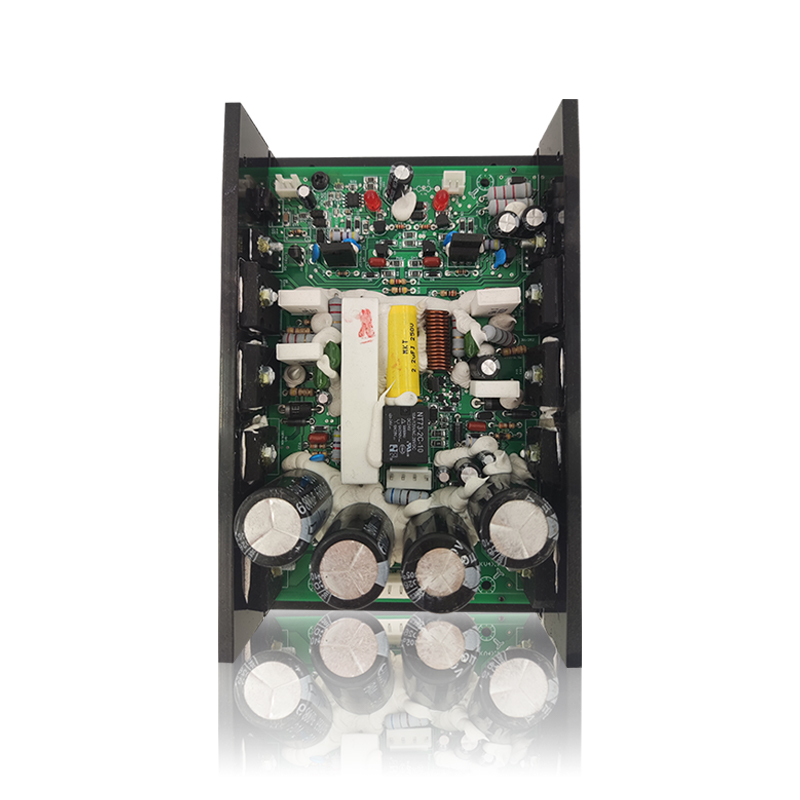
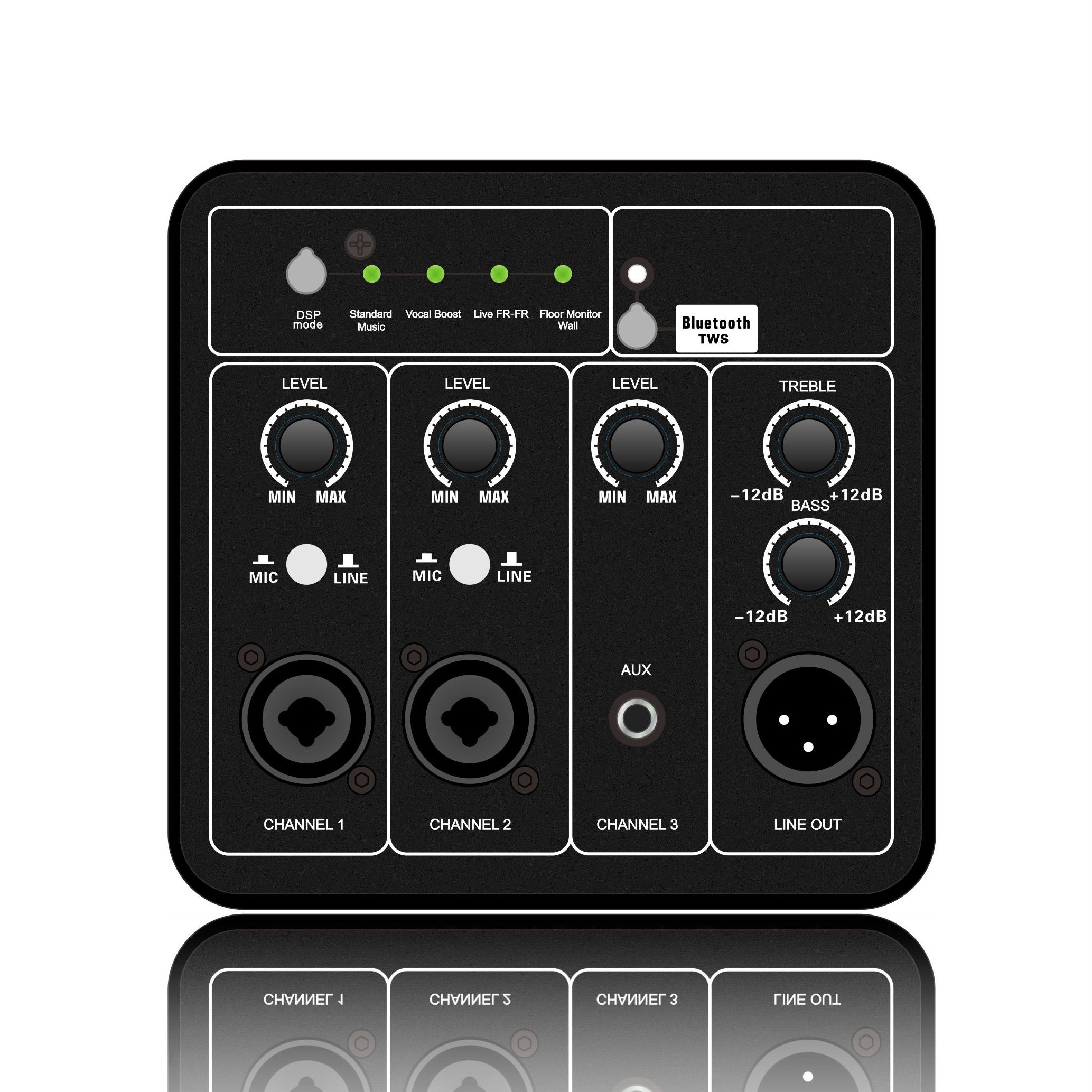
Understanding what an active power amplifier module contains helps buyers apply this matrix correctly. The class letter describes only the power stage; the supply design, feedback topology, and protection circuits determine real-world reliability. A subwoofer module, for example, combines a high-voltage rail with output limiting to survive continuous bass program, so the class choice and the protective features must be evaluated as one system.
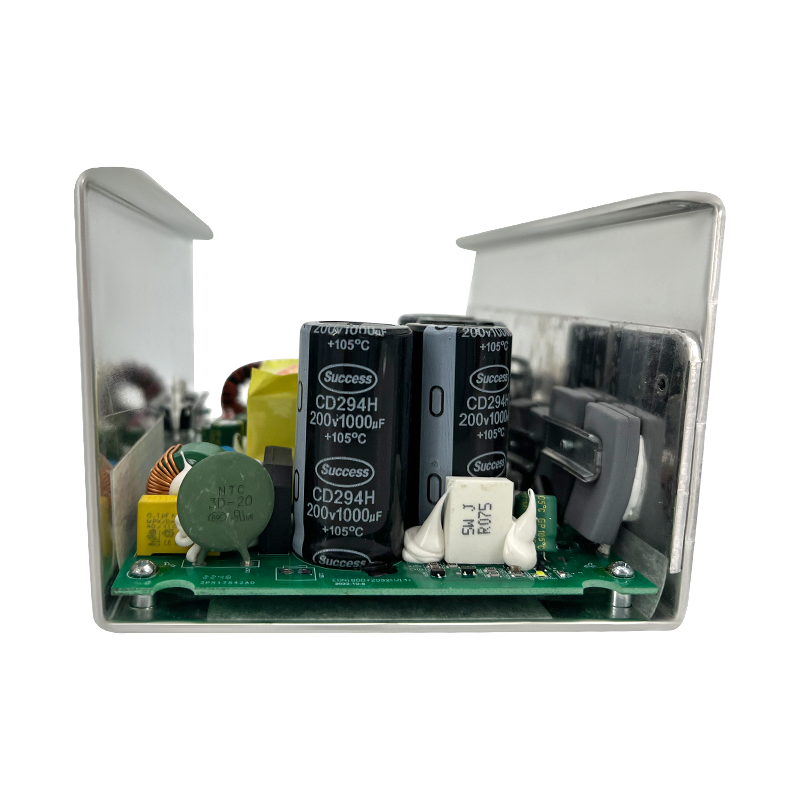 EON180S+2092 BTL Subwoofer Amplifier Module for Professional AudioFeaturing a 650W Class D BTL output and 800W switching supply, this subwoofer module includes protective circuits suited for continuous bass duty, aligning with the amplifier-class considerations described above.View Product →
Anatomy of a Power Amplifier Module
The cross-section of a modern module shows how the class interacts with everything around it. The input stage accepts balanced or DSP-processed signals, the driver stage shapes the switching or linear control, the output stage follows the chosen class, and the power supply sets the efficiency ceiling. The isometric diagram below shows the typical arrangement of these blocks in a self-contained module.
Frequently Asked Questions about Amplifier Classes
Which amplifier class is best for professional audio?
Class D offers the best balance of efficiency, weight, and heat for most pro audio modules. Class AB remains the analog-first choice, and Class H fits high-power linear stages.
What is the difference between Class AB and Class D amplifiers?
Class AB runs output transistors in the linear region, producing low distortion but wasting 30-50 percent of power as heat. Class D switches the transistors fully on and off, reaching 85-95 percent efficiency with an output filter.
Are Class D amplifiers good for live sound?
Yes. Modern Class D modules with LLC or PFC power supplies are widely used in line arrays and subwoofers; they handle high crest-factor program, stay cool, and reduce cabinet weight.
Which amplifier class is the most efficient?
Class D is the most efficient class used in audio, delivering 85-95 percent of input power to the load. Class C reaches even higher efficiency but is not usable for audio.
Do Class D amplifiers sound as good as Class AB amplifiers?
A well-implemented Class D module can sound very close to a well-implemented Class AB module. Output filter design, feedback loop, and power supply quality matter more than the class letter.
What does amplifier class mean for speaker design?
The class sets the conduction angle and efficiency of the output stage. It predicts heat generation, power supply demands, distortion behavior, and the physical size of the finished module.