English
 Español
 中文简体
中文简体
Home / News / Industry News / Class AB Car Amplifier Guide: Sound Quality, Power Draw, and Buying Tips
You've saved up for a decent car audio upgrade, and the choice has come down to two four-channel amplifiers with nearly identical power ratings. One is a compact Class D unit. The other is a heavier Class AB design with a slightly lower price and a reputation for smooth, natural sound. Which one actually belongs in your trunk?
This is one of the most common debates in car audio. Class AB amplifiers powered aftermarket systems for decades, but Class D has taken over most retail shelves in recent years. The engineering difference is real, and so are the trade-offs. This guide explains what the class label means in practical terms, what bench tests reveal about quality, and how to decide based on your speakers, your electrical system, and your listening habits.
Content
- 1 What Does "Class AB" Actually Mean in a Car Amplifier?
- 2 Class AB vs. Class D: Reading the Trade-Offs Correctly
- 3 What Bench Tests Reveal About Sound Quality
- 4 Installation Realities: Heat, Fuses, and Wire Gauge
- 5 Module-Level Options for Builders, Repair Shops, and OEM Integrators
- 6 Class AB Car Amplifier FAQ
- 6.1 Is a Class AB amplifier good for car audio?
- 6.2 What is the difference between Class AB and Class D car amplifiers?
- 6.3 Do Class AB amplifiers sound better than Class D?
- 6.4 Can you use a Class AB amplifier for a subwoofer?
- 6.5 How many watts RMS do I need for a Class AB car amplifier?
- 6.6 Do Class AB amplifiers draw more current at idle?
What Does "Class AB" Actually Mean in a Car Amplifier?
Amplifier classes describe how the output transistors are biased and switched. In a pure Class A circuit, output devices conduct current all the time, which produces extremely linear sound but wastes most of the energy as heat. In Class B, each half of the audio waveform is handled by a separate transistor, which improves efficiency but creates crossover distortion where the two halves meet.
Class AB is the middle path that became the car audio standard. A small idle bias keeps both output transistors slightly on around the zero-crossing point, so music at low and moderate levels is reproduced in a nearly Class A fashion. Vocals sound present, cymbals stay clean, and the transition between waveform halves does not add an audible notch. This is the technical reason behind the "warmth" so often attributed to Class AB.
In a typical automotive Class AB amplifier, the signal path runs through an input buffer, a voltage amplifier, and a biased output stage before reaching the speaker. The power supply must keep the rail voltages clean under dynamic load, which is why good Class AB designs use either a generously sized linear transformer or a well-regulated switching supply.
Class AB vs. Class D: Reading the Trade-Offs Correctly
Class D amplifiers switch their output transistors on and off at frequencies above 100 kHz, then filter the result to recover the audio signal. The switching approach cuts power loss dramatically, which is why Class D amps are smaller, cooler, and easier on the alternator. The catch is that sound quality depends heavily on the quality of the filter, the feedback loop, and the power supply. A cheap Class D amp can sound harsh; a well-designed one can be nearly transparent.
| Parameter | Class AB | Class D |
|---|---|---|
| Typical efficiency | 50–65% | 75–90% |
| Idle current draw | Higher, continuous bias | Much lower |
| Heat output | High | Low |
| Sound character | Warm, natural midrange | Transparent if well filtered |
| Size and weight | Larger, heavier | Compact, lightweight |
| Best use | Component speakers, full range | Subwoofers, tight installs |
The table is a starting point, not a verdict. A premium Class D amplifier with a clean output filter and robust power supply can measure better than a budget Class AB in distortion and noise. What Class AB gives you is a predictable, musically linear output stage that is hard to get badly wrong.
What Bench Tests Reveal About Sound Quality
An independent bench comparison published by BestCarAudio showed the efficiency gap in practice. The entry-level Class AB amp in that test drew just over 105 amperes and produced 793 watts during the dynamic power run. The premium Class D amplifier it was paired against produced about 80% more power with the same current draw, because it converted far less input energy into heat.
The efficiency difference is not just a laboratory curiosity. The heat generated by a Class AB amp has to go somewhere: into the heatsink, the air behind a dashboard, or the interior of a sealed enclosure. This is what installers mean when they call Class AB "current hungry." Sound quality benefits are real, but they carry an electrical and thermal price.
Total harmonic distortion (THD) and signal-to-noise ratio (SNR) also matter when you compare amplifiers. A well-executed Class AB amp commonly measures below 0.05% THD at moderate output. Budget Class D units sometimes show higher distortion at low levels because of switching noise. Take a familiar music track to your local shop and listen before you buy.
Installation Realities: Heat, Fuses, and Wire Gauge
Sizing the electrical path is part of any Class AB installation. At full output, a 400W RMS amp draws roughly 53A from a 13.8V system (about 400W divided by 13.8V and the 0.55–0.65 efficiency range). Under heavy bass, that load is sustained, not momentary. Use wiring and fuses rated for continuous operation.
| System RMS Power | Class AB Current Draw | Fuse Rating | Wire Gauge |
|---|---|---|---|
| 200W | ≈27A | 30A | 8 AWG |
| 400W | ≈53A | 60A | 4 AWG |
| 800W | ≈105A | 110A | 2 AWG |
Treat the table as a floor, not a ceiling. In hot climates or enclosed trunks, a 12V cooling fan is an inexpensive upgrade for anything above 400W. The heatsink fin area of a Class AB amp should always be mounted with open airflow; never trap it against carpet or trim.
Module-Level Options for Builders, Repair Shops, and OEM Integrators
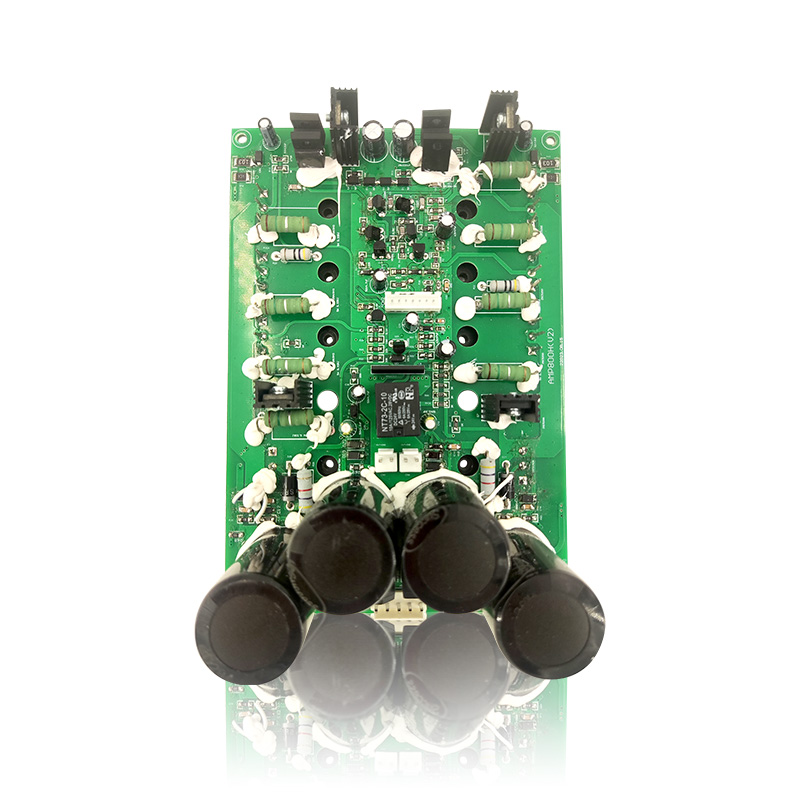
Custom fabrication shops, OEM audio brands, and technicians who rebuild factory sound systems often start with amplifier modules instead of finished chassis amps. A module provides a tested circuit layout, a mechanical footprint, and a documented power rating so you can design an enclosure around it. This shortens development time and reduces component-level debugging.
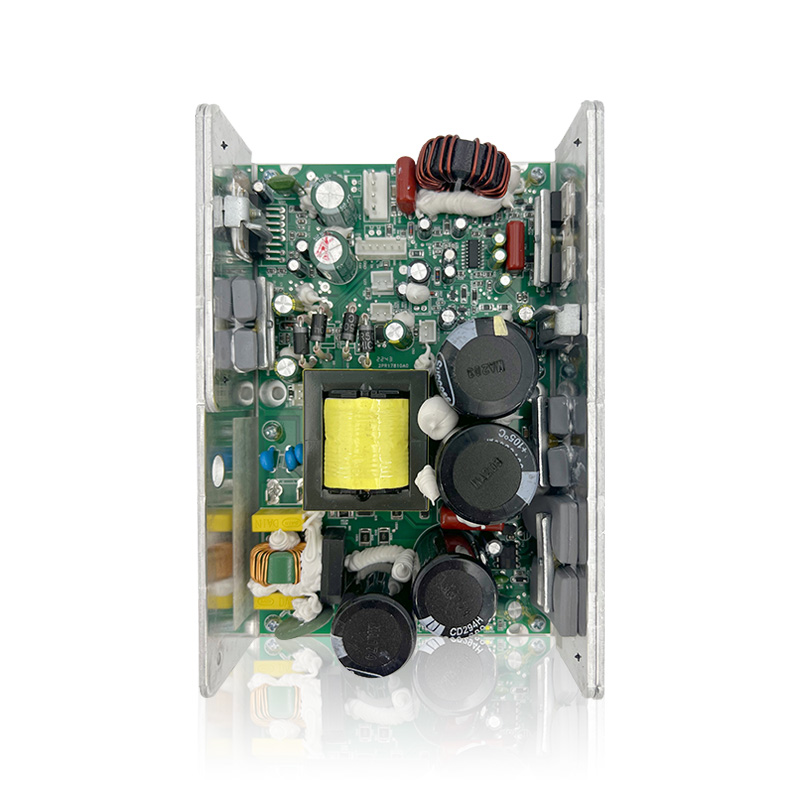
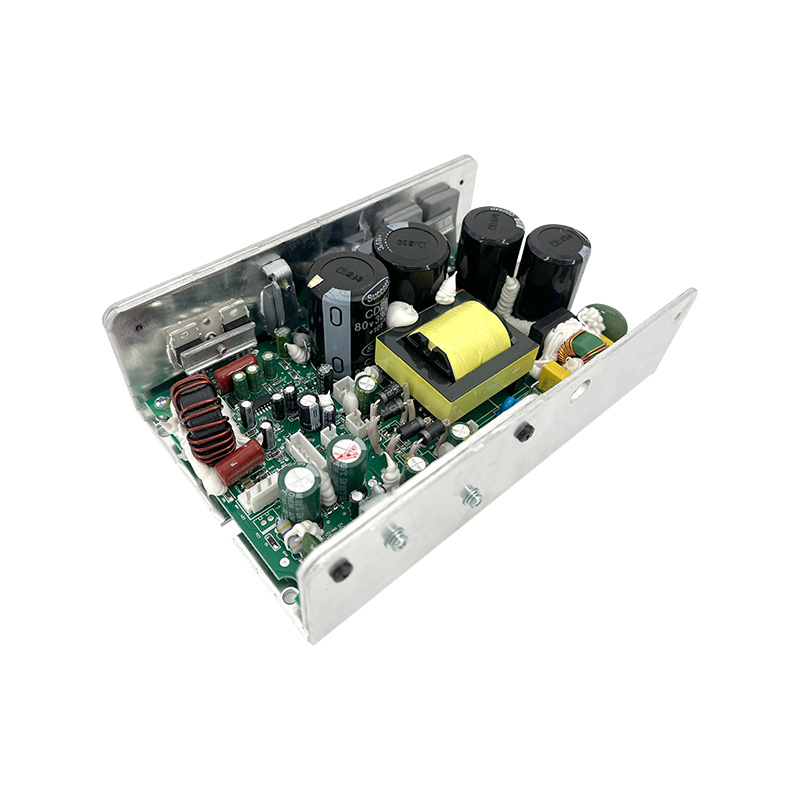
For example, the amp300h-7294 module uses a Bi-Class H output stage and a linear transformer power supply. Its bias behavior resembles a Class AB amplifier, while the switched rail keeps heat production below a conventional AB design. That makes it a practical starting point when you need roughly 300W of low-frequency plus 50W of high-frequency output.
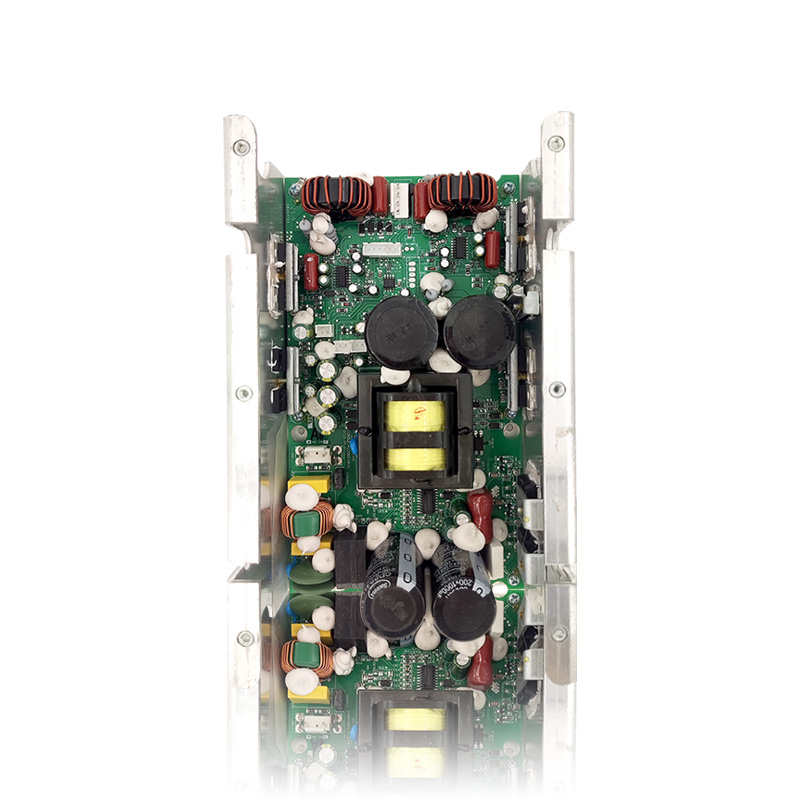
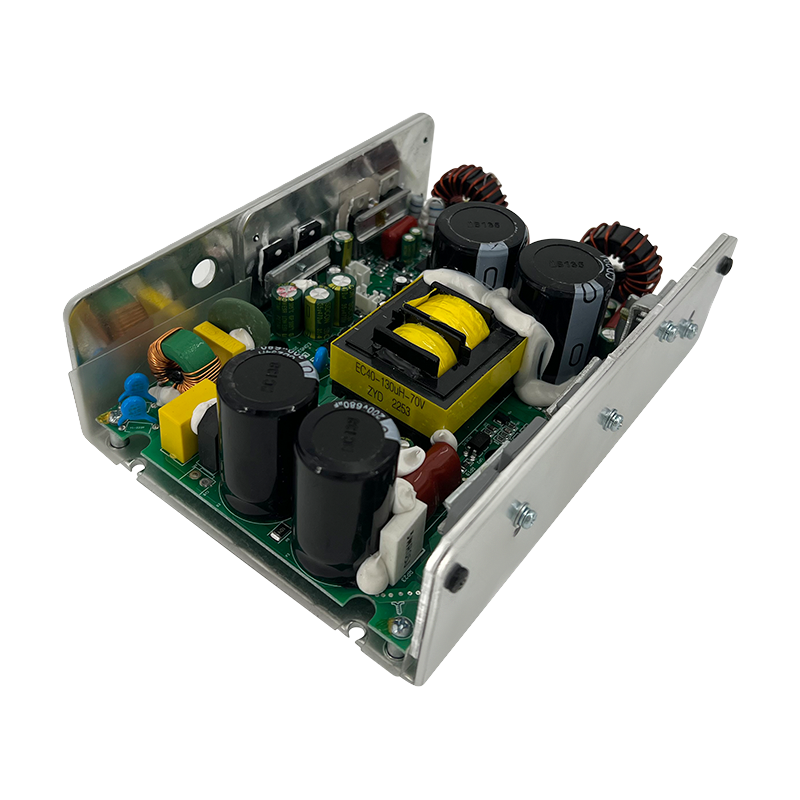
When the build demands more headroom, a 400W plus 100W module with a U-shaped aluminum heat sink demonstrates how thermal design is solved at the board level. The radiator on the amp400h-7294 is already sized for sustained operation, so you do not have to guess at heatsink volume or airflow.
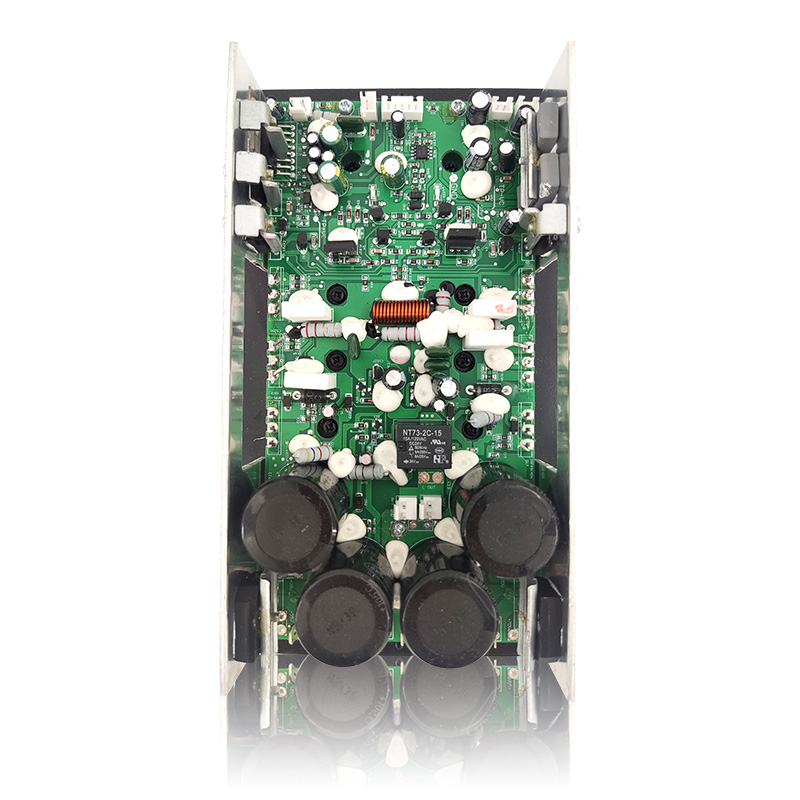 AMP400H+7294 Class H Power Amplifier Module with U-shaped Aluminum RadiatorThis module combines a 400W Class H bass section with a 100W Class AB high-frequency stage, featuring a U-shaped heatsink and built-in protections for reliable, sustained car audio performance.View Product →
Module-level sourcing is common because it shortens the path to production. Car audio builds that emphasize deep bass often combine a full-range module for the mid and treble channels with a dedicated subwoofer amplifier stage, which reduces development work and keeps the final assembly compact.
Class AB Car Amplifier FAQ
Is a Class AB amplifier good for car audio?
Yes, especially for full-range speakers. The linear bias keeps vocals and instruments natural, and the midrange often feels more present than on an equal-cost Class D design. Just budget for the extra current draw and heat dissipation.
What is the difference between Class AB and Class D car amplifiers?
Class AB uses a biased linear output stage, which sounds smooth but generates heat. Class D switches its output transistors on and off and filters the result, which is more efficient and compact. Sound quality in both depends heavily on build quality and the power supply.
Do Class AB amplifiers sound better than Class D?
Most listeners find entry-level and mid-priced Class AB amplifiers sound warmer and less fatiguing than budget Class D designs. At the premium end, the gap narrows sharply, and many people cannot consistently tell them apart in blind listening tests.
Can you use a Class AB amplifier for a subwoofer?
Yes. Class AB bass tends to be tight and well controlled, and many subwoofer amplifiers still use a Class AB output stage. For custom builds, a dedicated subwoofer amplifier module is a good option when space is flexible.
How many watts RMS do I need for a Class AB car amplifier?
For component speakers, 50 to 100 watts RMS per channel is common. For subwoofers, plan on 300 to 600 watts RMS if your alternator can sustain it. Use RMS power at 4 ohms as the reference, because max power numbers are largely meaningless.
Do Class AB amplifiers draw more current at idle?
Yes. The bias current runs whenever the amp is on, typically 1 to 3 amperes depending on the design. Class D amplifiers idle at a fraction of that. If you leave the stereo playing with the engine off, battery drain will be noticeable.