English
 Español
 中文简体
中文简体
Yes — Class AB amplifiers deliver superior sound performance for most real-world loudspeaker applications. They combine the linearity and low distortion of Class A designs with the efficiency of Class B, making them the industry standard for professional and consumer audio. If you are evaluating a Class AB Loudspeaker Amplifier for your system, the answer is clear: for balanced audio fidelity, thermal management, and practical output power, Class AB is the benchmark.
Content
- 1 What Is a Class AB Amplifier and How Does It Work
- 2 Class AB vs Other Amplifier Classes: A Direct Comparison
- 3 Sound Quality Advantages of Class AB Loudspeaker Amplifiers
- 4 Class AB Amplifier Circuit For Loudspeakers: Design Essentials
- 5 Power Output and Efficiency: Real-World Numbers
- 6 Applications Where Class AB Loudspeaker Amplifiers Excel
- 7 Key Specifications to Evaluate When Selecting a Class AB Loudspeaker Amplifier
- 8 About Ningbo Zhenhai Huage Electronics Co., Ltd.
- 9 Frequently Asked Questions
What Is a Class AB Amplifier and How Does It Work
A Class AB amplifier operates by biasing both the positive and negative output transistors so they conduct simultaneously for a small overlap region near the zero-crossing point of the audio waveform. This overlap eliminates the crossover distortion that plagues Class B designs while dramatically reducing the idle power dissipation of Class A amplifiers.
In a typical Class AB Amplifier Circuit For Loudspeakers, two complementary transistors (NPN and PNP, or N-channel and P-channel MOSFETs) share the output stage. A small quiescent current — usually between 20 mA and 100 mA depending on the design — keeps both devices slightly on at all times. This is the key technical difference from pure Class B, where no quiescent bias exists.
Key Operating Characteristics
- Conduction angle: slightly greater than 180° per device (Class B = exactly 180°; Class A = 360°)
- Quiescent current set by bias network, thermally compensated via diodes or transistors on heatsink
- Efficiency range: 50% to 78% under typical music signal conditions
- Total Harmonic Distortion (THD): typically 0.001% to 0.1% across the audio band
Class AB vs Other Amplifier Classes: A Direct Comparison
Understanding where Class AB sits relative to other topologies helps clarify why it dominates loudspeaker amplifier design. The table below compares the four main amplifier classes across the metrics that matter most in audio applications.
| Amplifier Class | Efficiency | THD Level | Heat Output | Best Use Case |
|---|---|---|---|---|
| Class A | 15–30% | Very Low | Very High | Low-power headphone amps |
| Class AB | 50–78% | Very Low | Moderate | Loudspeaker amplifiers (all power levels) |
| Class B | Up to 78% | High (crossover distortion) | Low | RF transmitters, not audio |
| Class D | 85–95% | Low–Moderate | Very Low | Battery-powered / subwoofers |
As the data shows, Class AB uniquely achieves high audio fidelity alongside practical thermal and efficiency characteristics, which explains its dominance in professional loudspeaker amplifier design worldwide.
Sound Quality Advantages of Class AB Loudspeaker Amplifiers
Elimination of Crossover Distortion
Crossover distortion — the audible glitch introduced when the signal transitions between the positive and negative output transistors — is the primary sonic flaw of Class B designs. In a properly biased Class AB circuit, the quiescent overlap current ensures a smooth, continuous handoff. Measured THD at 1 kHz for well-designed Class AB stages typically falls below 0.005%, which is inaudible under any listening conditions.
Wide Frequency Response and Low Noise Floor
A high-quality Class AB Loudspeaker Amplifier maintains flat frequency response from 20 Hz to 20 kHz ±0.5 dB, covering the full range of human hearing. Signal-to-Noise Ratio (SNR) values of 100 dB or greater are readily achievable, ensuring that quiet passages in music remain clean and noise-free even at high gain settings.
High Damping Factor for Loudspeaker Control
Damping factor — the ratio of loudspeaker impedance to amplifier output impedance — directly affects bass tightness and transient control. Class AB amplifiers routinely achieve damping factors of 200 to 500 or higher, giving the amplifier strong authority over woofer cone movement and resulting in clean, well-defined bass reproduction.
Class AB Amplifier Circuit For Loudspeakers: Design Essentials
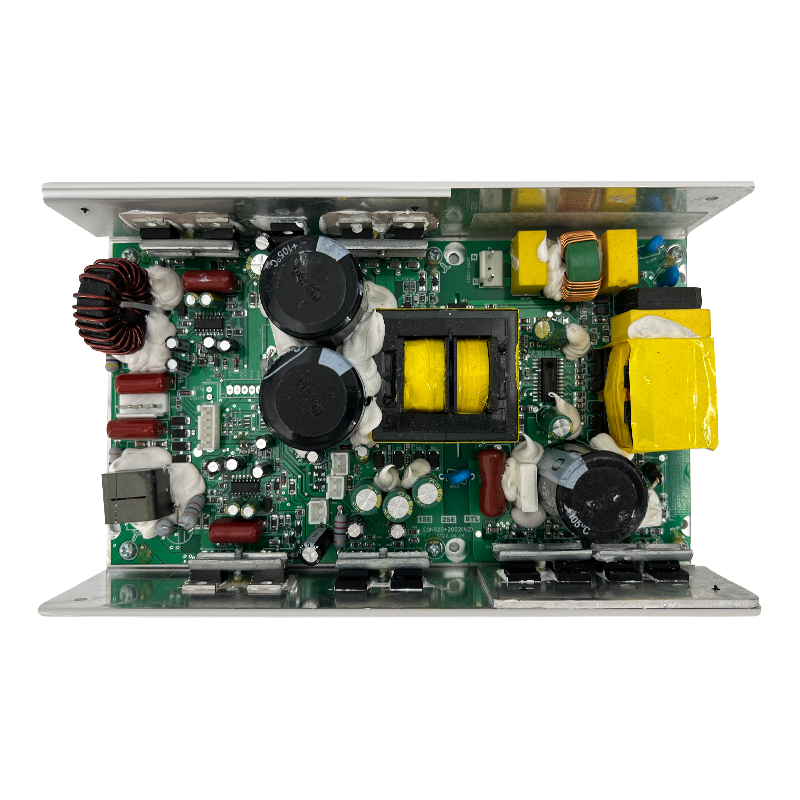
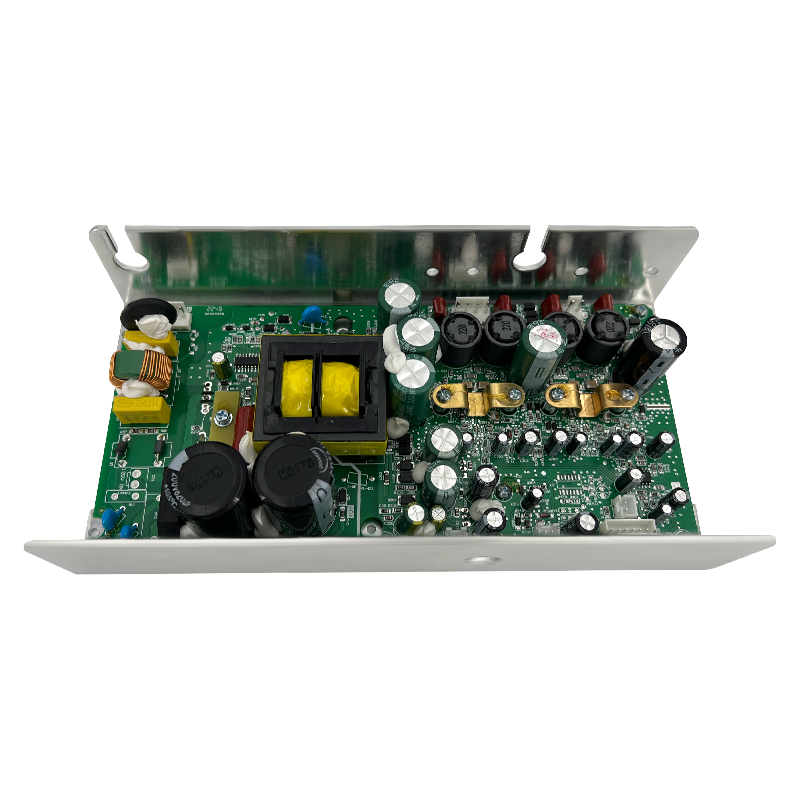
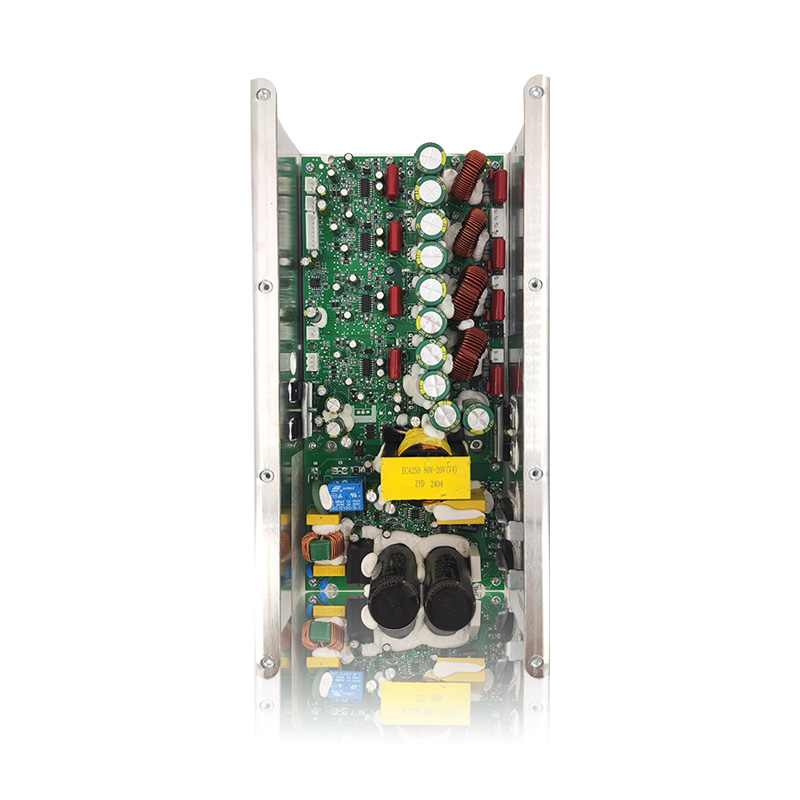
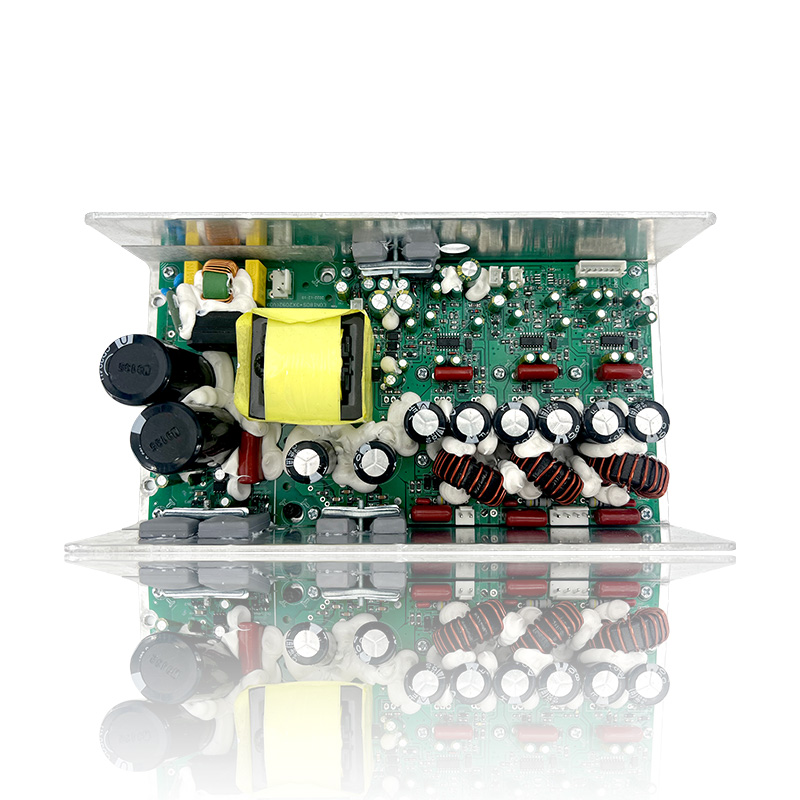
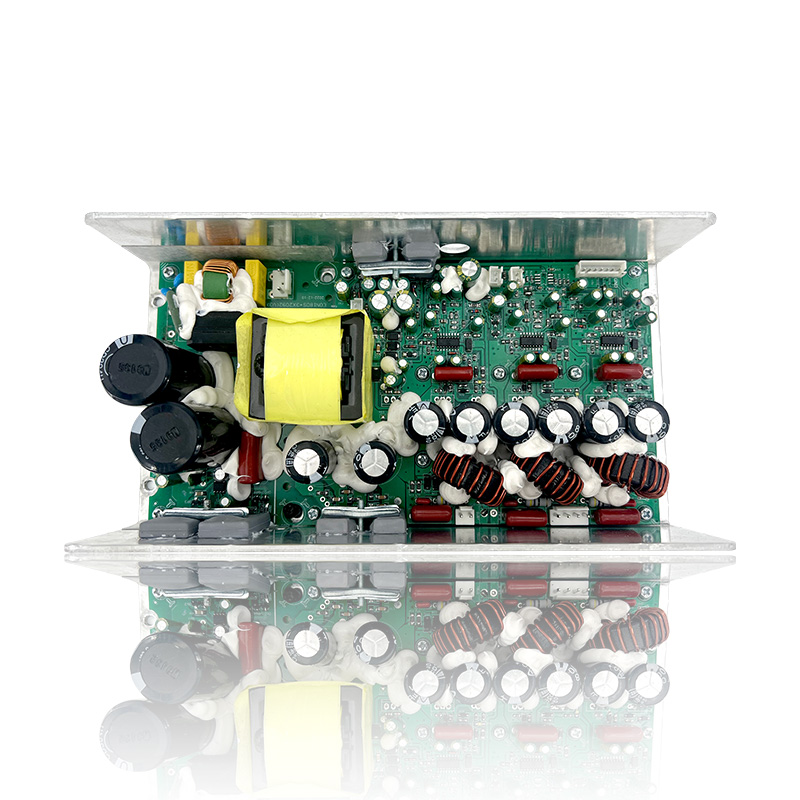
A well-engineered Class AB Amplifier Circuit For Loudspeakers incorporates several critical subsystems that work together to deliver consistent audio performance across all operating conditions.
- Input stage: Differential pair with high common-mode rejection ratio (CMRR typically greater than 80 dB) rejects noise and hum pickup.
- Voltage gain stage (VAS): A current-source-loaded common-emitter or cascode stage provides the majority of open-loop voltage gain, typically 60 to 80 dB.
- Output stage: Complementary emitter-follower pairs (or source-followers in MOSFET designs) provide current gain with near-unity voltage gain and low output impedance.
- Bias network (Vbe multiplier): Thermally tracks output transistor junction temperature to maintain stable quiescent current across the full operating temperature range.
- Global negative feedback: Reduces distortion by a factor of 20 to 40 dB while simultaneously lowering output impedance and extending bandwidth.
- Protection circuits: Safe Operating Area (SOA) limiting, DC offset detection, and thermal shutdown prevent loudspeaker and amplifier damage.
The interaction between these stages determines the final audio performance. For example, increasing the quiescent current by 50 mA in the output stage can reduce THD at low signal levels by a factor of 3 to 5 — at the cost of proportionally higher idle power dissipation and heatsink requirements.
Power Output and Efficiency: Real-World Numbers
The chart below illustrates the relationship between output power and efficiency for a Class AB design driving an 8-ohm loudspeaker load, compared to Class A and Class D.
Amplifier Efficiency at Rated Output Power (%)
25%
Class A
65%
Class AB
75%
Class B
90%
Class D
Figure 1: Typical efficiency at rated output (8 ohm load, sinusoidal test signal)
While Class D achieves higher peak efficiency, a well-designed Class AB amplifier at 65% average efficiency provides a thermal and electrical performance profile that is more than adequate for fixed-installation and rack-mount professional systems. A 500 W Class AB amplifier dissipates approximately 185 W as heat — manageable with proper heatsinking — compared to a Class A design of equivalent output that would dissipate over 1,500 W.
Applications Where Class AB Loudspeaker Amplifiers Excel
The Class AB topology is found across virtually every segment of the professional and consumer loudspeaker amplifier market. The following application areas illustrate why:
- Live sound reinforcement: Power amplifiers in the 500 W to 3,000 W range drive full-range loudspeakers and line arrays. Class AB delivers the wide dynamic range and low distortion required for live vocal and instrument reproduction.
- Studio monitor amplifiers: Accurate near-field and mid-field monitors depend on Class AB stages with THD below 0.01% to reveal mixing and mastering details without coloration.
- Active PA systems: Integrated Class AB amplifier modules within active speaker enclosures provide reliable output power with thermal protection in demanding touring environments.
- Home theater receivers: Multi-channel amplifiers benefit from Class AB's balance of fidelity and reasonable heat output in confined enclosures.
- Public address (PA) and installed sound: Background music and paging systems in retail, hospitality, and transportation environments use Class AB amplifiers for consistent 24/7 operation.
Key Specifications to Evaluate When Selecting a Class AB Loudspeaker Amplifier
Not all Class AB designs perform equally. When specifying a Class AB Loudspeaker Amplifier for a project, the following measurable parameters are the most reliable indicators of actual audio performance:
| Specification | Good Value | Why It Matters |
|---|---|---|
| THD+N at rated power | < 0.05% | Measures harmonic coloration and noise |
| Signal-to-Noise Ratio | > 100 dB (A-weighted) | Determines audible noise floor |
| Frequency Response | 20 Hz – 20 kHz ± 0.5 dB | Ensures tonal neutrality across audio band |
| Damping Factor | > 200 (at 1 kHz, 8 ohm) | Controls bass tightness and transient accuracy |
| Crosstalk (stereo) | < -70 dB at 1 kHz | Preserves stereo imaging and channel separation |
| Input Impedance | 10 kΩ – 100 kΩ | Ensures compatibility with mixers and processors |
About Ningbo Zhenhai Huage Electronics Co., Ltd.
Ningbo Zhenhai Huage Electronics Co., Ltd. is a professional audio enterprise integrating research and development, production, and sales. As a dedicated Class AB Loudspeaker Amplifier Manufacturers and Class AB Loudspeaker Amplifier Factory, we have spent many years focusing on the production of sound mixers, active power amplifiers, microphones, and related electronic components, equipment, and other products.
We specialize in Custom Class AB Loudspeaker Amplifier solutions and other audio products. Over the years, the company has been adhering to the business policy of good products, good service, and good reputation, establishing long-term and stable cooperative relations with many companies at home and abroad. We have provided OEM services for many well-known audio brands and welcome customers from all walks of life to visit, guide, and negotiate business.
Our professional design, production, and testing teams are fully equipped to customize products according to customer needs — ensuring that every Class AB amplifier circuit for loudspeakers meets the exact specifications required for your application.