English
 Español
 中文简体
中文简体
The short answer: a Pro Line Array Amplifier is a purpose-built amplifier designed specifically to drive line array speaker systems, often integrating DSP processing, crossover management, and impedance matching for multiple driver channels. A conventional power amplifier amplifies audio signals without system-level speaker management. If you are deploying a line array system for live events, installed sound, or touring, a dedicated Line Array Power Amplifier will deliver measurably better results in control, efficiency, and audio fidelity. Below, we explore exactly why — and when each technology is the right call.
Content
- 1 Understanding the Line Array Amplifier
- 2 Understanding the Conventional Power Amplifier
- 3 Feature-by-Feature Comparison
- 4 The Role of DSP in a Professional Audio Amplifier System
- 5 Power Output and Efficiency: Why It Matters for Line Arrays
- 6 Network Control and Remote Management
- 7 Which Applications Call for Which Amplifier?
- 8 Key Specifications to Evaluate When Selecting a Line Array Amplifier
- 9 Typical Power Requirements by Application Scale
- 10 About Ningbo Zhenhai Huage Electronics Co., Ltd.
- 11 Frequently Asked Questions
Understanding the Line Array Amplifier
A Pro Line Array Amplifier is engineered to power multi-way line array cabinets — systems that typically include separate high-frequency compression drivers, midrange drivers, and low-frequency woofers within each cabinet. Managing these drivers independently requires more than raw power; it demands precise signal routing, time alignment, and protection circuitry tailored to the speaker load.
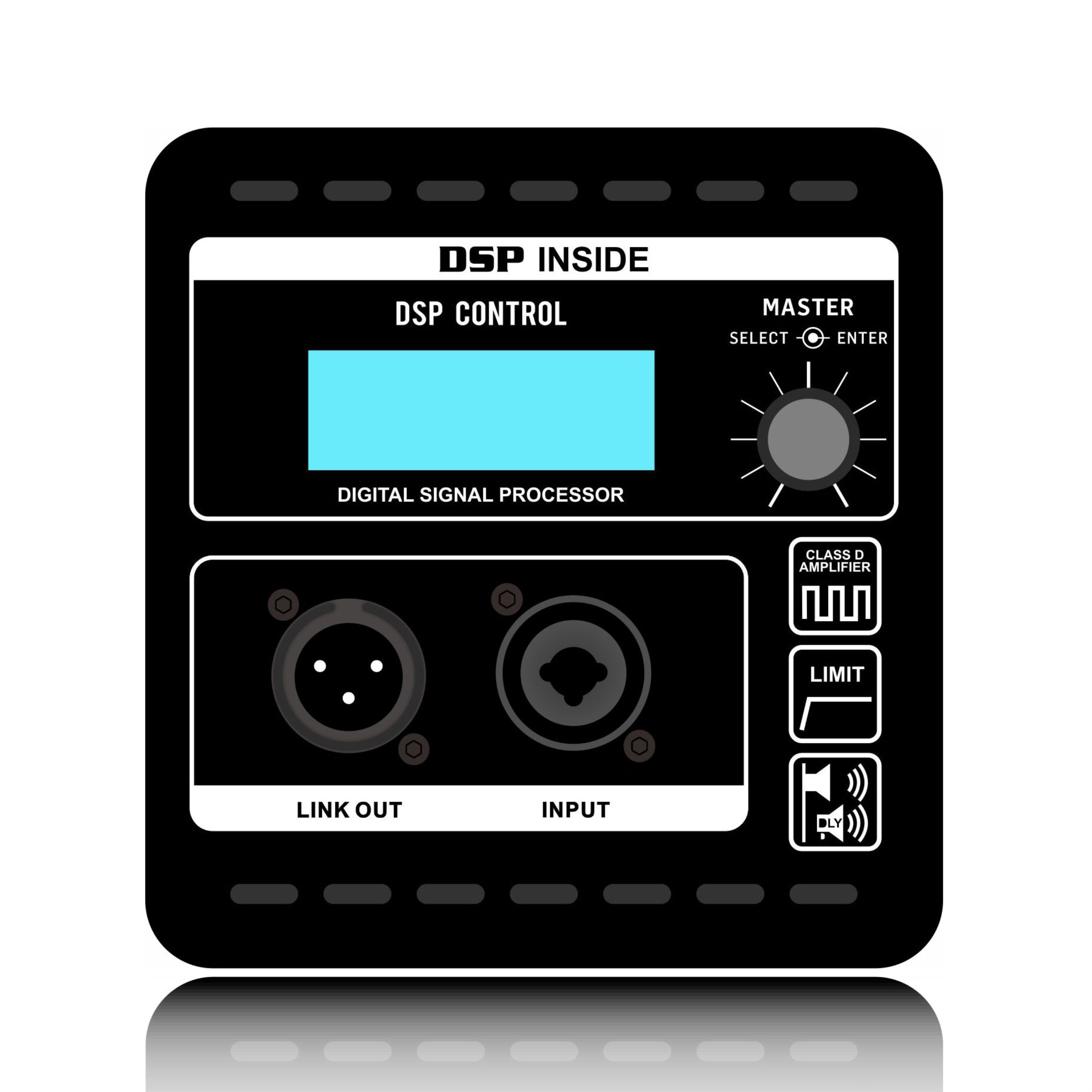
Modern line array amplifiers incorporate onboard DSP (Digital Signal Processing) that handles crossover filtering, delay alignment, equalization, and limiter functions — all configured specifically for the connected speaker cabinets. This integration eliminates the need for separate external signal processors and reduces the risk of signal degradation between devices.
A typical professional DSP Line Array Amplifier provides 4 to 8 output channels, with per-channel power ratings commonly ranging from 500W to 2,500W at 4 ohms. The DSP section typically offers 96kHz processing, latency below 1ms, and up to 64 programmable presets matched to specific speaker cabinet configurations.
Understanding the Conventional Power Amplifier
A conventional power amplifier takes a line-level audio signal and amplifies it to speaker-level output. It does not inherently know anything about the speaker system it is driving — it simply delivers power. Two-channel and four-channel power amplifiers are widely used in installations, studios, and live sound rigs where signal processing is handled externally by dedicated processors or mixing consoles.
Conventional power amplifiers excel in applications where maximum flexibility is needed — where the same amplifier may drive different speaker loads at different times, or where a centralized DSP rack handles all processing for a complex multi-zone installation. They are also the standard choice for studio monitoring, broadcast, and applications requiring extremely flat, uncolored amplification.
Feature-by-Feature Comparison
The table below compares the two amplifier types across the parameters that matter most to audio professionals selecting equipment for live or installed sound applications.
| Feature | Pro Line Array Amplifier | Conventional Power Amplifier |
|---|---|---|
| Onboard DSP | Yes (crossover, EQ, delay, limiter) | Rarely included |
| Output Channels | 4–8 channels typical | 2–4 channels typical |
| Speaker Preset Management | Yes, matched to cabinet specs | No |
| Driver Protection | Multi-layer (thermal, excursion, limiter) | Basic (thermal, short circuit) |
| Network Control | Ethernet / remote software | Rarely included |
| Impedance Flexibility | Optimized for array loads (2–8Ω) | Broad range (2–16Ω) |
| Efficiency (Class D) | 85–95% | 60–90% (varies by class) |
| Best Application | Line array systems, live sound, touring | Studio, broadcast, multi-zone installs |
The Role of DSP in a Professional Audio Amplifier System
The integration of DSP is the single most important differentiator in a Professional Audio Amplifier System built around line arrays. Here is what onboard DSP actually does in practice:
Crossover Filtering
Each amplifier output channel is assigned a specific frequency band matched to the driver it powers — for example, channel 1 handles 80Hz–800Hz for the mid drivers, channel 2 handles 800Hz–20kHz for the HF compression drivers. This is achieved with precise digital FIR or IIR filters, achieving crossover slopes of up to 48dB/octave — far steeper and more accurate than passive crossovers.
Time Alignment and Delay
In a line array, acoustic alignment between HF and LF drivers is critical. DSP delay settings — typically adjustable in increments of 20 microseconds or less — ensure all drivers within a cabinet arrive at the listener's position coherently, eliminating phase cancellation that degrades clarity and output level.
Parametric EQ and Correction
Onboard parametric EQ — often 8 to 16 fully parametric bands per channel — allows operators to correct for room acoustics, stack configuration, and driver response variations without adding external hardware to the signal chain.
Limiters and Speaker Protection
Dedicated limiters — including peak, RMS, and excursion-based limiting — protect speakers from damage without audible artifacts at high SPL. This is especially important in touring scenarios where operators may push systems close to their thermal or mechanical limits.
Power Output and Efficiency: Why It Matters for Line Arrays
Line array systems require substantial amplifier headroom — a single four-cabinet array might demand 4,000W to 8,000W of total amplifier power across all channels. Efficiency directly impacts rack weight, heat dissipation, and power draw from the venue's electrical supply.
The chart below illustrates the efficiency advantage of Class D amplification used in modern DSP Line Array Amplifiers compared to older Class AB designs still common in conventional power amplifiers.
Amplifier Efficiency by Class — Power Delivered vs. Power Consumed
Class D (DSP Line Array Amplifier)90–95%
Class H (Conventional Power Amplifier)75–85%
Class AB (Conventional Power Amplifier)50–65%
Higher efficiency means less heat, lower power draw, and reduced rack weight — critical for touring applications
For a touring rig consuming 10,000W of audio power, switching from Class AB to Class D amplification can reduce total power draw from approximately 18,000W to under 11,000W — a significant reduction that affects generator sizing, fuel consumption, and heat management in a rack.
Network Control and Remote Management
One of the practical advantages of a modern Line Array Power Amplifier is remote network control via Ethernet. Through dedicated control software, engineers can monitor and adjust every amplifier in the system from a laptop or tablet — including real-time metering, preset recall, delay adjustments, and fault alerts.
This capability is particularly valuable in fixed installation contexts — houses of worship, conference centers, theaters — where systems may be operated by staff who are not audio specialists. A properly configured preset can be loaded with a single click, ensuring consistent system behavior regardless of operator skill level.
Conventional power amplifiers rarely include network connectivity as a standard feature. Adding remote control capability requires additional hardware and introduces more points of potential signal failure in the chain.
Which Applications Call for Which Amplifier?
Choose a Pro Line Array Amplifier When:
- Driving multi-way line array cabinets with separate HF, MF, and LF drivers
- Operating large-scale live events, concerts, or touring productions
- Installing in venues requiring networked control and preset management
- Minimizing rack space and external processing equipment
- Requiring precise speaker protection to preserve expensive driver components
- Working in applications where efficiency and low heat output are critical
Choose a Conventional Power Amplifier When:
- Driving passive two-way or full-range speakers with external crossovers
- Operating studio monitoring or broadcast environments
- Building systems where a centralized DSP processor manages all signal routing
- Requiring maximum flexibility to drive different speaker loads across different projects
Key Specifications to Evaluate When Selecting a Line Array Amplifier
When evaluating a Professional Audio Amplifier System for line array use, these are the specifications that have the greatest real-world impact:
- Output power per channel at rated impedance — verify at both 4Ω and 8Ω; some amplifiers derate significantly at lower impedances
- THD+N (Total Harmonic Distortion + Noise) — look for values below 0.05% at rated power for clean, transparent amplification
- Signal-to-noise ratio — a minimum of 100dB is expected in professional applications; 110dB+ is preferred for touring systems
- DSP sample rate and latency — 96kHz processing with latency below 1ms is the current professional standard
- Number of EQ bands and filter types — more parametric bands and filter shape options give greater flexibility during system tuning
- Input connectivity — balanced XLR analog inputs are standard; AES/EBU digital inputs and Dante network audio capability are valuable in advanced installations
- Cooling system — variable-speed fan cooling extends component life and reduces noise in quiet acoustic environments
Typical Power Requirements by Application Scale
The chart below illustrates typical total amplifier power requirements for different application scales, helping system designers select the right number and rating of amplifier units.
Total Amplifier Power by Venue Scale (kW)
2–4 kW
Small Club
(<300 seats)
(<300 seats)
8–16 kW
Mid Theater
(300–1,500)
(300–1,500)
24–48 kW
Arena
(1,500–10,000)
(1,500–10,000)
80–200 kW
Festival Stage
(10,000+)
(10,000+)
Estimates include main PA, delays, and subwoofer systems; actual requirements vary by SPL targets and coverage design
About Ningbo Zhenhai Huage Electronics Co., Ltd.
Ningbo Zhenhai Huage Electronics Co., Ltd. is a professional audio enterprise integrating research and development, production, and sales. As a dedicated Pro Line Array Amplifier Manufacturer and factory, the company has focused for many years on the production of sound mixers, active power amplifiers, microphones, and related electronic components and equipment.
Specializing in Custom Pro Line Array Amplifier solutions and a broad range of professional audio products, the company has maintained its commitment to good products, good service, and good reputation throughout its development. These values have supported the establishment of long-term, stable cooperative relationships with partners across domestic and international markets, including long-term OEM services for well-known audio brands.
Huage Electronics maintains professional design, production, and testing teams capable of customizing products to meet specific customer requirements. Clients from all industries are welcome to visit, consult, and explore business cooperation opportunities.
Frequently Asked Questions
Q1: Can I use a standard power amplifier to drive a line array cabinet?
A1: Technically yes, but the result will be suboptimal and may damage drivers. Line array cabinets require specific crossover points, delay values, and limiting thresholds that a standard power amplifier cannot provide. Without these, drivers receive full-range signal at incorrect levels, significantly shortening their lifespan and degrading audio quality.
Q2: How many cabinets can one Pro Line Array Amplifier typically drive?
A2: This depends on cabinet impedance and amplifier channel count. A four-channel DSP Line Array Amplifier driving a three-way cabinet uses three channels per cabinet, meaning one amplifier handles one cabinet plus has one spare channel. For a six-cabinet hang, you would typically need three amplifier units. Always consult the cabinet manufacturer's recommended amplifier configuration for the specific cabinet model.
Q3: What is the difference between FIR and IIR filters in a DSP Line Array Amplifier?
A3: IIR (Infinite Impulse Response) filters are computationally efficient and introduce minimal latency — typically used for crossovers and EQ. FIR (Finite Impulse Response) filters offer linear phase response, meaning all frequencies in the pass band are delayed equally, which is beneficial for time-coherent crossover designs. High-end line array amplifiers offer both filter types, giving engineers the flexibility to match the filter approach to the acoustic design priorities of each project.
Q4: Is Dante audio networking necessary in a Professional Audio Amplifier System?
A4: Dante is not strictly necessary but adds significant value in larger or more complex installations. It allows audio distribution over standard Ethernet infrastructure with very low latency (less than 1ms at 48kHz), eliminating long analog cable runs and allowing flexible signal routing between devices. For fixed installations with multiple amplifier racks spread across a building, Dante connectivity simplifies cabling and improves system reliability considerably.
Q5: How should I maintain a Line Array Power Amplifier to extend its service life?
A5: Key maintenance practices include keeping ventilation slots and fan intakes clear of dust (clean with compressed air every 3–6 months depending on environment), ensuring adequate rack spacing for airflow around each unit, storing and transporting in protective cases with shock absorption, and periodically checking all input and output connector contacts. Firmware updates from the manufacturer should be applied as released, as they often include protection algorithm improvements and new speaker preset libraries.