English
 Español
 中文简体
中文简体
Home / News / Industry News / Amplifier Abbreviations Explained: AMP, DSP, PFC, LLC, BTL, and More for OEM
You are reviewing a power amplifier module datasheet and you see PFC, LLC, DSP, BTL, and TWS listed. Do you know exactly which ones affect power stability, sound processing, or output wiring? Here is the short answer: most amplifier abbreviations tell you about the power topology, signal processing path, or output method.
For OEM speaker engineers and audio product managers, this shorthand is practical, not academic. Misreading one abbreviation can lead to a prototype that overheats, a power supply that fails overseas, or a final product that does not match the marketing claim. The good news is that once you understand the small set of abbreviations used in amplifier modules, you can quickly evaluate any spec sheet.
Content
- 1 What Does "AMP" Actually Stand For?
- 2 Common Amplifier Abbreviations on Module Datasheets
- 3 Why These Abbreviations Matter for Speaker Manufacturers
- 4 Practical Guide: Reading a Real Amplifier Module Specification
- 5 Frequently Asked Questions About Amplifier Abbreviations
- 5.1 Q: What does AMP stand for in audio?
- 5.2 Q: What does DSP mean in power amplifier modules?
- 5.3 Q: What is Class D vs Class AB in amplifiers?
- 5.4 Q: What does PFC mean in a switching power supply?
- 5.5 Q: What does BTL output mean for a subwoofer module?
- 5.6 Q: What does TWS mean on a Bluetooth audio module?
What Does "AMP" Actually Stand For?
In audio engineering, AMP is simply a shortening of amplifier. It is not a true acronym, like "laser" or "radar." You will see it written in uppercase in data sheets, but it does not stand for "Amplified Music Power" or anything similar.
One common point of confusion is that AMP can also mean ampere, the unit of electrical current. When you read a cable spec, AMP refers to current capacity. When you read a speaker system spec, AMP almost always refers to the amplifier.
In the context of powered speakers, line array systems, and subwoofers, the AMP is the entire amplification stage that drives the transducers. It may be a standalone amplifier or, more commonly in modern active speakers, an integrated amplifier module.
Common Amplifier Abbreviations on Module Datasheets
Amplifier modules are typically described with a group of abbreviations that fall into a few categories: power topology, signal processing, input/output, and manufacturing terms. Below is a quick reference table that covers the most frequent terms you will encounter.
| Category | Abbreviation | Full Name | What It Means |
|---|---|---|---|
| Power | Class D | Class D amplifier | Switching amplifier with high efficiency (usually 80-95%) and low heat |
| Power | Class H | Class H amplifier | Amplifier with variable rail voltage; high dynamic headroom |
| Power | PFC | Power Factor Correction | Circuit that keeps input current stable across a wide AC voltage range |
| Power | LLC | LLC Resonant Converter | Switching power supply topology with high efficiency and low EMI |
| Power | BTL | Bridge-Tied Load | Output configuration that doubles voltage swing, useful for subwoofers |
| Processing | DSP | Digital Signal Processor | Onboard chip for EQ, crossover, delay, and limiter functions |
| Processing | EQ | Equalizer | Tone control; often available as graphic or parametric |
| Processing | TWS | True Wireless Stereo | Wireless pairing between two speakers for stereo playback |
| I/O | RCA | Radio Corporation of America | Unbalanced analog input, widely used for CD and MP3 sources |
| I/O | XLR | Cannon connector | Balanced input/output, standard in professional audio |
| Manufacturing | SMT | Surface Mount Technology | Assembly method for compact, reliable PCBs |
These abbreviations are not optional jargon. They describe real constraints and performance trade-offs. For example, a DSP module with ADAU1701 starts from a consistent platform and each model adds different I/O or playback features, which makes it easier to predict firmware behavior.
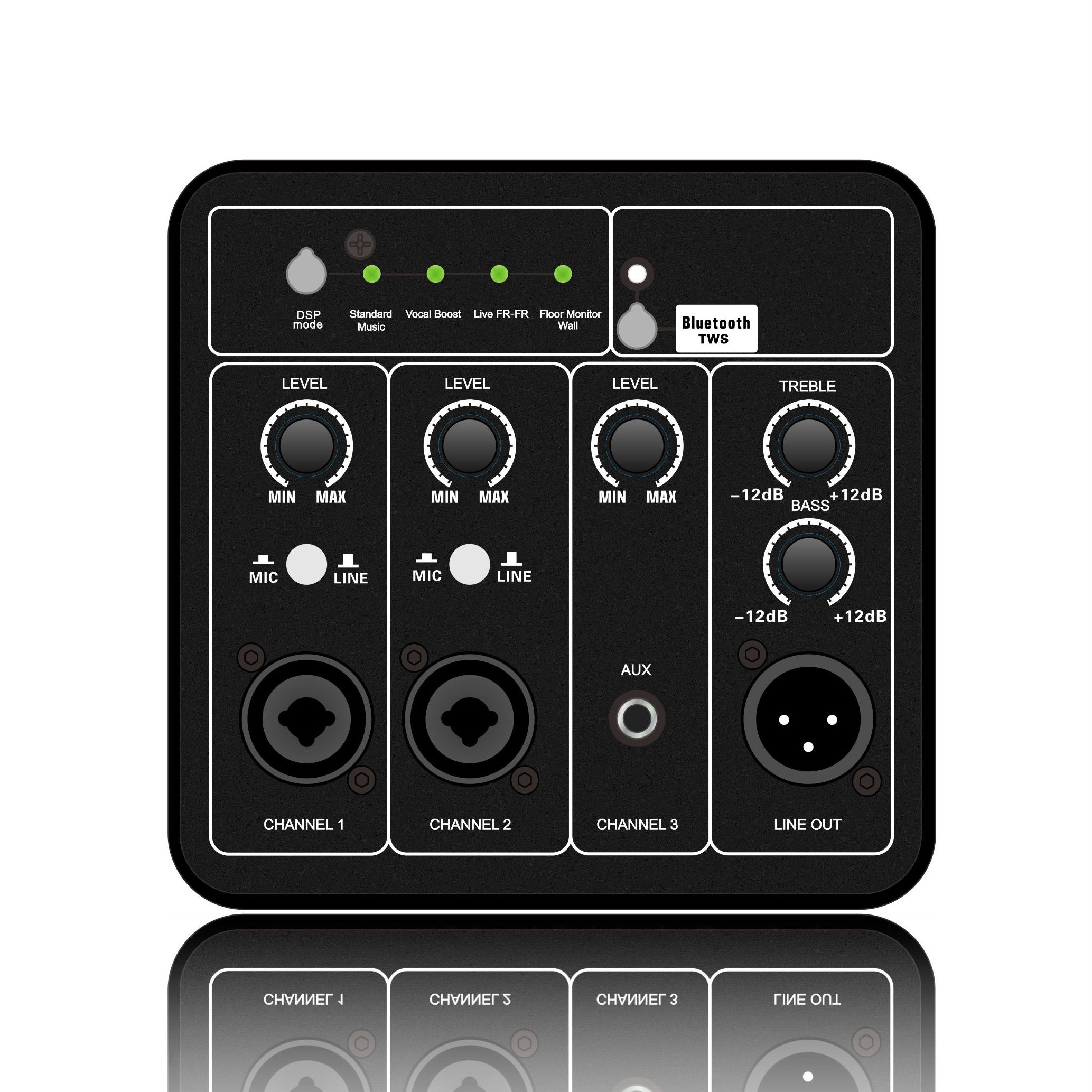
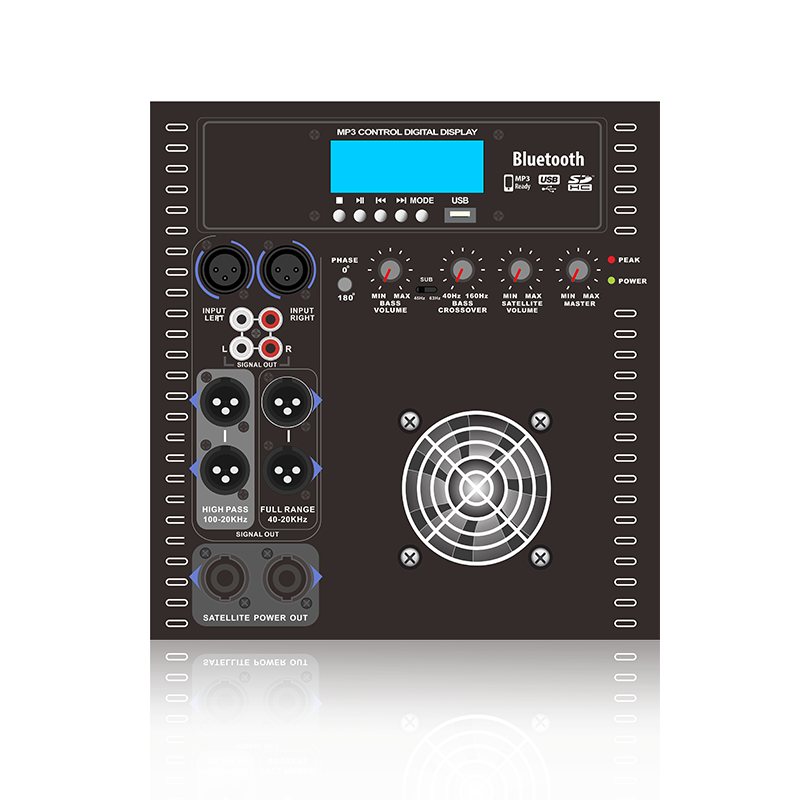
 Integrated DSP Control Module with ADAU1701 and USB MP3 PlayerThis functional module combines ADAU1701 DSP with USB/Bluetooth input and LCD control, suitable for loudspeakers. It simplifies firmware setup for OEMs with single-knob presets and balanced connections.View Product →
Why These Abbreviations Matter for Speaker Manufacturers
As an OEM or system integrator, you care about more than just output power. The real question is whether the amplifier will survive in your specific enclosure, duty cycle, and target market. Let's see how the abbreviations translate into real-world performance.
Class D vs Class H: Efficiency and Heat
Class D modules with PFC and LLC resonance deliver high efficiency across a wide input voltage range. This matters when you ship speakers to countries with 110V or 220V grids. According to industry benchmark data, a typical Class D switching amplifier runs around 90% efficiency, which keeps heatsinks smaller and battery life longer in portable products. A Class H amplifier with a linear transformer is less efficient (often 60-70%) but can provide excellent peak dynamics for high-power subwoofers.
BTL Output for Low-Frequency Power
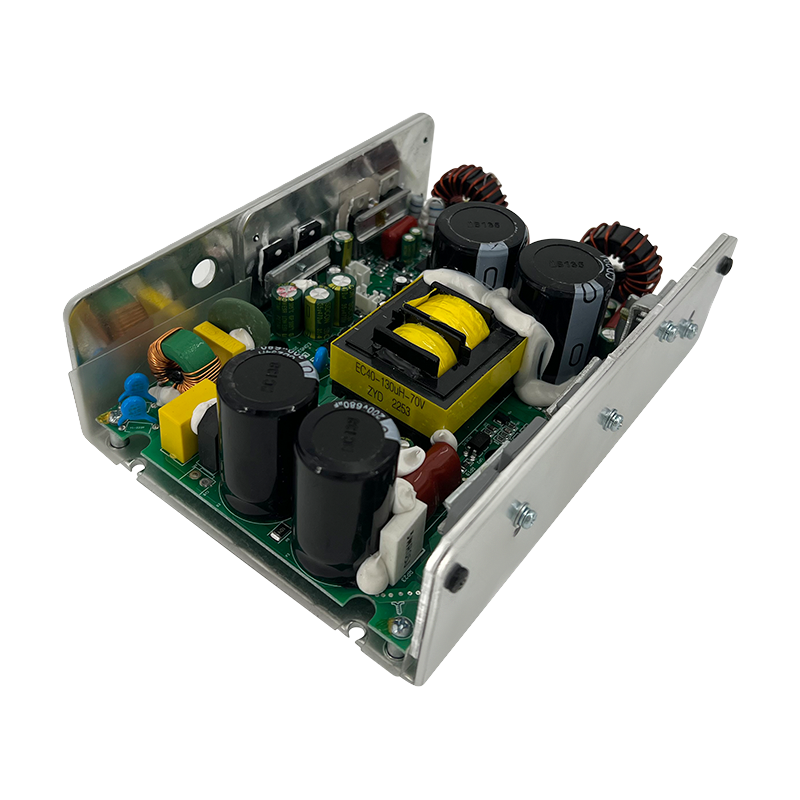
BTL (Bridge-Tied Load) is a common abbreviation on subwoofer modules. It combines two amplifier channels to double the voltage swing across the load. This is why a subwoofer module rated at LP 650W in 8Ω with BTL output can deliver serious low-end punch without needing a separate bridge transformer.
DSP: Flexible Sound Shaping Without Extra Parts
The DSP abbreviation indicates an onboard digital signal processor. Instead of adding a separate analog equalizer board, you can use a DSP module to implement crossover, EQ, delay, and limiting in firmware. This reduces assembly time and bill-of-material cost. Many modern modules also integrate Bluetooth TWS for stereo pairing, which simplifies wireless consumer products. For a deeper look at how active amplifier modules integrate into speaker cabinets, read this overview of active power amplifier modules.
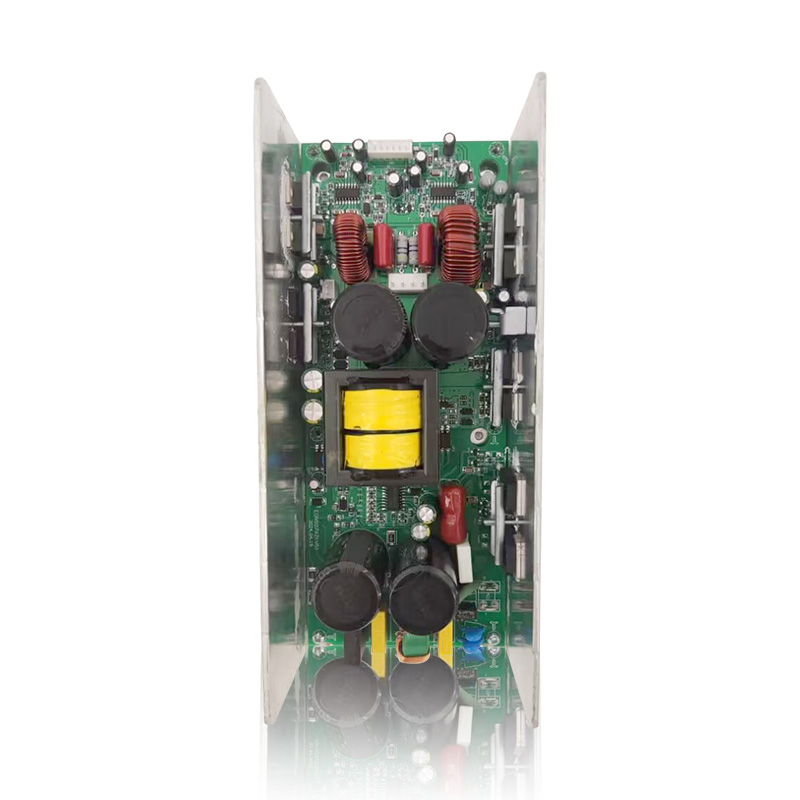
 BTL Subwoofer Amplifier Module for Pro Audio ApplicationsThis Class D module offers 650W at 8 ohms with an 800W switching supply and robust protections, making it a reliable choice for BTL subwoofer builds in pro audio systems.View Product →
Practical Guide: Reading a Real Amplifier Module Specification
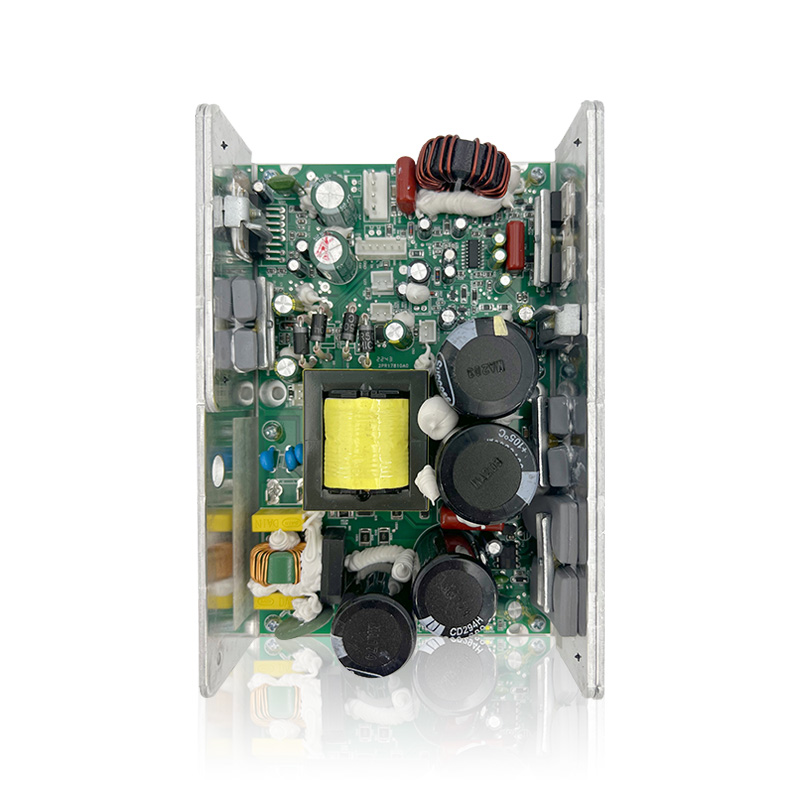
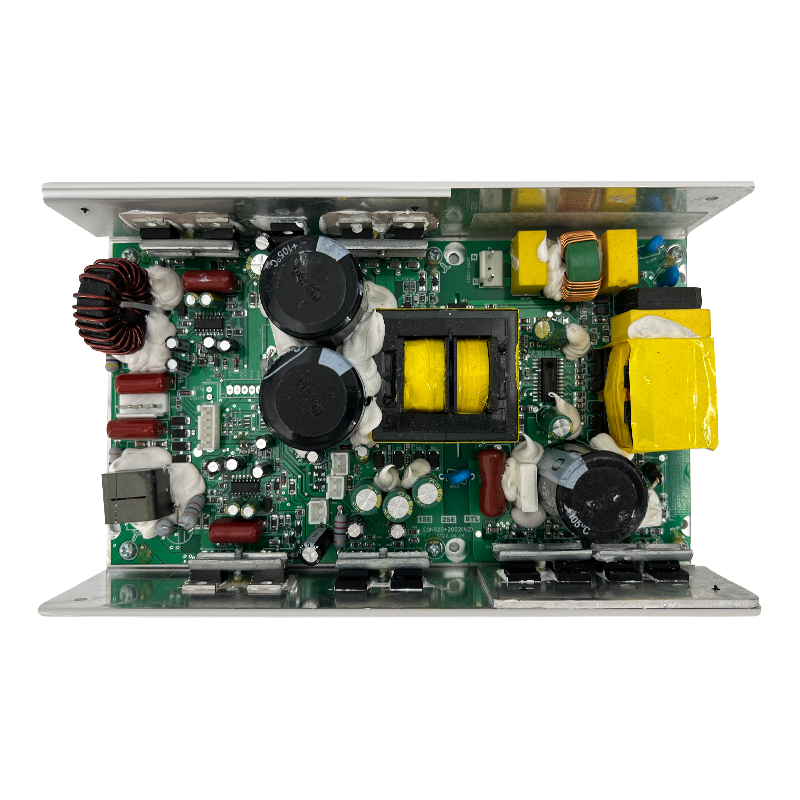
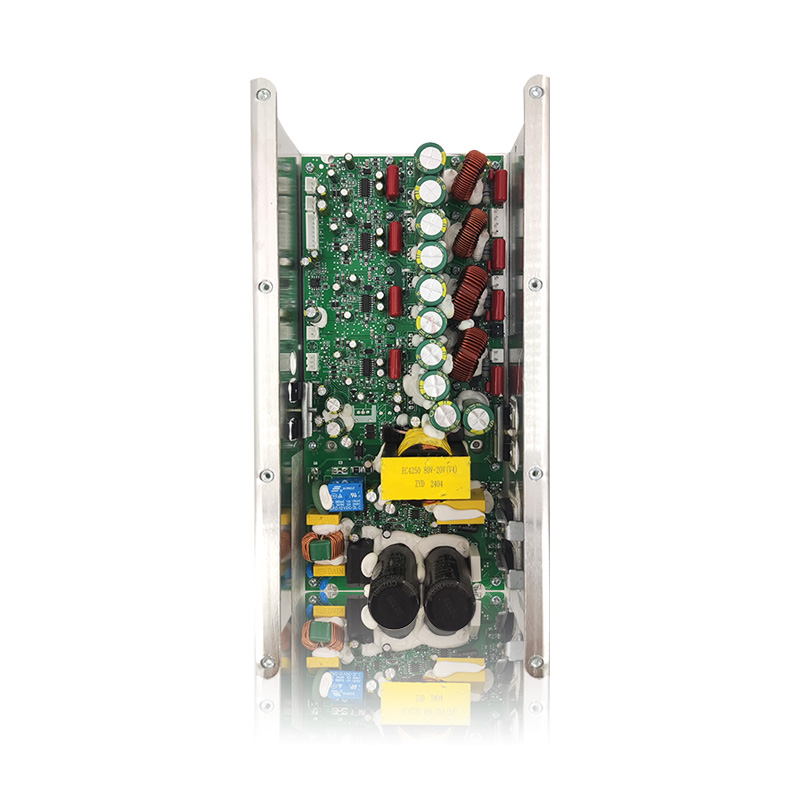
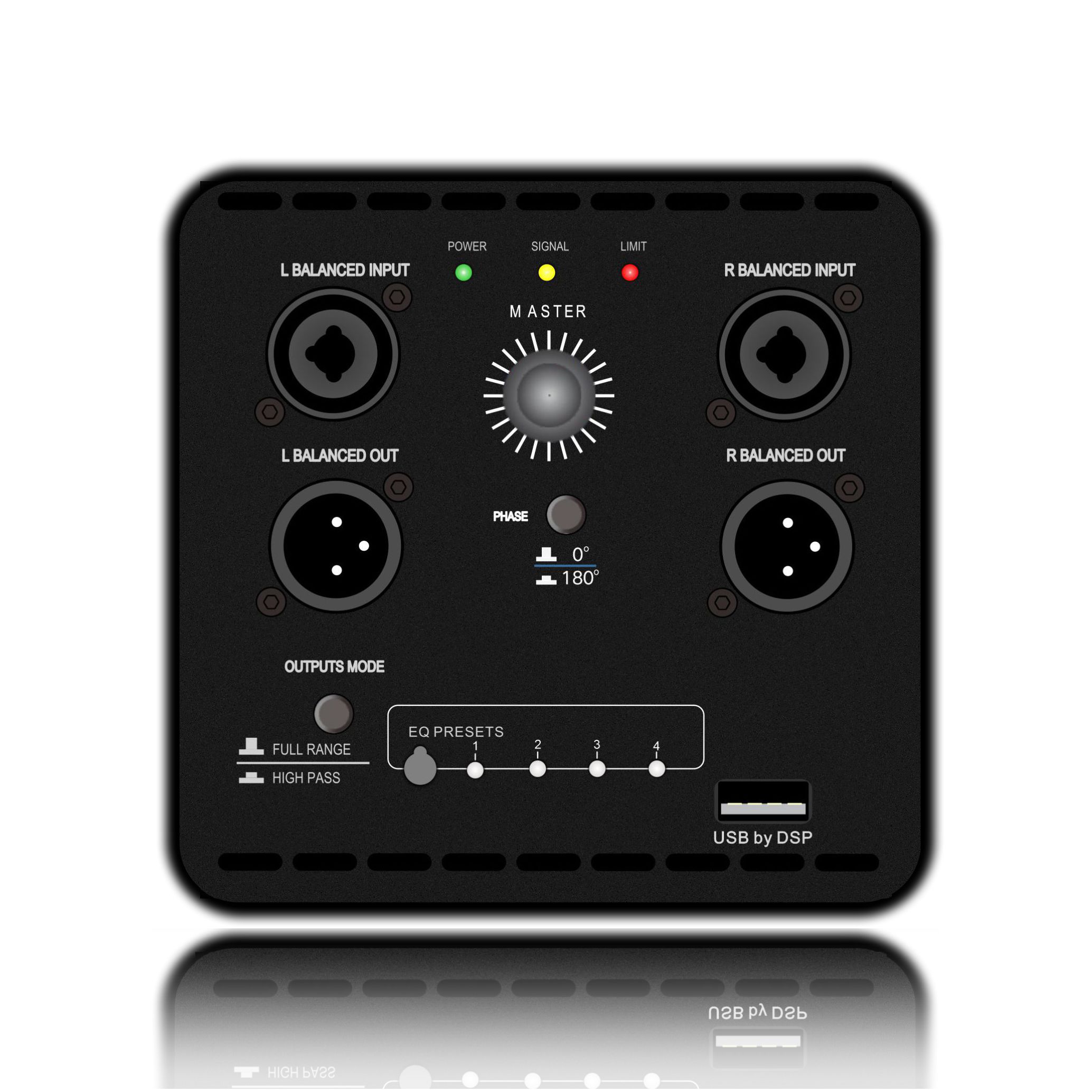
Let's read a typical line array power amplifier module specification, such as the EON522D-2092, which is rated LP500W/HP200W.
The LP and HP indicate the low-frequency and high-frequency output power levels respectively. In a line array cabinet, you need different power for the woofer and the compression driver. The LP rating (500W) powers the low-mid transducers, while the HP rating (200W) drives the high-frequency horn. This avoids the wrong power match that causes clipping or blown drivers.
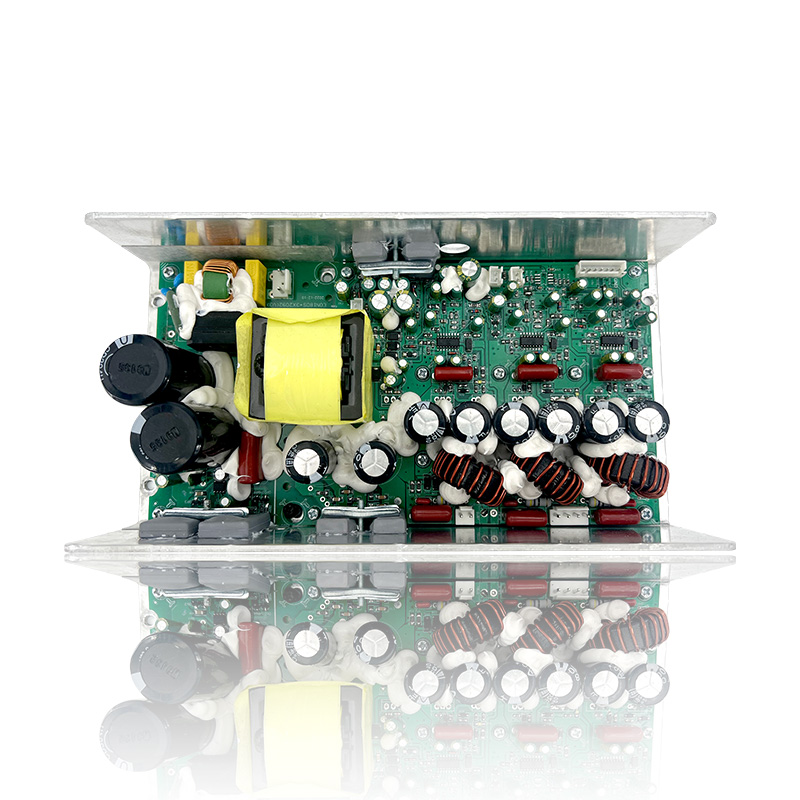
The LLC resonant converter in this module provides regulation at high conversion efficiency. Combined with PFC, it supports a wide AC input range from 100V to 240V, which is critical for international sales. The module also includes overload and overcurrent protection, which the abbreviation list above can help you spot.
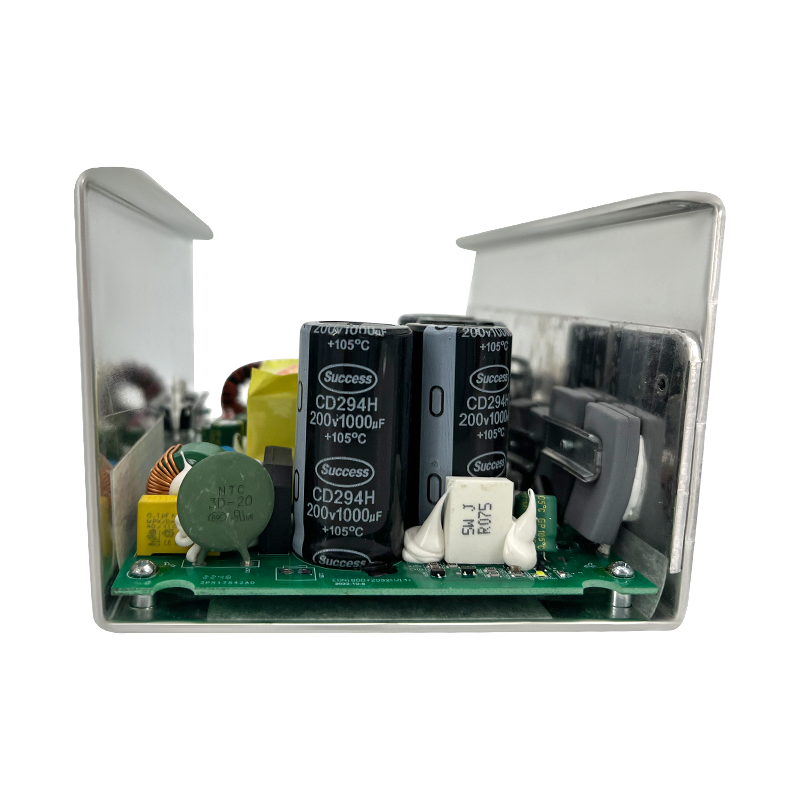
For a complete understanding of the mechanical design, consider the module structure in the isometric diagram below.
Frequently Asked Questions About Amplifier Abbreviations
Q: What does AMP stand for in audio?
A: In audio systems, AMP stands for amplifier, not ampere. It is a device that increases the amplitude of a signal.
Q: What does DSP mean in power amplifier modules?
A: DSP stands for Digital Signal Processor. It handles EQ, crossovers, limiters, and other sound-shaping functions in the digital domain.
Q: What is Class D vs Class AB in amplifiers?
A: Class D uses switching transistors and high efficiency, while Class AB uses linear conduction and higher heat. Class AB offers a smooth sound; Class D is cooler and more compact.
Q: What does PFC mean in a switching power supply?
A: PFC (Power Factor Correction) improves power utilization from the wall outlet, allowing the module to work stably across varied AC voltage conditions.
Q: What does BTL output mean for a subwoofer module?
A: BTL (Bridge-Tied Load) uses two amplifier channels to drive one load, doubling the voltage swing and increasing power output without a transformer.
Q: What does TWS mean on a Bluetooth audio module?
A: TWS (True Wireless Stereo) enables two Bluetooth speakers to pair and play left and right channels, creating a wireless stereo system.