English
 Español
 中文简体
中文简体
Home / News / Industry News / Class A Stereo Amplifier Explained: Pros, Cons, and Modern Alternatives
You don’t buy a Class A stereo amplifier for efficiency. You buy it for the way it reproduces music—with a naturalness that makes other designs sound mechanical by comparison. The heat is real, the power consumption is real, and the price can be intimidating. Here is what a Class A stereo amplifier actually does, where it wins, where it loses, and how to decide if it belongs in your system.
A simplified isometric view of a Class A output stage: output devices stay fully biased while a large heatsink handles continuous dissipation.
Content
- 1 What Is a Class A Stereo Amplifier?
- 2 The Real Trade-Offs: Sound Quality, Heat, and Efficiency
- 3 Class A vs. Class AB vs. Class D
- 4 Why Classic Class A Amps Carry a Premium Price
- 5 Modern Alternatives for Builders and OEMs
- 6 How to Choose the Right Stereo Amplifier for Your System
- 7 Class A Stereo Amplifier: FAQ
What Is a Class A Stereo Amplifier?
An amplifier class describes how its output devices conduct during the audio signal cycle. In a true Class A stereo amplifier, the output transistors or valves are biased so that they conduct during all 360 degrees of the waveform. They never switch off. This removes crossover distortion—the small timing notch that can occur when the signal crosses zero—and keeps the operating point extremely linear.
That continuous conduction is why a Class A amplifier sounds so fluid. It does not wait to wake up at every zero crossing. It is always at the right operating point, ready to deliver current to the speaker the instant the music demands it. Single-ended Class A circuits can use only one active device per channel, while push-pull Class A designs use a complementary pair, but both share the same principle: constant current, constant heat, and very low distortion.
If you are shopping for a stereo amplifier, this constant-current behavior is exactly what separates a true Class A design from the cheaper “class A biased” circuits seen in budget audio products.
The Real Trade-Offs: Sound Quality, Heat, and Efficiency
The same design decisions that make Class A sound clean also create practical headaches. Because the output devices always conduct, the amplifier draws a large idle current from its power supply. A 25 W per channel Class A stereo amplifier can consume more than 100 W from the wall even when no music is playing. That continuous energy becomes heat, which demands a large heatsink and careful ventilation.
In return, a well-designed Class A stage can keep distortion below 0.1% without any feedback tricks. The monotonic transfer curve gives the sound an “effortless” quality at low volume, which is why many audiophiles still swear by it.
What Class A Does Well
- No crossover distortion
- Excellent low-level detail and microdynamics
- Simple circuit topology in single-ended form
- Predictable and stable operating point
What Class A Costs You
- Very high idle power consumption
- Large and heavy heatsinks required
- Expensive power supplies and matched parts
- Heat can shorten capacitor life inside the chassis
Class A vs. Class AB vs. Class D
Most modern stereo amplifiers fall into one of three classes. Class A is the benchmark for linearity, while Class AB and Class D are practical choices for real-world systems. The table below compares them at a glance.
| Class | Efficiency | Heat at Same Output | Crossover Distortion | Typical Use |
|---|---|---|---|---|
| Class A | 20–30% | Very high | None | High-end home audio |
| Class AB | 50–65% | Moderate | Low | Integrated amplifiers, PA systems |
| Class D | 80–90% | Low | Very low (filter dependent) | Powered speakers, subwoofers, portable gear |
Numbers alone do not explain the listening difference. A Class A amp’s low distortion is achieved without the harsh switching artifacts that early Class D designs introduced. But modern Class D modules with good output filters have closed much of the gap, especially when paired with DSP correction.
Typical efficiency ranges under real music signals, based on conventional power amplifier design references.
Approximate waste heat produced per 100 W of audio output, calculated from typical efficiency values.
Why Classic Class A Amps Carry a Premium Price
A true Class A stereo amplifier costs more because every component must be oversized. The transformer needs to supply continuous current, not just peak current. The output devices must be carefully matched so the two halves of the waveform meet smoothly. And the heatsink is not an accessory—it is the second-largest structural part of the chassis.
In a dual-mono design, two complete power supplies and two heatsink assemblies are required, which effectively doubles the mechanical cost. Low production volumes also mean hand assembly, measuring, and testing. That is why a 50 W Class A amplifier can cost more than a 200 W Class AB amplifier from the same brand.
When you see a suspiciously cheap “Class A” amplifier, check its idle current and thermal capacity. Many budget products use a light bias at the zero-crossing point to reduce crossover distortion, but they do not operate in true continuous Class A. If the heatsink is small and the price is low, it is probably a class A/B hybrid or a marketing label.
Modern Alternatives for Builders and OEMs
If heat and energy cost are deal-breakers, you do not have to abandon the idea of high-fidelity sound. Much of what makes Class A feel special is low distortion and linearity, and modern Class D and Class H circuits deliver similar measured performance with far less waste. For OEM manufacturers and advanced DIY builders, a module-based power stage is often the smartest route.
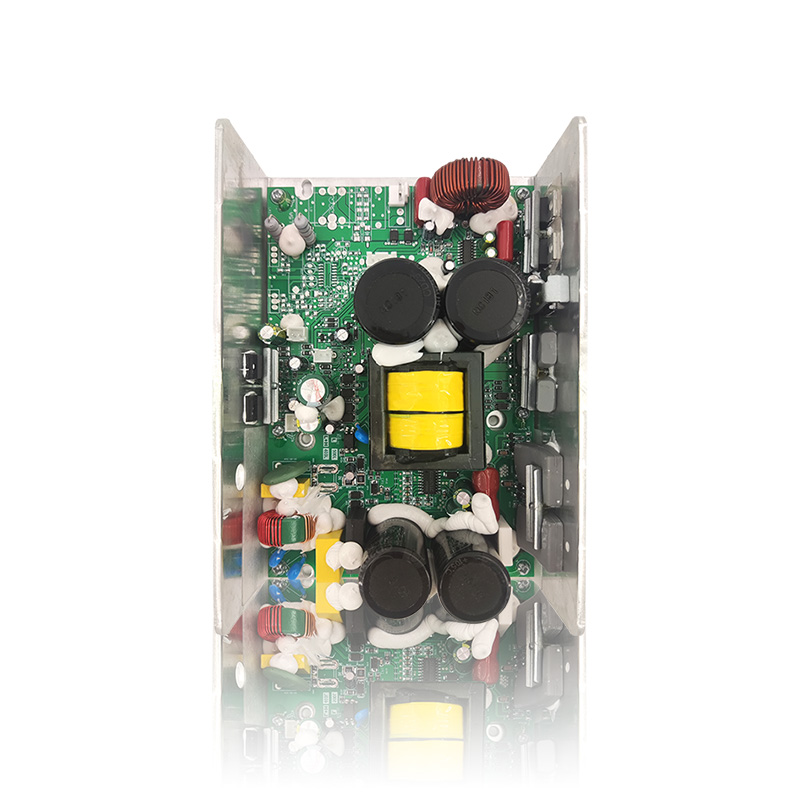
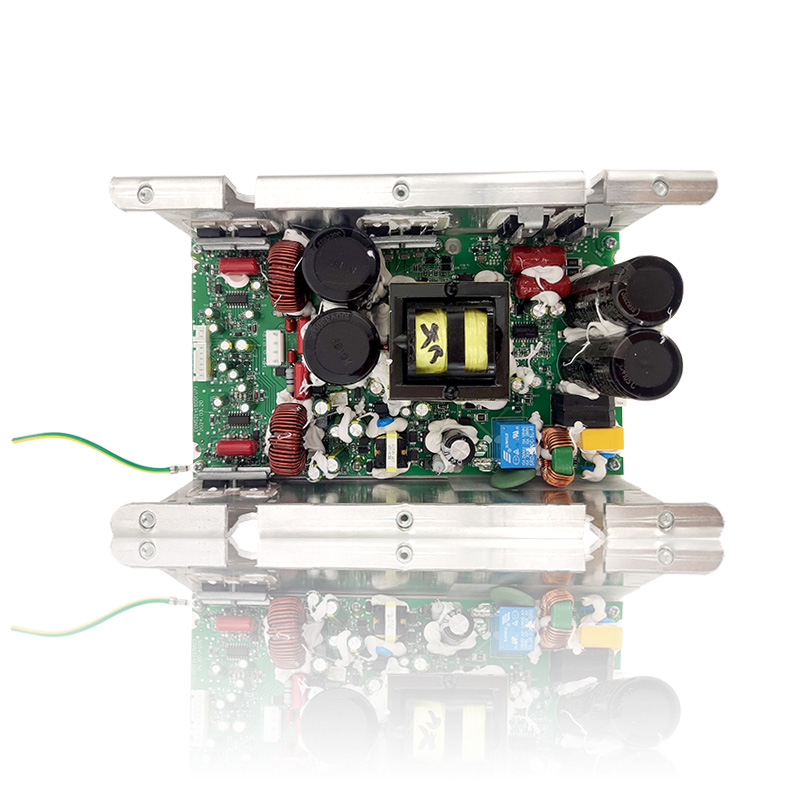
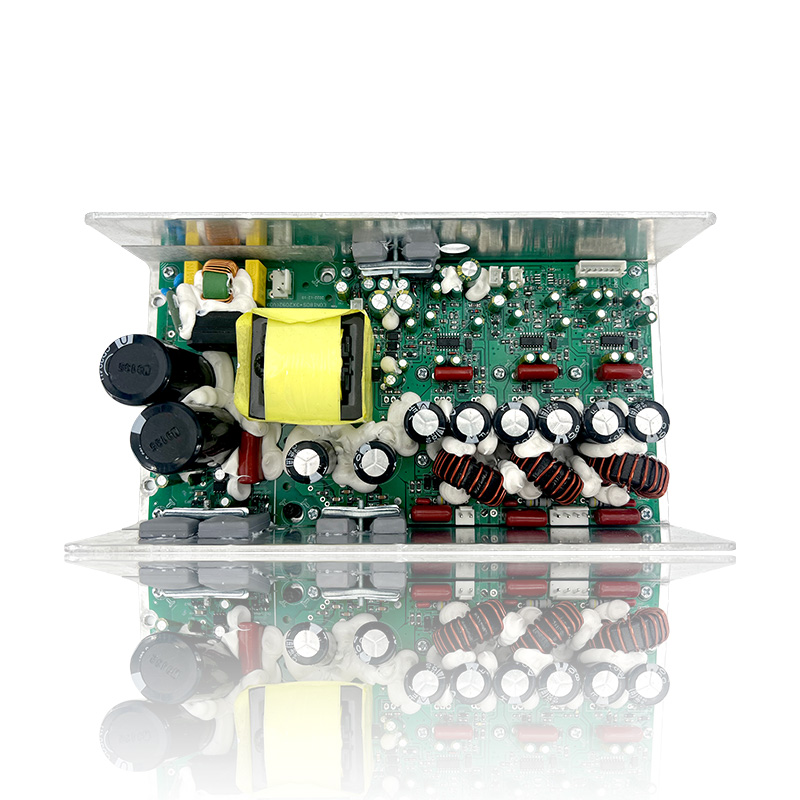
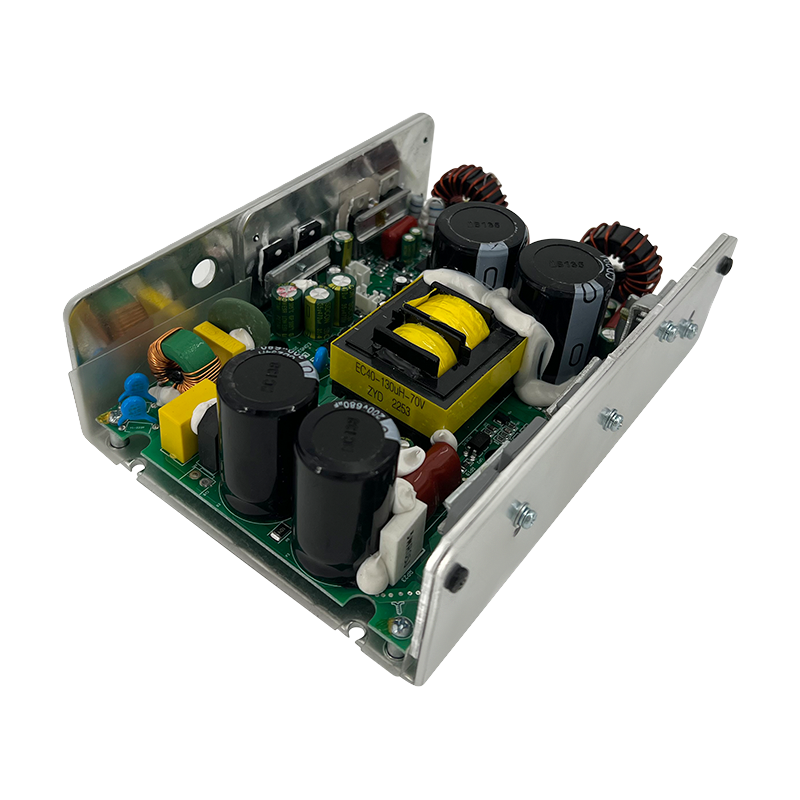
For example, an active stereo speaker or a compact desktop amplifier can use a 500 W LF / 200 W HF Class D power amplifier module as its power core. This module combines PFC and LLC resonant switching power, so it stays efficient and reliable in different regions without a bulky transformer. If you prefer the smoother behavior of a linear power supply, the Bi-Class H power amplifier module with 300 W LF and 50 W HF gives a more traditional analog character while improving efficiency over pure Class A.
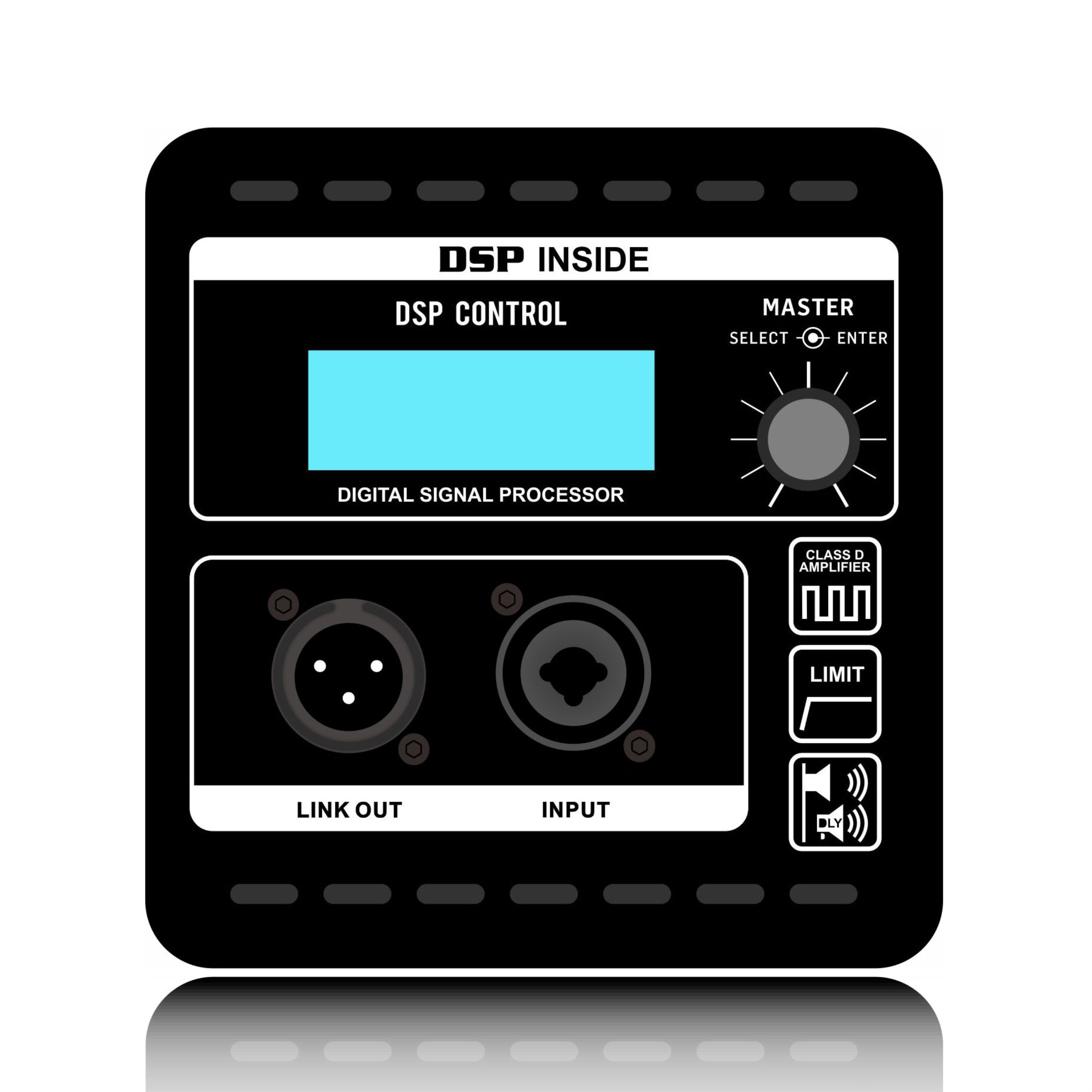
Modern speaker voicing is often done in the digital domain. Adding an ADAU1701 DSP functional module with stereo RCA input lets a manufacturer set EQ, delay, and crossover curves without changing the hard-wired analog circuit. That level of tuning is not possible with a classic Class A amplifier, and it is one reason why commercial loudspeaker brands have moved to DSP-controlled Class D designs.
 Wholesale DSP1901: Stereo RCA Input with Single-knob DSP Control ADAU1701 Based As China DSP1901: Stereo RCA Input with Single-knob DSP Control ADAU1701 Based DSP Functional Module suppliers and company, Zhenhai Huage...View Product →
How to Choose the Right Stereo Amplifier for Your System
There is no single best amplifier class, only the best class for a given use. Start with your speakers, room, and listening habits. A high-sensitivity speaker in a small room can be magical with 10 or 20 watts of Class A. A large room with inefficient speakers will quickly turn that same amplifier into a furnace.
- Speaker sensitivity: Above 90 dB efficiency makes low-power Class A practical.
- Ventilation: Class A needs open shelves or floor space, never a sealed cabinet.
- Impedance: Check how the amp behaves with 4 Ω and 8 Ω speakers; Class A designs often excel with stable loads.
- Duty cycle: If you listen for hours at high volume, heat management matters more than pure linearity.
- Service life: Heat accelerates electrolytic capacitor aging; factor in maintenance costs.
If you are still evaluating different technologies, this overview of active power amplifier modules explains how modules work and where they fit in a finished product.
Class A Stereo Amplifier: FAQ
What is a Class A amplifier?
A Class A amplifier keeps its output devices conducting through the full 360-degree signal cycle. This removes crossover distortion and produces extremely linear behavior.
Why do Class A stereo amplifiers run so hot?
They draw near-full bias current even at idle. Most of that energy is released as heat, so a 25 W amplifier can dissipate more than 100 W during quiet passages.
Is Class A better than Class AB?
In theory, Class A has lower distortion and no crossover notch. Class AB offers much higher efficiency and enough performance for most listeners, so the choice depends on priorities.
Can a Class D amplifier sound as good as Class A?
Modern Class D designs have narrowed the gap significantly. Many listeners struggle to hear the difference, though Class A still has an effortless quality in microdynamics and treble.
What is the typical efficiency of a Class A stereo amplifier?
Most real-world Class A amplifiers operate between 15% and 30% efficiency, compared with roughly 60% for Class AB and 85% for Class D.
Are Class A amplifiers worth the price?
If you prize absolute transparency and can handle the heat, yes. If you need power efficiency, compact size, or sustained high output, Class AB or Class D offers better value.