English
 Español
 中文简体
中文简体
Quick Answer: If you prioritize sound fidelity and tonal warmth — especially for home audio, studio monitoring, or live performance — a Class AB amplifier remains a preferred choice among audio engineers and audiophiles alike. Class D amplifiers, while highly efficient and compact, are better suited for subwoofers, portable systems, and applications where power savings are critical. For most demanding Hi-Fi and professional audio applications, Class AB delivers a level of sonic character that Class D is still working to match.
This article breaks down the core differences between these two amplifier topologies — covering efficiency, thermal behavior, distortion characteristics, and real-world use cases — so you can make an informed decision based on your actual application rather than marketing language.
Content
- 1 What Is a Class AB Amplifier and How Does It Work
- 2 Class AB vs Class D: Core Technical Differences
- 3 Efficiency Comparison: Where Each Topology Wins
- 4 Why Class AB Amplifiers Run Hot — and Why That Is Not a Design Flaw
- 5 Class AB Amplifier Sound Quality: What the Measurements Say
- 6 Best Applications for Class AB: Home Audio, Studio, and Live Sound
- 7 THD Performance Across Frequency: A Detailed Look
- 8 About Ningbo Zhenhai Huage Electronics: Professional Class AB Amplifier Manufacturing
- 9 Frequently Asked Questions About Class AB Amplifiers
What Is a Class AB Amplifier and How Does It Work
A Class AB amplifier is an analog audio amplifier topology that combines the low-distortion characteristics of Class A operation with the efficiency advantages of Class B. In a Class A design, the output transistors conduct for the full 360° of the input signal cycle, which produces very low distortion but extreme heat and wasted power. Class B amplifiers have each transistor conduct for only 180°, which improves efficiency but introduces crossover distortion at the zero-crossing point of the waveform.
The Class AB amplifier circuit explanation resolves this trade-off by biasing both output transistors to conduct slightly beyond their 180° half-cycles — typically overlapping by 5° to 20°. This small conduction overlap eliminates crossover distortion while keeping idle power dissipation significantly lower than pure Class A. The result is a design that operates with total harmonic distortion (THD) figures typically between 0.001% and 0.1%, making it the dominant choice for professional audio power amplifier applications worldwide.
The analog signal path of a Class AB design processes audio continuously in the voltage domain without switching or digital conversion. This means the amplified output is a direct, proportional reproduction of the input — a characteristic many audio professionals consider foundational to transparent, natural-sounding reproduction.
Class AB Amplifier: Conduction Angle Concept
The diagram above illustrates how Class AB sits between Class A and Class B in terms of conduction angle. Unlike Class B, which cuts off sharply at 180°, Class AB maintains a small overlap zone that eliminates the audible crossover distortion artifact. This overlap — typically representing just 5–15% additional idle current — is responsible for the topology's characteristic low-distortion, high-fidelity output. The trade-off is moderately higher heat generation compared to switching amplifiers, but the sonic payoff is consistent and reliable.
Class AB vs Class D: Core Technical Differences
Class D amplifiers use a completely different operating principle. Rather than amplifying an analog signal directly, they convert the audio input into a high-frequency pulse-width modulated (PWM) signal — typically operating at switching frequencies between 300 kHz and 1 MHz. The output transistors switch fully on and off, and a low-pass filter reconstructs the audio from those pulses. Because the transistors are never in a partially conductive state, theoretical efficiency can reach 85–98%, compared to 50–70% for Class AB under typical load conditions.
However, switching introduces its own challenges. PWM jitter, electromagnetic interference (EMI), and the accuracy of the output filter all contribute to sonic artifacts that careful analog designs avoid entirely. Modern Class D designs have improved substantially, but objective measurements still often show higher intermodulation distortion (IMD) and output impedance variation across frequency compared to well-engineered AB power amplifier designs.
| Parameter | Class AB | Class D |
|---|---|---|
| Efficiency | 50–70% | 85–98% |
| THD (typical) | 0.001%–0.1% | 0.01%–0.5% |
| Signal Type | Analog (continuous) | PWM switching |
| Heat Output | Moderate–High | Low |
| Size / Weight | Larger, heavier | Compact, lightweight |
| EMI Risk | Very Low | Moderate–High |
| Preferred Use | Hi-Fi, pro audio, studio | Subwoofers, portable, car |
Efficiency Comparison: Where Each Topology Wins
Efficiency is arguably Class D's strongest argument. At full output power, a well-designed Class D stage can convert over 90% of drawn power into audio output, while Class AB typically tops out around 65–70%. At idle or low listening levels — which represent the majority of real-world listening time — the gap narrows considerably, as Class D still consumes switching losses even with no signal, while Class AB's idle current is predictable and stable.
For battery-operated or mobile-installed systems, Class D's efficiency advantage directly translates into longer run time and smaller power supply requirements. In a fixed home audio or professional rack system, the efficiency difference is less operationally significant — the heat management of a well-designed Class AB chassis is entirely manageable with proper ventilation and heatsinking, and the sonic return on investment is clear.
Power Efficiency by Amplifier Class (%)
This bar chart compares the power efficiency across the four most common amplifier classes. Class D leads significantly in peak efficiency, which is why it dominates battery-powered and automotive applications. However, it is important to note that real-world efficiency varies based on load impedance, signal level, and output filter quality — Class D's advantage shrinks at moderate listening volumes. Class AB remains the most practical high-fidelity option when thermal design allows for adequate heat dissipation, offering a meaningful balance between efficiency and audio performance that Class A cannot match.
Why Class AB Amplifiers Run Hot — and Why That Is Not a Design Flaw
One of the most frequently asked questions about this topology is: why does a Class AB amplifier get hot? The answer is directly related to how the circuit is biased. To eliminate crossover distortion, both the NPN and PNP output transistors are kept in a slightly-on state even when no signal is present. This idle current — sometimes called quiescent current — flows through the output stage continuously, dissipating energy as heat whether or not audio is playing.
A typical 100W Class AB design may dissipate 30–60W of heat at idle, depending on the bias setting and rail voltage. At full output power, the efficiency rises and the ratio of wasted heat to useful audio power improves. This is counterintuitive to many users: the amplifier actually runs coolest at high volumes and hottest at low listening levels. Proper thermal management — including adequate heatsink surface area, internal airflow, and thermal shutdown protection — is therefore a critical engineering consideration in any quality analog audio amplifier.
The heat generated is not a defect — it is an inherent consequence of a design choice that produces audibly superior linearity. Professional audio power amplifiers are typically designed with this thermal behavior in mind from the ground up, incorporating robust protection circuitry to prevent thermal runaway and ensure decades of reliable service.
Heat Dissipation vs Output Power Level — Class AB vs Class D
This line graph shows the heat dissipation behavior of both amplifier types across output power levels. Notice that Class AB dissipates its highest heat relative to output at low signal levels (idle and 10% power), while Class D maintains consistently lower thermal output across the range. However, at high output levels, the Class AB transistors become more efficient as a proportion of total power draw — the heat delta between the two narrows at maximum output. For real-world home listening, where most listening occurs at 5–20% of rated power, understanding this idle heat is key to proper rack ventilation planning.
Class AB Amplifier Sound Quality: What the Measurements Say
Sound quality is always the central debate, and here Class AB has a measurable and perceptible edge in most analog audio amplifier applications. The continuous analog signal path means there is no reconstruction filter, no PWM clock noise, and no intermodulation between the switching frequency and the audio signal. The harmonic distortion profile of a Class AB stage also tends to be predominantly second-order — a harmonic that the human auditory system finds subjectively pleasant — rather than the higher-order harmonics introduced by switching artifacts.
Published audio measurements from engineering journals consistently show that well-designed Class AB amplifiers achieve THD+N figures of 0.002–0.05% at rated output across the 20 Hz–20 kHz audio band, with flat frequency response and very low noise floors. Intermodulation distortion — which directly correlates with perceived harshness and listening fatigue — is also typically lower in Class AB designs operating within their thermal limits.
In professional loudspeaker amplifier applications, where the amplifier drives complex, reactive loads (crossover networks, compression drivers, multi-way cabinets), the current delivery capability and low output impedance of Class AB designs ensure tight woofer control and transient accuracy that remains difficult to replicate with switching topologies under demanding conditions.
Radar Comparison: Class AB vs Class D Across Key Audio Metrics
The radar chart above maps both amplifier topologies across six critical audio performance dimensions. Class AB (green) scores strongly in sound quality, transient response, and electromagnetic cleanliness — three metrics that directly define the listening experience. Class D (orange dashed) leads in size/weight score, efficiency, and thermal management, which are critical in space-constrained and mobile environments. The chart makes clear that neither topology is universally superior: the winning choice depends entirely on what your application demands most. For professional and Hi-Fi audio environments, the Class AB profile aligns closely with what matters to the end listener.
Best Applications for Class AB: Home Audio, Studio, and Live Sound
The question of which is the best Class AB amplifier for home audio often comes down to the specific system requirements — impedance load, power requirements, room size, and sensitivity of the loudspeakers. In all of these cases, the core technical strengths of Class AB make it an appropriate choice. The consistent, load-independent output impedance ensures that the amplifier interacts predictably with any speaker cable or crossover network, without the reactive load sensitivity issues that can challenge some Class D output filters.
In professional live sound reinforcement, Class AB power amplifiers drive the main and monitor systems where sonic accuracy and dynamic headroom are critical. The ability to deliver high peak current into low-impedance loads (2Ω, 4Ω) without instability is a consistent advantage. Studio monitoring — where every producer and engineer depends on accurate reproduction to make mixing decisions — is another area where Class AB has maintained a dominant position for decades.
- Home Hi-Fi systems with sensitive, multi-way loudspeakers
- Professional FOH and monitor amplification in live sound
- Studio reference monitoring and mastering room systems
- Recording studios requiring low noise floor and low crosstalk
- Broadcast and installation audio where reliability over years matters
- OEM audio systems requiring long-term supply chain consistency
Class AB Suitability Score by Application (out of 10)
This horizontal bar chart ranks Class AB amplifier suitability across six common audio deployment scenarios. Hi-Fi home audio and studio monitoring top the chart because these environments reward the topology's core strengths: low distortion, stable impedance behavior, and continuous analog output. Car audio and portable applications receive lower scores due to power budget constraints and size limitations — areas where Class D has a genuine and practical advantage. This chart is intended as a practical guide for system designers and integrators making technology-selection decisions based on real-world requirements.
THD Performance Across Frequency: A Detailed Look
Total Harmonic Distortion (THD) is measured across the audio frequency band to evaluate how faithfully an amplifier reproduces signals from bass to treble. Class AB designs typically show their lowest THD in the midrange (1–5 kHz) and slightly elevated figures at the frequency extremes — particularly below 50 Hz, where output transformers or coupling components can add coloration, and above 15 kHz, where phase shift and feedback loop bandwidth constraints become factors.
Class D designs, by contrast, show rising THD figures at high frequencies due to the proximity of the audio band to the switching frequency and output filter corner frequency. In some designs, THD at 20 kHz can be 10–20 times higher than at 1 kHz — a measurable difference that may contribute to top-end brightness or listening fatigue in extended sessions with program material rich in high-frequency content.
THD (%) vs Audio Frequency — Class AB vs Class D (Typical)
This frequency vs THD graph illustrates a consistent pattern observed across published amplifier measurements: Class AB maintains a relatively flat and low distortion profile across the full 20 Hz–20 kHz audio band, while Class D exhibits a rising distortion trend as frequency increases toward the upper limits of hearing. The practical implication is most audible on program material with prominent high-frequency content — cymbals, strings, vocals with significant harmonic overtones — where the distortion difference between topologies can affect perceived clarity and resolution. This is one of the core technical reasons Class AB remains the preferred choice for Hi-Fi loudspeaker amplifier applications.
About Ningbo Zhenhai Huage Electronics: Professional Class AB Amplifier Manufacturing
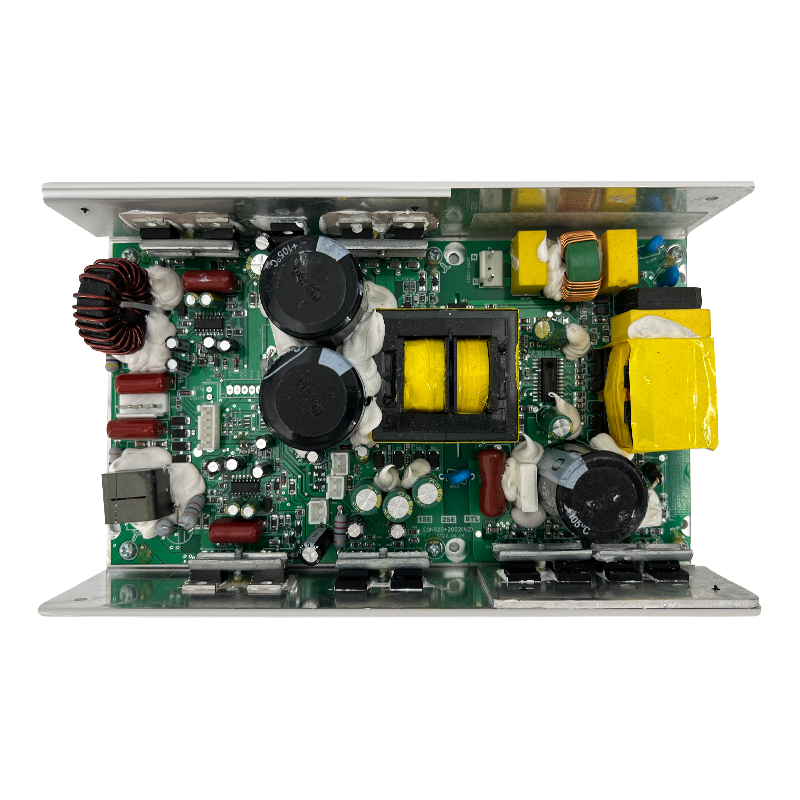
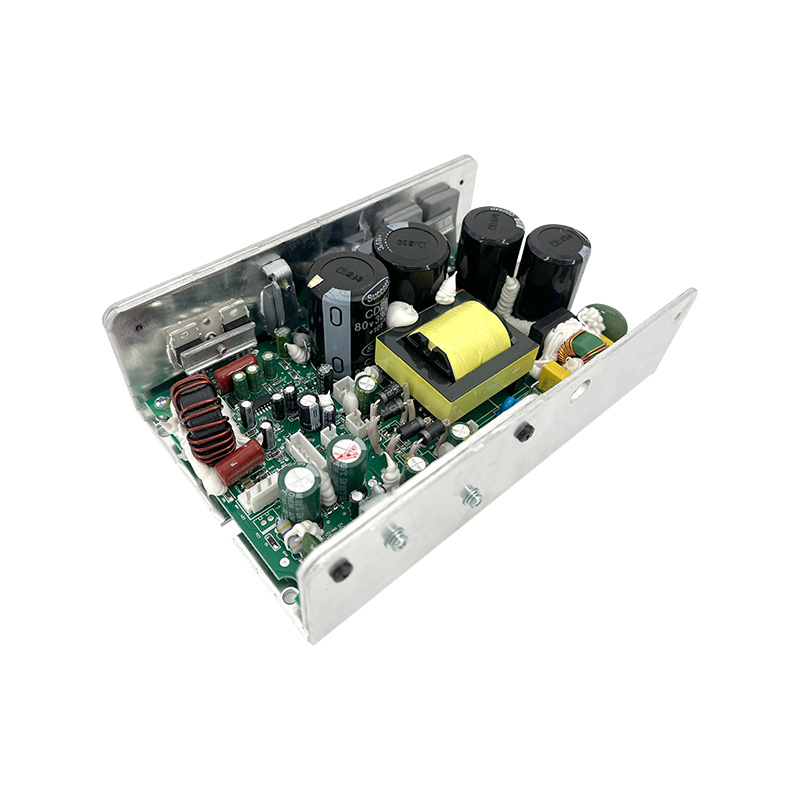
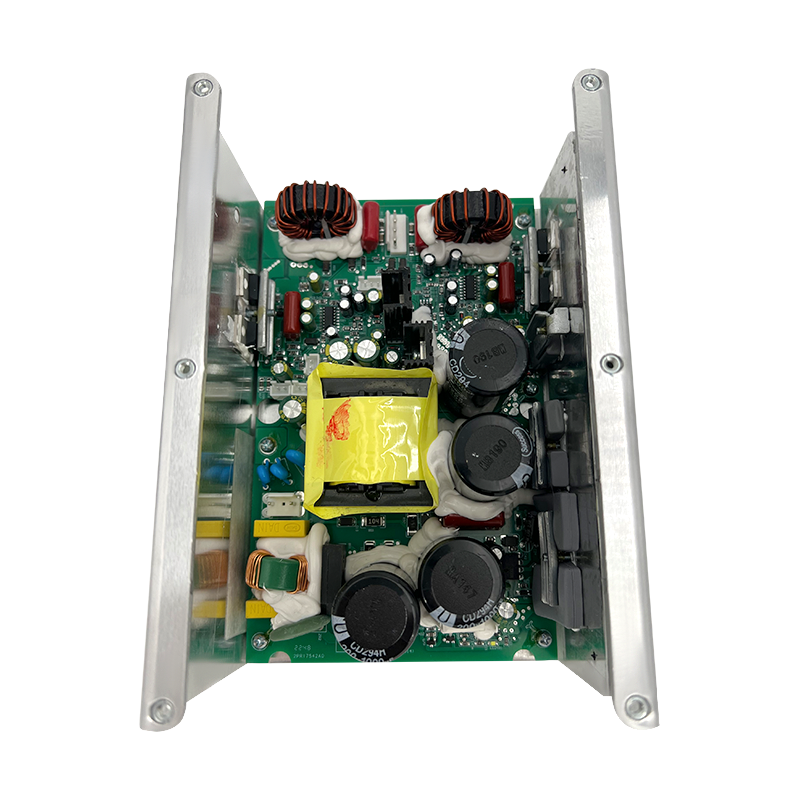
Ningbo Zhenhai Huage Electronics Co., Ltd. is a professional audio enterprise integrating research and development, production, and sales. As a dedicated Class AB Loudspeaker Amplifier manufacturer and factory, the company has spent many years focusing on the production of sound mixers, active power amplifiers, microphones, and related electronic components. The facility brings together professional design, production, and testing teams capable of supporting both standard catalog products and fully custom engineering programs.
The company specializes in custom Class AB Loudspeaker Amplifier development and other audio products, operating under a consistent business policy of quality products, reliable service, and strong reputation. Over the years, Huage Electronics has established long-term cooperative relationships with companies across domestic and international markets, providing OEM services for a range of well-known audio brands worldwide. Customers across all sectors — from installation audio to professional sound reinforcement — are welcome to visit the facility, discuss technical requirements, and explore partnership opportunities.
For OEM buyers, system integrators, or audio brands seeking a stable and capable manufacturing partner for analog audio amplifier production, Huage Electronics offers the technical depth and production infrastructure to support demanding specifications — from prototype through volume production.
Frequently Asked Questions About Class AB Amplifiers
Q1: Is a Class AB amplifier good or bad for audio quality?
Class AB is widely regarded as one of the best-sounding amplifier topologies available. Its low harmonic distortion, continuous analog signal path, and absence of switching artifacts make it a strong choice for demanding audio applications. The "bad" reputation it sometimes receives relates to heat generation and efficiency — characteristics that are manageable with proper design and not relevant to sound quality itself.
Q2: Is Class AB amplifier technology outdated in 2026?
No. Class AB remains in active production and widespread use across professional audio, Hi-Fi, broadcast, and installation markets. While Class D has gained ground in specific niches, Class AB has not been displaced in applications where sound quality is the primary metric. Many professional audio manufacturers continue to release new Class AB designs because the topology consistently delivers the sonic performance their customers require.
Q3: Why does a Class AB amplifier waste power?
The power "waste" in Class AB comes from the quiescent (idle) bias current that flows through both output transistors at all times to prevent crossover distortion. This is not truly wasted — it is the deliberate engineering choice that produces low distortion. At rated output power, efficiency improves substantially. The heat produced is a measurable consequence of this design decision, not a manufacturing defect.
Q4: Can a Class AB amplifier be used in car audio?
Yes, Class AB amplifiers can be and are used in car audio systems, particularly for mid-range and full-range speaker applications where sound quality is prioritized over amplifier footprint. However, the lower efficiency compared to Class D means higher current draw from the vehicle's electrical system, which must be factored into the system design. Many high-end car audio enthusiasts specifically choose Class AB for its sonic character.
Q5: What is the typical THD of a good Class AB amplifier?
A well-designed Class AB audio amplifier typically achieves THD figures between 0.002% and 0.05% at rated output across the 20 Hz–20 kHz band. High-performance designs can reach below 0.001% at mid-frequencies. These figures are generally below the threshold of audibility for most listeners, making THD a less practically significant differentiator than other parameters such as noise floor, IMD, and output impedance at frequency.
Q6: What should I look for when selecting a Class AB loudspeaker amplifier?
Key factors include rated continuous output power at your speaker's impedance, THD+N at rated output, signal-to-noise ratio, damping factor (higher is generally better for woofer control), input sensitivity matching your source, protection circuitry (thermal, short circuit, DC fault), and build quality of the power supply and output stage. For OEM or system integration applications, also consider the manufacturer's ability to support custom specifications and long-term production consistency.