English
 Español
 中文简体

Home / News / Industry News / Class B Amp Explained: Efficiency, Crossover Distortion and Module Choices
A 100 W Class B amp sitting at idle draws almost nothing and barely warms its heatsink. Feed the same circuit into a 4 ohm speaker and run it at one watt, and a notch appears right where the waveform crosses zero. Efficiency is the easy part of this topology; linearity around the zero crossing is what decides whether it belongs in a finished audio product.
Here is the conclusion first: for audio equipment, pure Class B is rarely the right final answer. It is the reference point every other amplifier class is measured against, and it is the reason Class AB exists at all. If you are specifying an amplifier module for a powered speaker, a subwoofer or a portable system, understanding Class B tells you exactly which trade-offs you are paying for — and which specifications to demand from a supplier.
Content
- 1 What a Class B Amp Really Is
- 2 Class B Against Class A, Class AB and Class D
- 3 Crossover Distortion: The Real Cost of That Efficiency
- 4 Where Class B Still Makes Sense
- 5 Choosing an Amplifier Module: Specs That Decide the Purchase
- 6 Frequently Asked Questions
- 6.1 What is a Class B amplifier used for?
- 6.2 What is the difference between Class A, Class B and Class AB amplifiers?
- 6.3 Why does a Class B amplifier produce crossover distortion?
- 6.4 What is the maximum efficiency of a Class B amplifier?
- 6.5 Can a Class B amplifier module drive a subwoofer?
- 6.6 Is Class AB better than Class D for powered speakers?
What a Class B Amp Really Is
Industry amplifier references define Class B by its conduction angle. Two output devices share the work, and each one conducts for exactly half of the signal cycle — 180 degrees. One device pushes current into the load on the positive half, the other pulls current out on the negative half, and together they rebuild the full waveform at the output.
Because both devices sit at cutoff when no signal is present, there is almost no quiescent current and almost no idle heat. That single property is the appeal. The theoretical efficiency ceiling of an ideal Class B push-pull stage is pi/4, or roughly 78.5%, compared with about 25% for a Class A stage whose devices conduct through all 360 degrees.
The catch is that the two halves must meet precisely at zero volts. In real silicon they do not, and that mismatch defines the reputation of the class.
Class B Against Class A, Class AB and Class D
Efficiency alone does not decide which amplifier class belongs in a product. Idle current, distortion behaviour and thermal design matter just as much — and the table below shows where Class B actually sits.
| Class | Conduction angle | Efficiency | Idle current | Distortion behaviour | Common use |
|---|---|---|---|---|---|
| Class A | 360 degrees | About 25% | Very high | Lowest and smoothest | Low-power hi-fi, preamp stages |
| Class B | 180 degrees | Up to about 78.5% | Near zero | Crossover notch at low levels | RF transmitters, battery gear, legacy designs |
| Class AB | Just over 180 degrees | 50% to 70% in practice | Low | Low; crossover largely removed | Powered speakers, pro audio, subwoofers |
| Class D | Switching | Above 90% typical | Very low | Low with a well-designed filter | Portable speakers, PA, subwoofer modules |
Two patterns stand out. Class B wins on idle current, because unbiased output devices draw almost nothing until a signal arrives — which is why the topology survives in battery-powered products and RF transmitters. It loses on linearity exactly where small signals live, and that is the quiet listening range that dominates real-world use.
Crossover Distortion: The Real Cost of That Efficiency
At the zero crossing, both output devices are close to cutoff at the same instant. Gain collapses briefly, the transfer curve flattens, and the output waveform picks up a notch. On a spectrum analyser that notch appears as a spray of high-order harmonics — the gritty edge listeners describe as harsh or transistorised. It is worst at low output levels, where the notch is a large fraction of the signal, and it fades into the background once the amplifier is driven hard.
Three fixes exist. Bias the output devices slightly into conduction so they never fully switch off, which is precisely what turns a Class B stage into Class AB. Apply enough negative feedback to linearise the crossover region. Or leave the linear topology behind and switch to Class D with a well-designed output filter. The first option shaped modern audio hardware: most speaker amplifiers sold as Class B push-pull audio stages are in fact running a small bias current.
Once the output stage is biased correctly, the sound character of the finished product is decided by the analogue front end in front of it — tone controls, graphic EQ, microphone mixing and limiting — which is where a design analysed in this Class AB amplifier design analysis usually earns or loses its reputation.
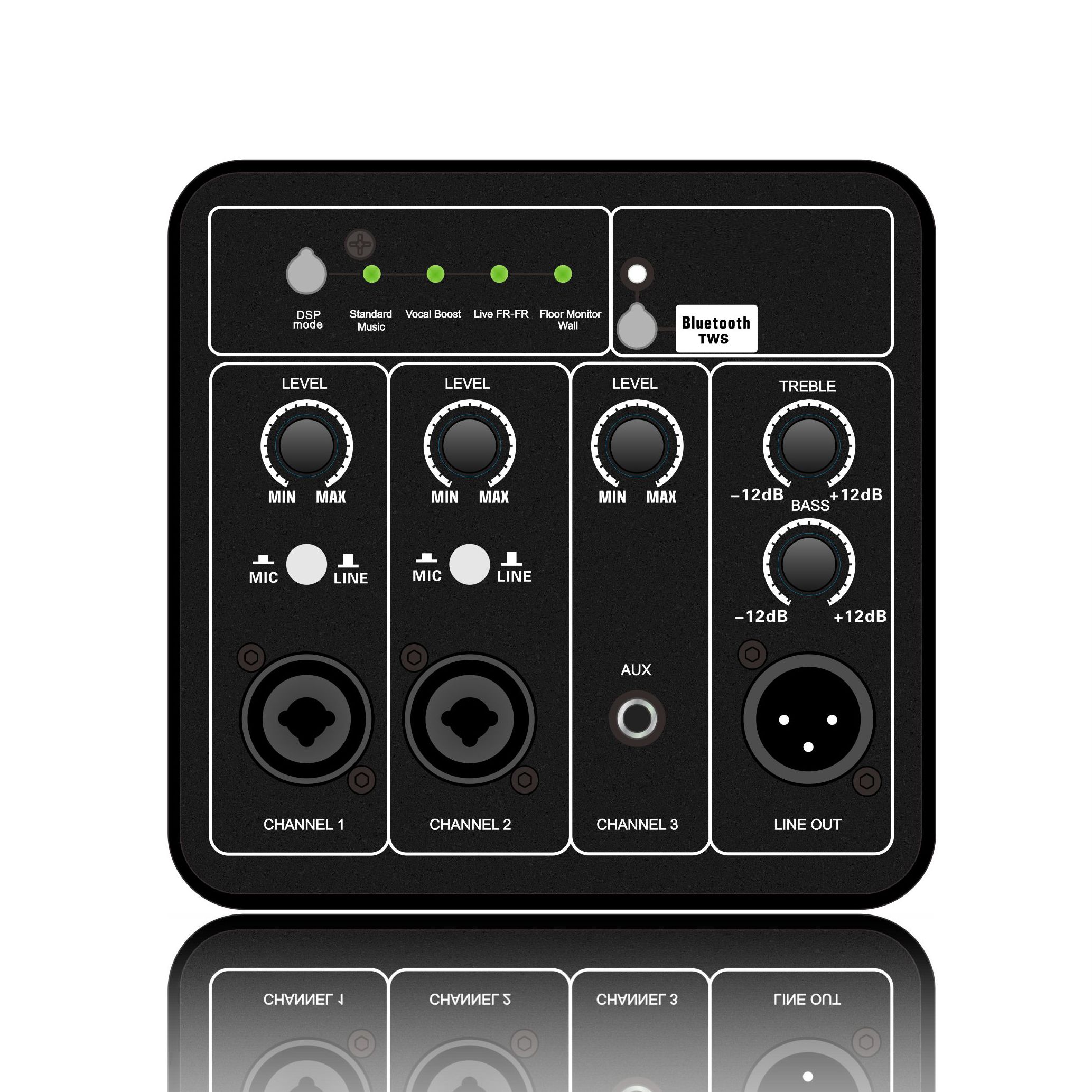
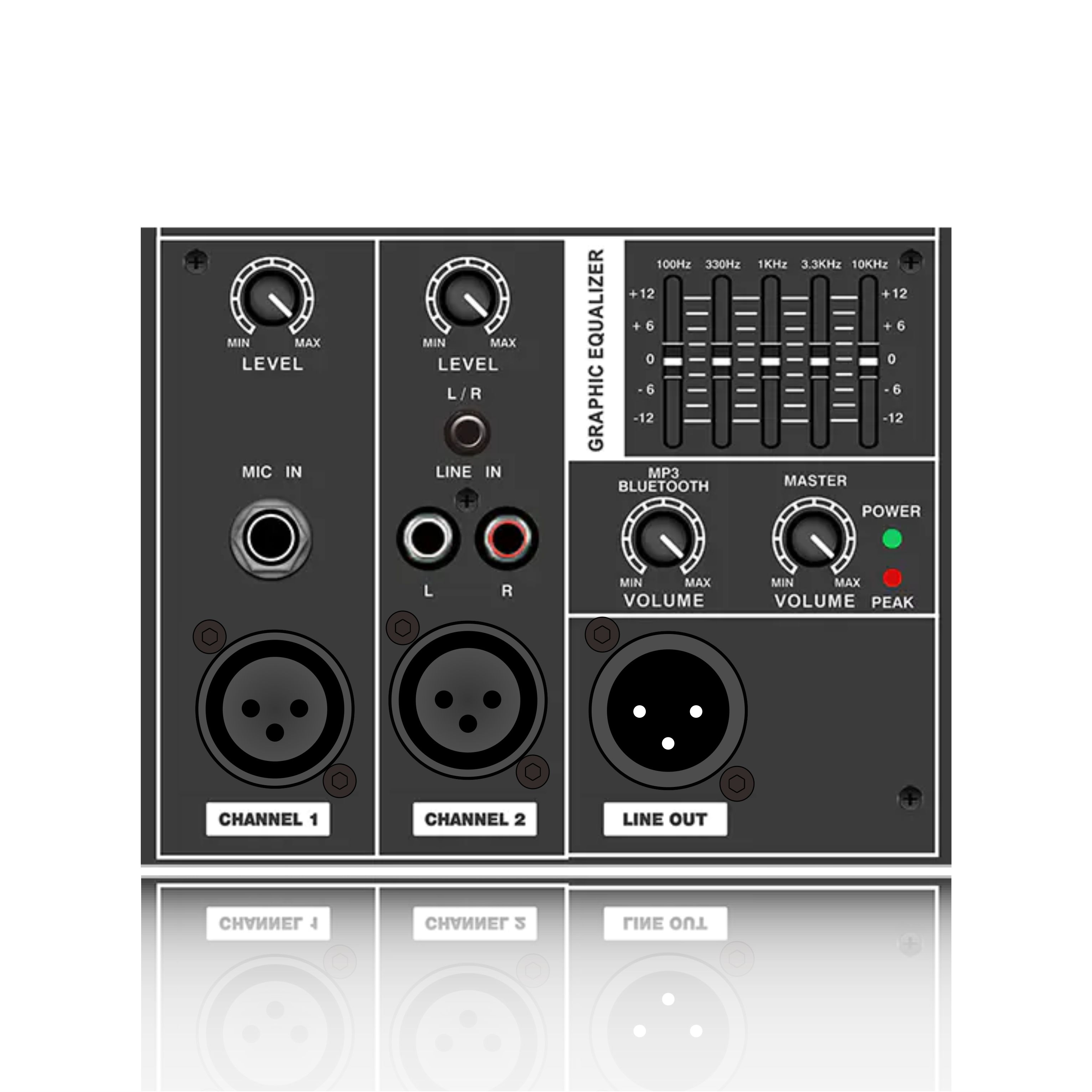
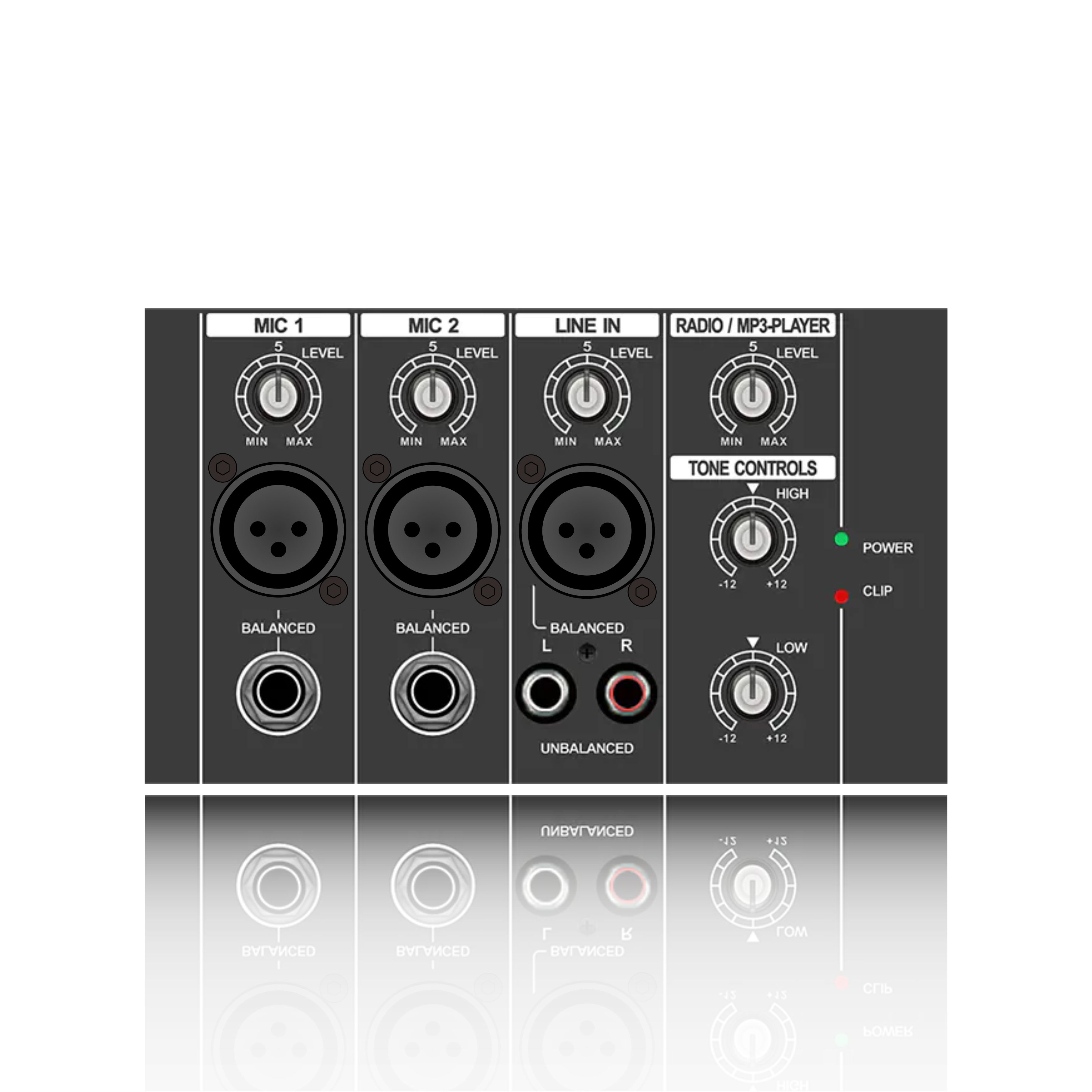 PL1 Horizontal Treble and Bass EQ Module for Class AB AmplifiersHorizontal analog module adds treble/bass EQ, mic and line inputs, volume controls, and clip indication to Class AB amplifier front ends.View Product →
Where Class B Still Makes Sense
Pure Class B is not obsolete, only specialised. It remains common in RF power amplification, where transmitters and constant-envelope signals tolerate the nonlinearity, and in battery-powered equipment where near-zero quiescent current translates directly into runtime. It also survives in cost-sensitive designs where a modest amount of crossover distortion is an acceptable price for a smaller, cooler output stage.
- RF and constant-envelope transmission, where the class B and class C stages in a transmitter are standard practice.
- Battery-powered devices, where standby and idle consumption decide how long the product runs.
- Legacy or low-cost platforms where the alternative is a physically larger and hotter Class A stage.
For anything that reproduces music at low levels — desktop speakers, studio monitors, home audio — the distortion penalty outweighs the efficiency gain, and Class AB remains the mainstream answer. High-power professional systems take a different route entirely: Class H modules that modulate the supply rail to follow the signal, keeping the voltage drop across the output devices small while preserving linear operation.
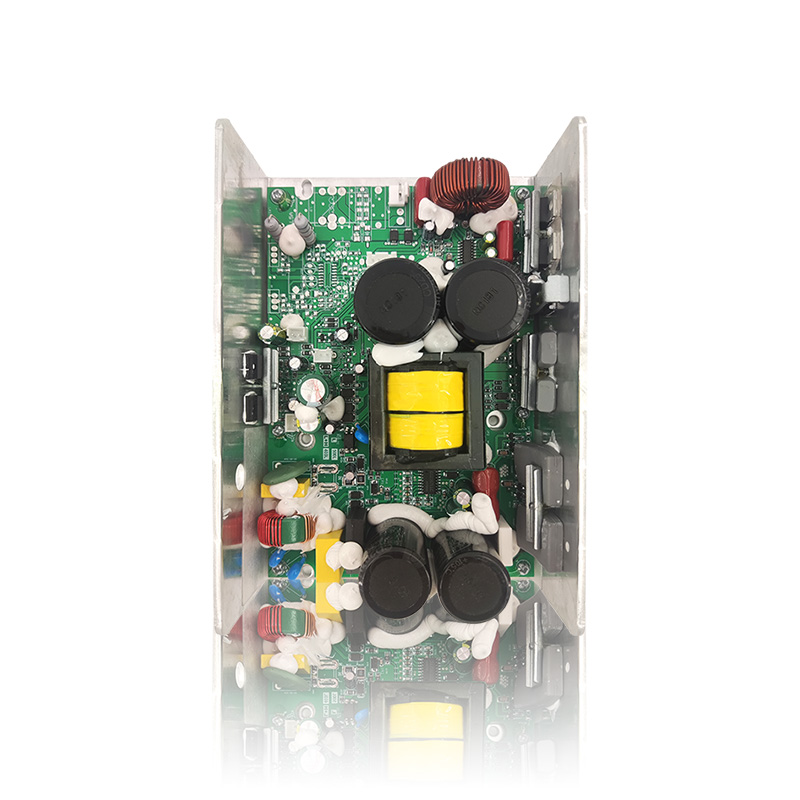
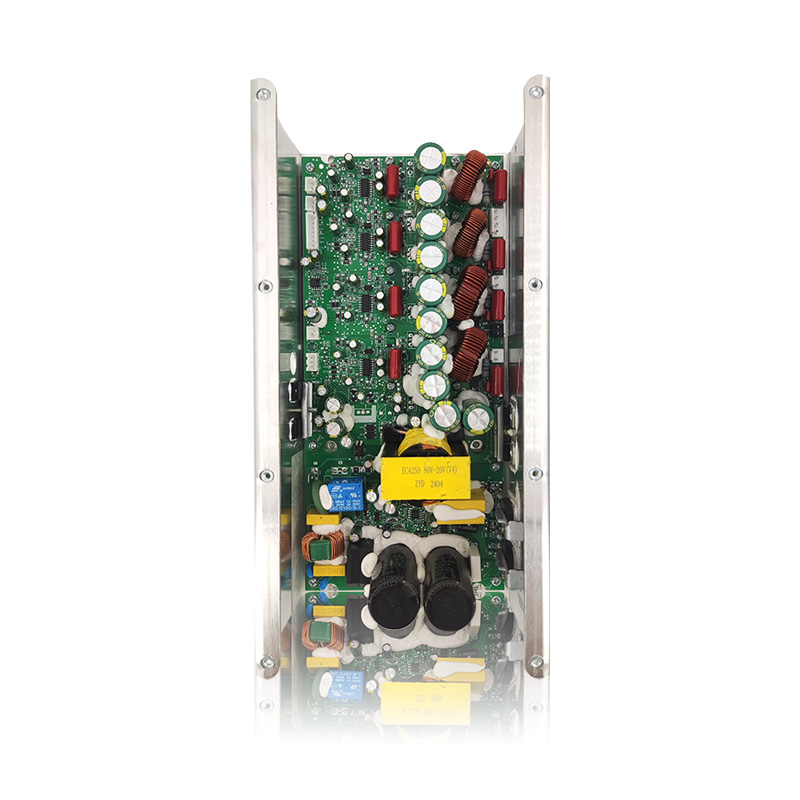
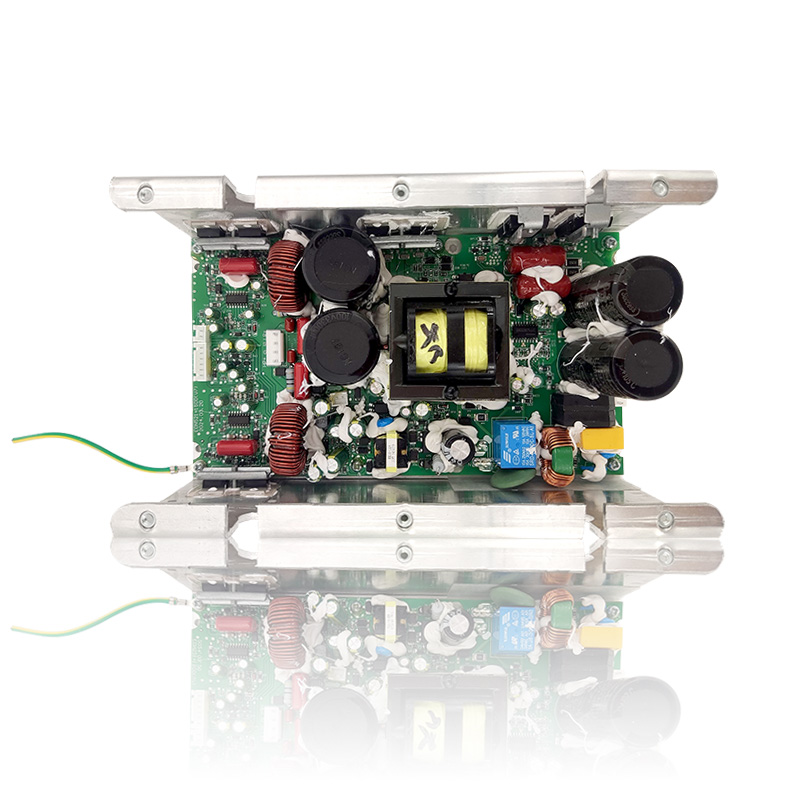
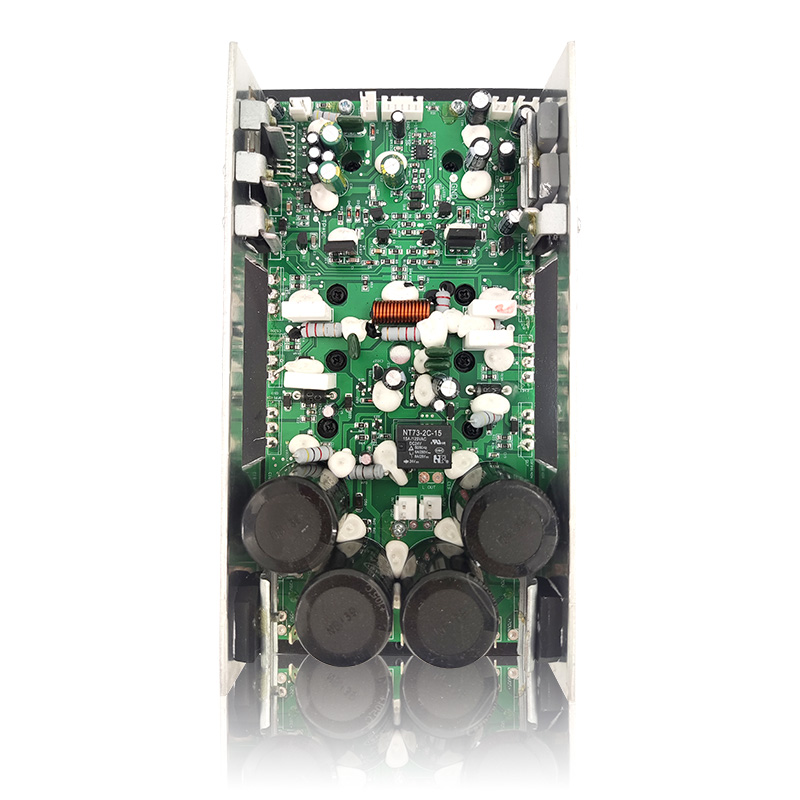 AMP400H+7294 Class H Power Amplifier Module with U-Shaped RadiatorClass H module delivers 400 W into 4 Ohm, 100 W Class AB into 8 Ohm, with U-shaped aluminum radiator and protection.View Product →
Choosing an Amplifier Module: Specs That Decide the Purchase
For anyone specifying a module rather than designing a discrete stage, the checklist below is what separates a smooth integration from a redesign six weeks later.
- Rated power at a stated impedance. A 500 W figure means nothing without the load, because 500 W into 4 ohm draws twice the current of 500 W into 8 ohm and changes both heatsink and protection requirements.
- Supply topology. Linear transformer supplies are simple and robust; switching supplies with PFC and LLC resonance are lighter and tolerate a wider mains range.
- Continuous versus peak rating. Check the thermal rating rather than the marketing peak, and confirm what the heatsink is doing — a U-shaped aluminium radiator carries real load in a high-power module.
- Protection circuits. Over-current, overload, DC offset and thermal shutdown protect both the module and the loudspeaker, while a limit circuit stops the front end driving the output stage into hard clipping.
- Front-end functions. Graphic EQ, microphone priority, echo and output-mode switching determine how much extra board area and wiring you need around the amplifier.
- Manufacturing evidence. An SMT line and an acoustic test room tell you whether a supplier can hold tolerances across production batches, not just on the first sample.
Because these choices shift from product to product, most module projects need some level of adaptation — supply voltage, connector placement, EQ presets or output mode. A supplier with an established module customisation process will usually shorten that loop considerably.
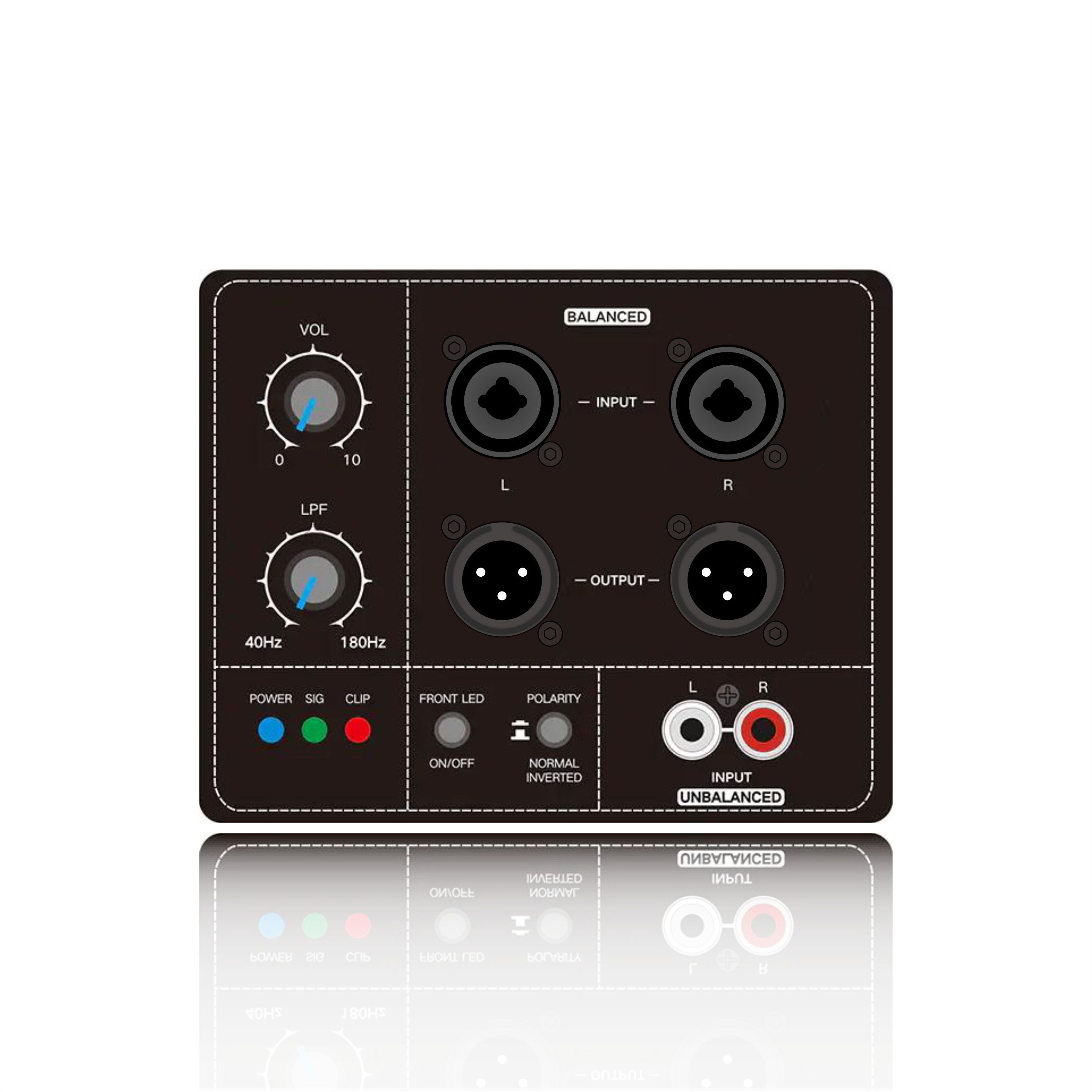
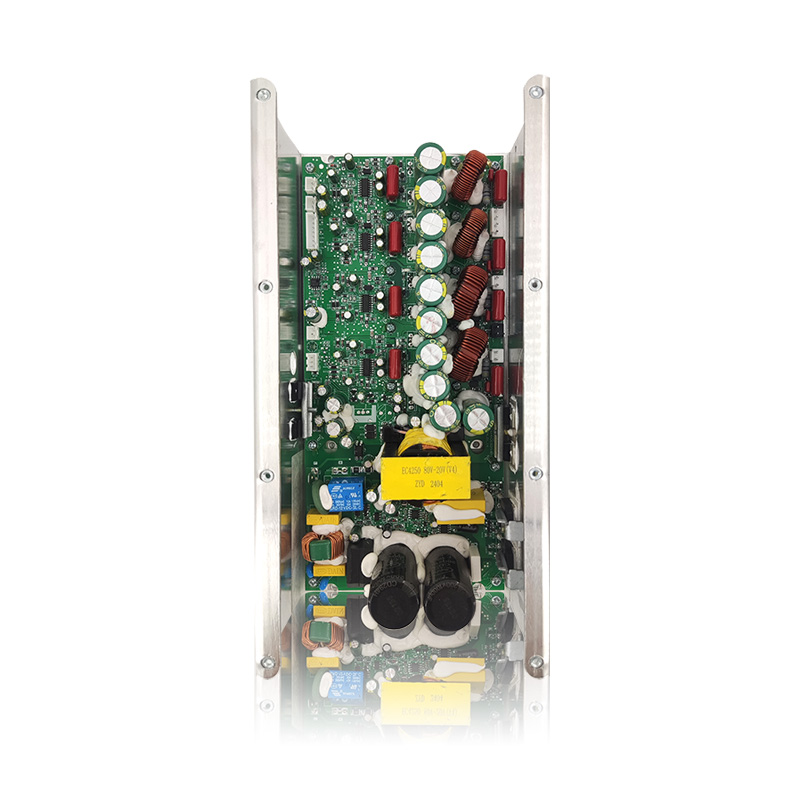
 PL21 / PL21E Vertical 5-Band Graphic Equalizer and Limit Protection ModuleVertical audio module offers 5-band graphic EQ, limit protection, balanced mic/line inputs, XLR output, volume controls, and PL21E microphone echo.View Product →
Frequently Asked Questions
What is a Class B amplifier used for?
Pure Class B stages appear mainly in RF power amplifiers, battery-powered equipment and cost-driven designs where idle current matters more than a small amount of crossover distortion. In audio products, the same push-pull idea is almost always implemented as Class AB.
What is the difference between Class A, Class B and Class AB amplifiers?
The difference is conduction angle. Class A devices conduct through all 360 degrees and idle hot, Class B devices conduct 180 degrees each and idle cold, and Class AB conducts slightly more than 180 degrees with a small bias current that removes most crossover distortion.
Why does a Class B amplifier produce crossover distortion?
Around zero volts both output devices are near cutoff, so gain momentarily drops and the waveform flattens into a notch. That notch generates high-order harmonics and is most audible at low output levels.
What is the maximum efficiency of a Class B amplifier?
The theoretical maximum is pi/4, roughly 78.5%, for an ideal push-pull stage. Real amplifiers fall below that because of supply losses, device saturation voltage and the bias current used in practical designs.
Can a Class B amplifier module drive a subwoofer?
It can deliver the current, but the crossover notch and thermal stress make it a poor match for subwoofer duty. Most powered subwoofer modules use Class D or Class H output stages with a DSP front end for filtering and limiting.
Is Class AB better than Class D for powered speakers?
Neither is universally better. Class AB offers linear behaviour and simple EMC performance, while Class D runs cooler and lighter at high output. The decision usually comes down to thermal budget, weight targets and how much processing the design already includes.
Class B is best treated as a boundary rather than a destination. It defines the efficiency limit that linear audio amplifiers can approach — about 78.5% in theory — and it marks the point where crossover distortion becomes the dominant design problem. For speaker and powered-module products, the practical answer is almost always a Class AB front end built on the same push-pull idea, or a move to Class D where efficiency and size matter more than the last fraction of linearity. Knowing which side of that line your product sits on is the whole specification exercise.