English
 Español
 中文简体
中文简体
Home / News / Industry News / Class D vs Class AB Amplifiers: Efficiency, Sound Quality, and Real-World Tradeoffs
An audio brand is weighing two amplifier platforms for its next powered loudspeaker: a 500 W Class D module with a switching power supply, and a 300 W Class AB module built around a linear transformer. The Class D board weighs about a third as much, runs cool enough to mount without a large heat sink, and draws very little current at idle. The Class AB board keeps a simpler analog signal path, is easy to service in the field, and clips in a predictable, forgiving way. Which platform is the right one?
Here is the practical answer: for battery-powered speakers, compact PA cabinets, line arrays, and subwoofer duty, Class D has become the natural default. For conventional analog PA amplifiers, OEM builds where serviceability matters, and designs that intend to keep a classic discrete output stage, Class AB still earns its place. The sound quality gap that once separated them has narrowed to the point where the decision is driven by power supply, heat, packaging, and system cost.
Content
- 1 How Class AB and Class D Amplifiers Work
- 2 Class AB vs Class D: Side-by-Side Engineering Comparison
- 3 Efficiency and Heat: Where the Two Classes Separate Most
- 4 Sound Quality: Has the Gap Really Closed?
- 5 Choosing the Right Amplifier Class for Your Build
- 6 Frequently Asked Questions
- 6.1 Which is better: Class D or Class AB?
- 6.2 Are Class D amplifiers as good as Class AB for sound quality?
- 6.3 What does Class AB mean in an amplifier?
- 6.4 How efficient is a Class D amplifier compared with Class AB?
- 6.5 Is a Class D amplifier good for a subwoofer?
- 6.6 Why do some people prefer Class AB amplifiers?
How Class AB and Class D Amplifiers Work
Class AB is a linear amplifier. A push-pull pair of output transistors conducts through the crossover region, and a small bias current prevents the discontinuity that appears in Class B. Because the output stage regulates voltage continuously, efficiency is limited, and the heat sink normally dominates the mechanical design.
Class D is not inherently digital. The audio signal is converted into a high-frequency pulse-width modulated square wave, usually at several hundred kilohertz, and power MOSFETs are switched fully on and fully off. An LC low-pass filter removes the switching carrier and restores the music signal. Because the transistors spend almost no time in their linear region, conduction losses stay very small.
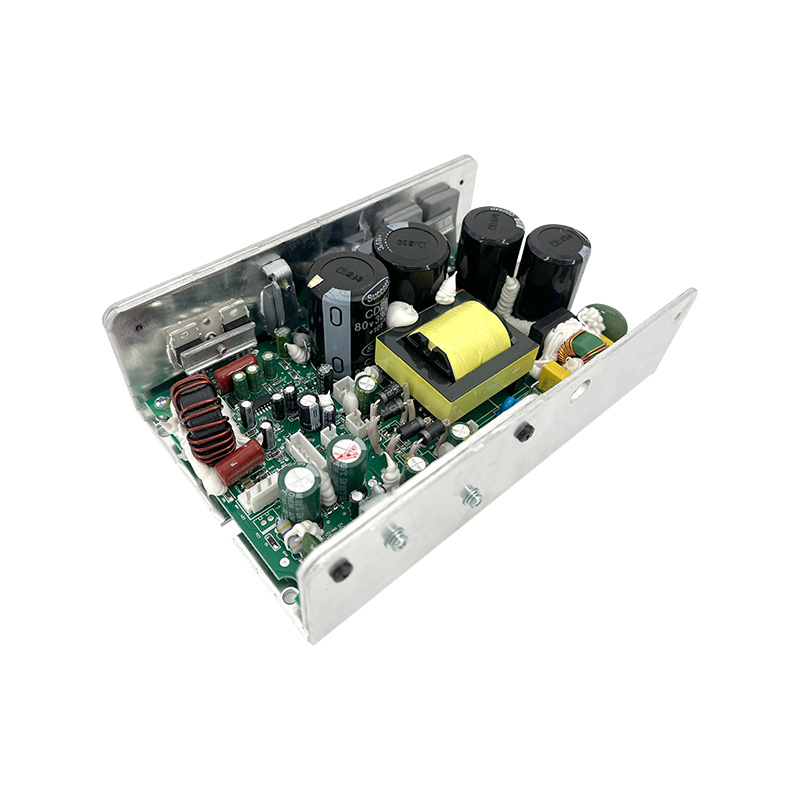
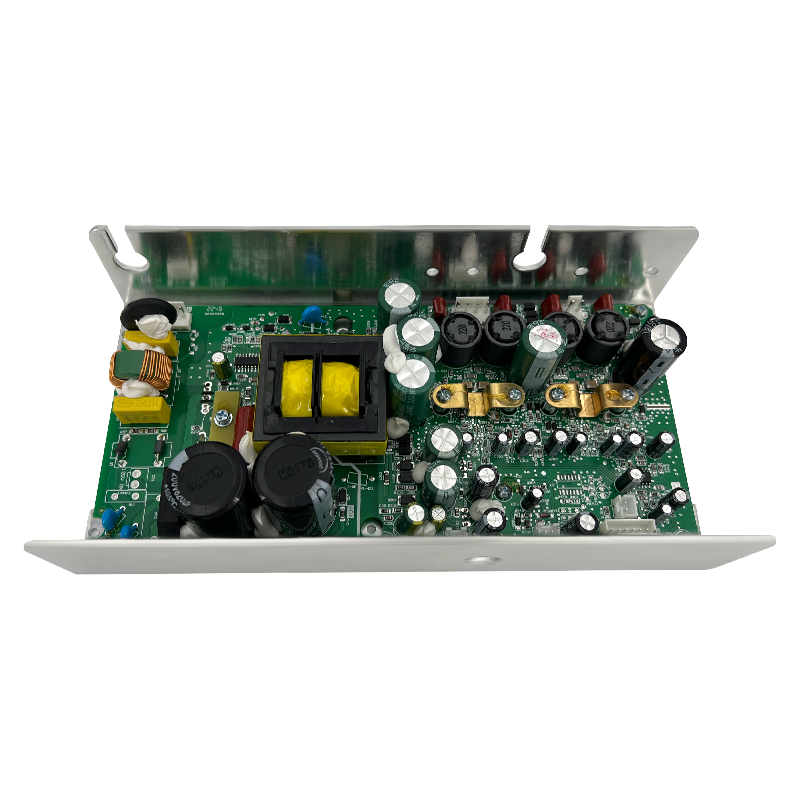
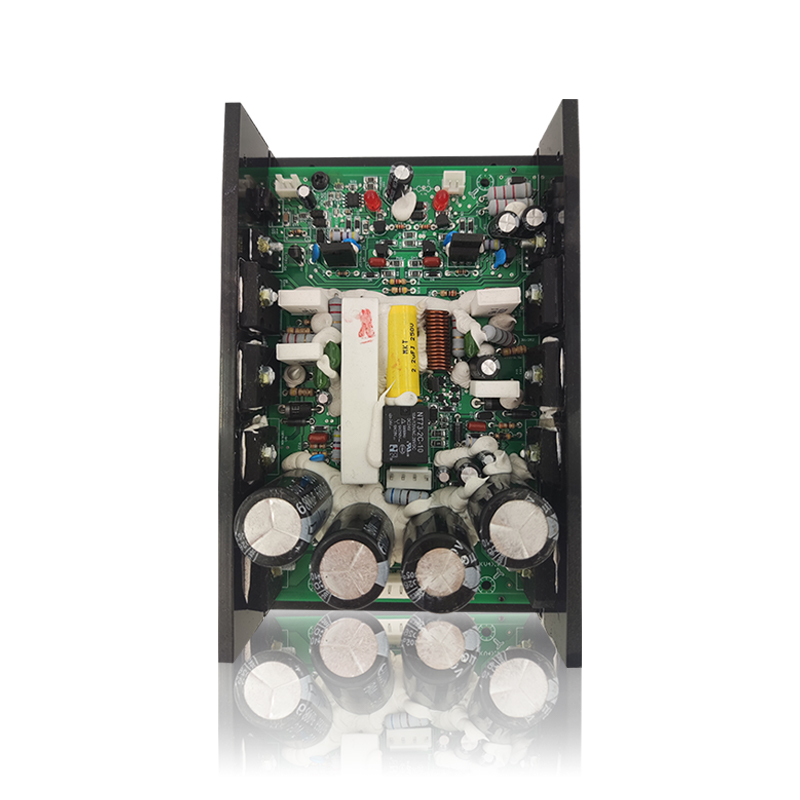
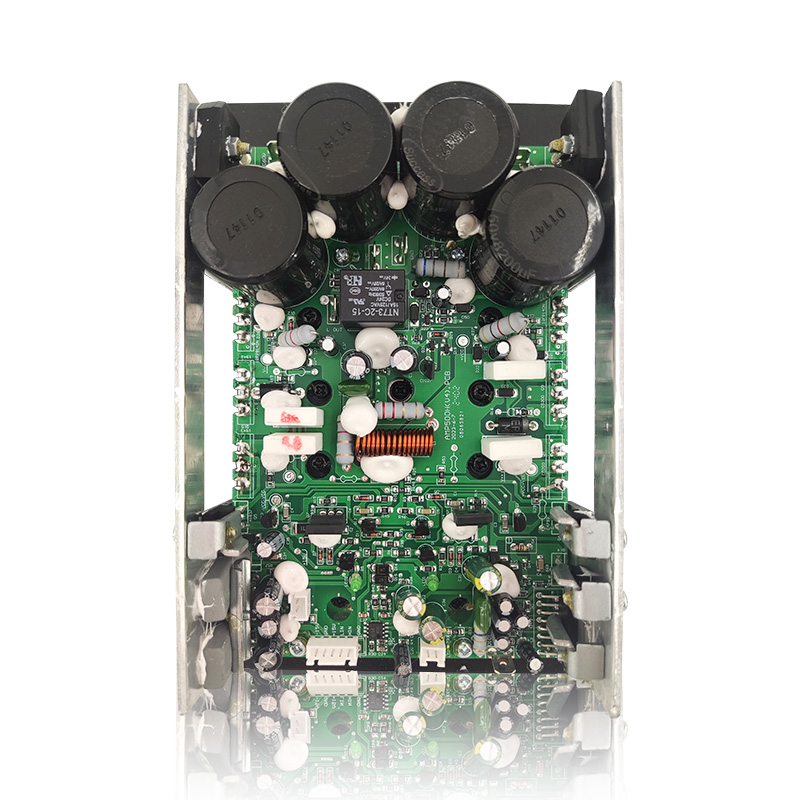
Isometric illustration of a typical module-level architecture for each amplifier class.
The two topologies change everything downstream: power supply, heat sink, cabinet volume, and even the protection strategy.
Class AB vs Class D: Side-by-Side Engineering Comparison
The table below summarizes the parameters that matter when you are specifying an amplifier module for a real product: efficiency, heat, power supply, size, distortion, and serviceability.
| Parameter | Class AB | Class D |
|---|---|---|
| Typical efficiency | 50–65% | 80–92% |
| Idle power loss | Moderate (bias current) | Very low |
| Heat generation | High; large heat sink required | Low; small or no heat sink |
| Size and weight | Transformer and heat sink add bulk | Compact SMPS, light chassis |
| Power supply | Linear transformer typical | Switching PSU, PFC/LLC common |
| THD (typical 1 kHz) | 0.01–0.1% | 0.05–0.3% (design-dependent) |
| EMI and RF emissions | Low | Needs careful layout and filtering |
| Output power scaling | Becomes large and heavy above 500 W | Compact even at 1000 W and beyond |
| Serviceability | Simple, standard parts | SMD-based, harder field repair |
Efficiency and Heat: Where the Two Classes Separate Most
The largest measurable difference is efficiency. A Class AB output transistor behaves like a variable resistor between the supply rail and the speaker, so the voltage dropped across the device becomes heat. Typical published figures place Class AB between 50 and 65 percent, while Class D reaches 80 to 92 percent because the output devices are either fully on or fully off.
Typical published efficiency figures referenced in audio amplifier literature.
The effect on heat becomes obvious when both amplifiers deliver the same output power. Class AB dissipation peaks between about 40 and 70 percent of full power, exactly where music and speech spend most of their time. Class D dissipation stays low across the entire operating range, which is why a 500 W Class D module can use a much smaller heat sink than a 500 W Class AB module.
For active line arrays with multiple 500 W amplifiers in one rack or cabinet, the difference translates into smaller transformers, lighter cabinets, and lower air-conditioning load in touring systems.
Sound Quality: Has the Gap Really Closed?
Measured performance says yes for well-designed units. Modern high-end Class D modules with post-filter feedback record noise and distortion figures that are comparable to, or better than, typical Class AB amplifiers. Independent amplifier measurements consistently show that topology alone no longer predicts sound quality.
What still differs is behavior under load. Class AB is linear, so its distortion profile is dominated by low-order harmonics that many listeners find natural. Class D interacts with the speaker through its output filter; a poorly designed filter can introduce harshness, while a well-designed one is audibly transparent. The class label does not guarantee the result, the engineering does.
For midrange, treble, and full-range studio monitors, the linear load behavior of Class AB is a genuine advantage. For subwoofers, where the driver load is simpler and power reserves matter more, Class D is often the better system-level choice.
Choosing the Right Amplifier Class for Your Build
Class D: High Output, Tight Spaces, and Battery Operation
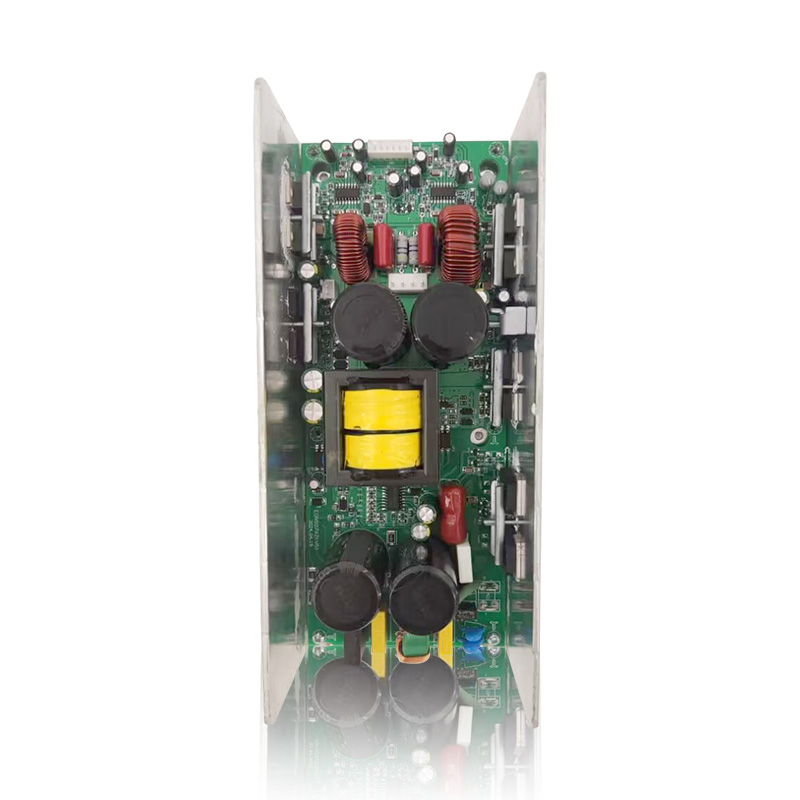
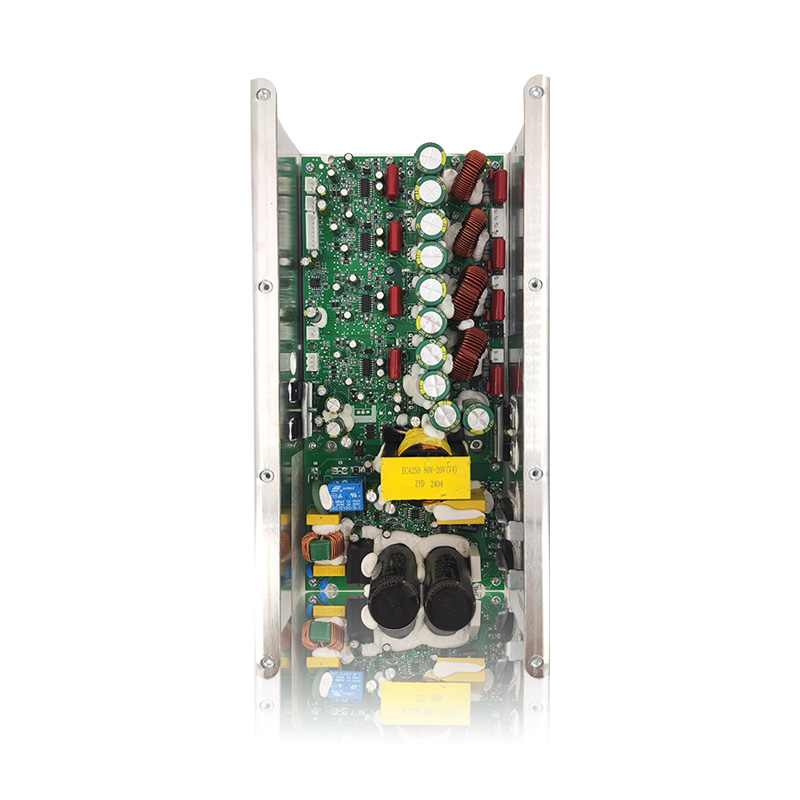
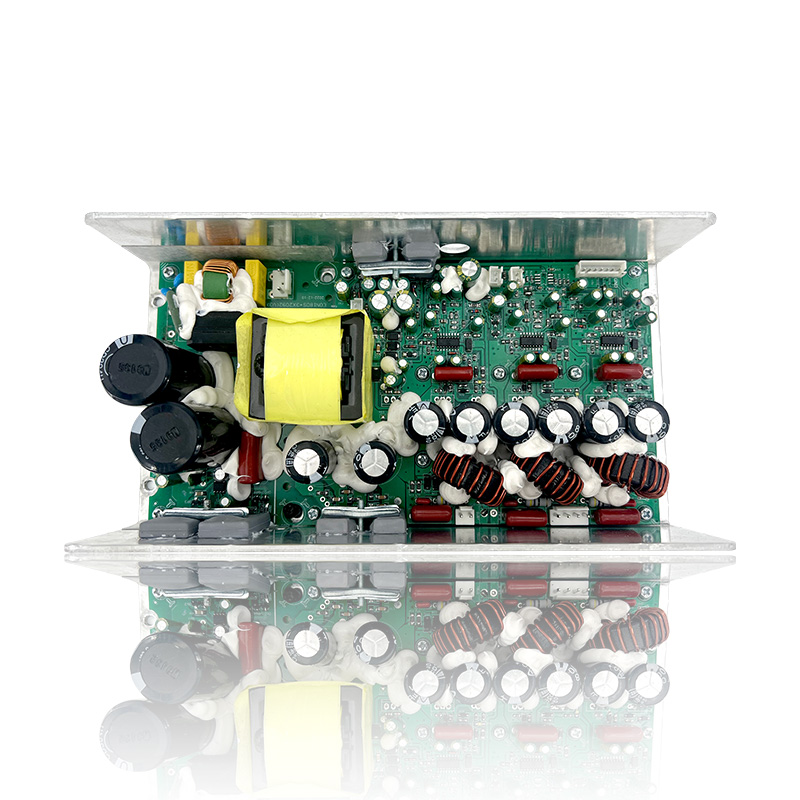
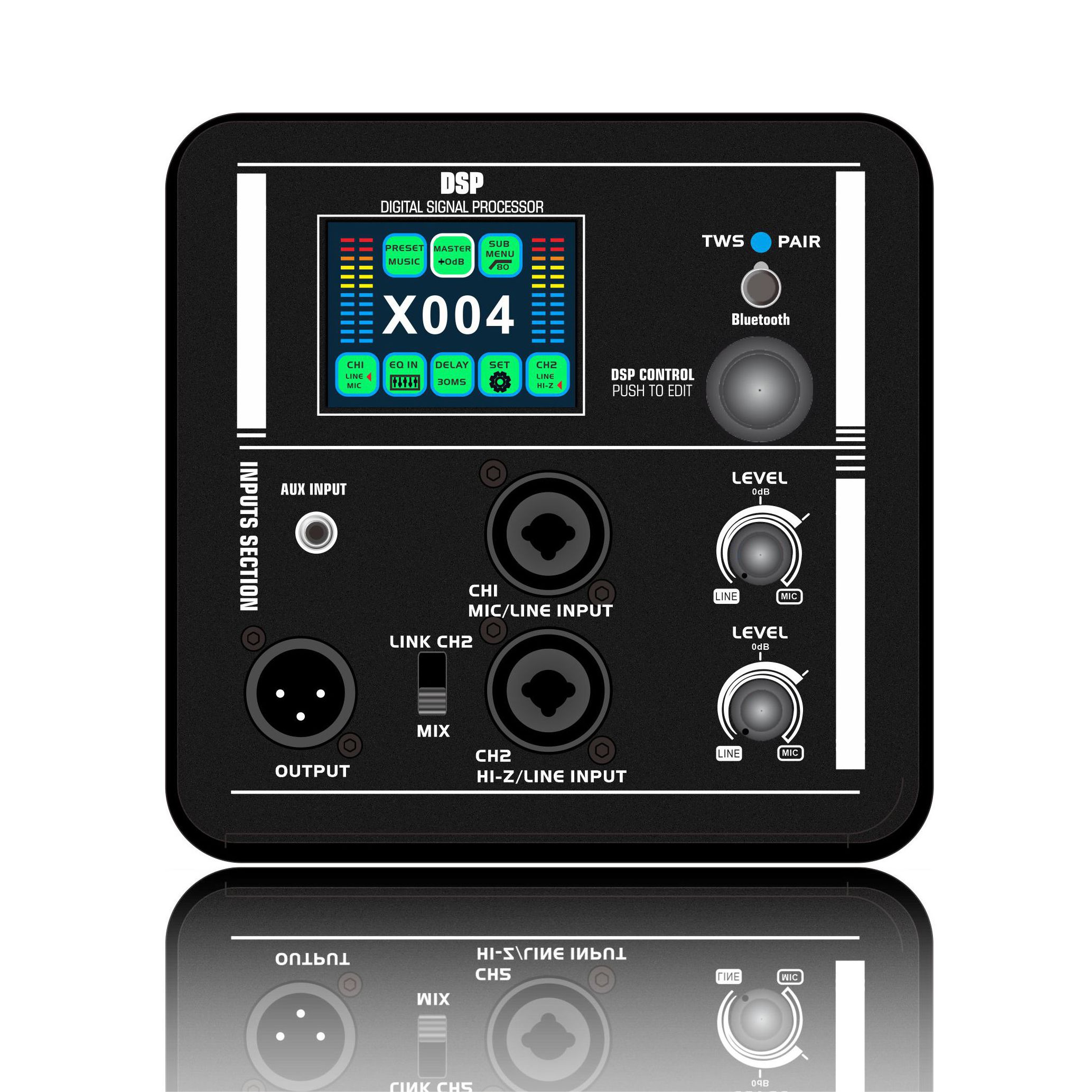
If the product is a powered subwoofer, a line array cabinet, a column speaker, or a battery-powered portable speaker, Class D is usually the first choice. The combination of a switching power supply and PWM output stage keeps the amplifier compact enough to integrate into the cabinet itself. In our own OEM work for PA brands, a module such as the eon522d-2092 Class D power amplifier module, rated at 500 W plus 200 W with an LLC resonant supply, has become the default starting point for two-way active speakers.
 Wholesale EON522SUB: LP 500W/4ohm LLC Resonant Active Subwoofer Power Amplifier As China EON522SUB: LP 500W/4ohm LLC Resonant Active Subwoofer Power Amplifier Module suppliers and company, Zhenhai Huage professional w...View Product →
Before locking in the design, confirm that the module's rated output matches your drivers; amplifier module impedance compatibility varies with topology and power supply design and directly affects maximum output and thermal behavior.
Class AB and Class H: Analog Simplicity and Field Service
For conventional PA amplifiers where technicians expect to repair with soldering irons and standard parts, Class AB remains attractive. Class H adds a tracking voltage rail to the classic AB topology, which raises efficiency while preserving the analog signal path. A module such as the amp300h-7294 Class H amplifier module, delivering 300 W plus 50 W from a linear transformer supply, shows how far traditional designs can go without a switching power stage.
Class AB also has an advantage in low-cost, low-complexity products: a linear supply is easier to certify for electromagnetic compatibility, and the audible behavior under clipping is more forgiving.
Don't Forget the Front End
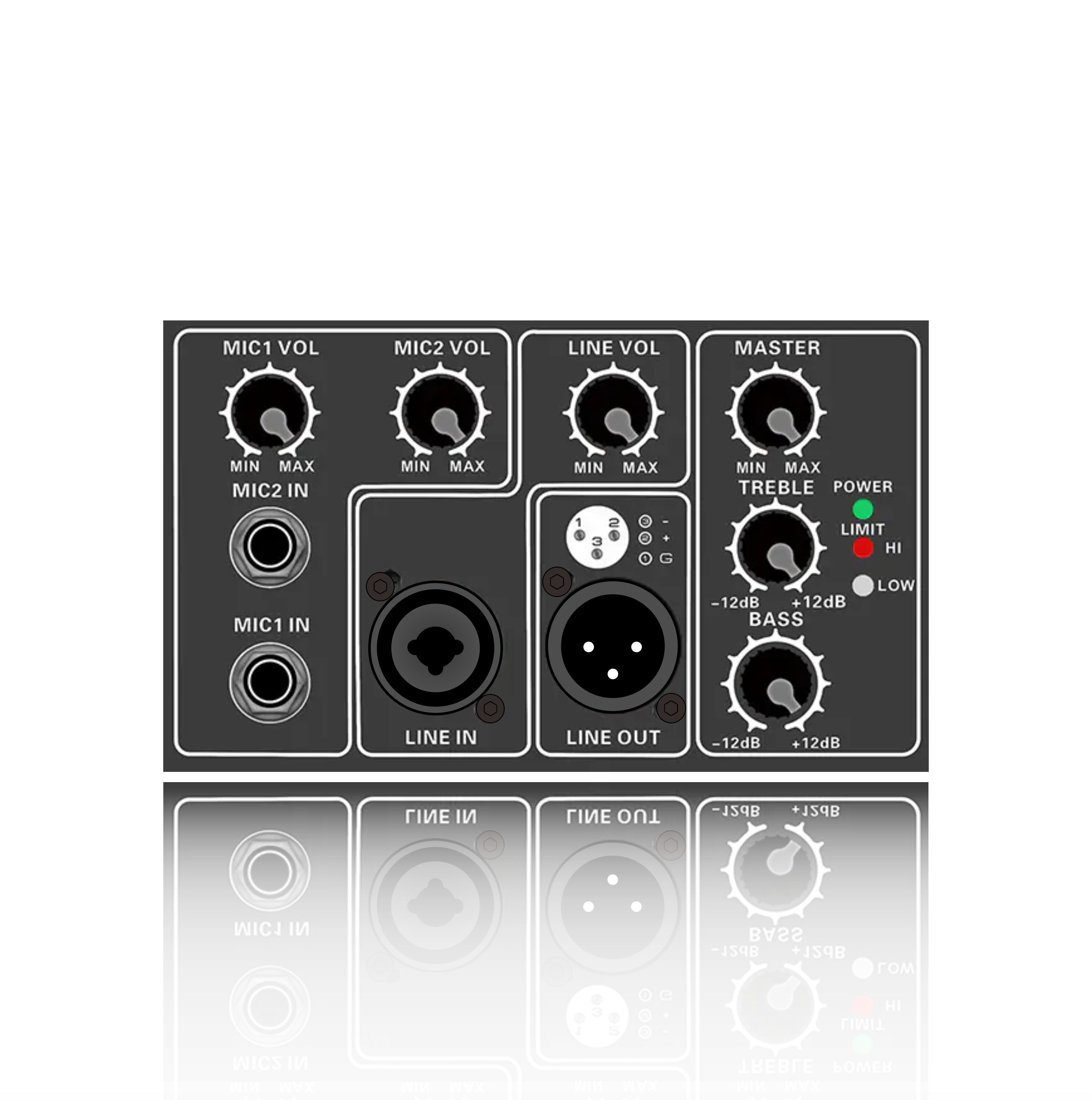
The amplifier class only describes the output stage. Tone control, microphone priority, equalization, and protection live in a separate front-end board. In an analog Class AB build, that front end is usually an analog function module; the PL1 analog function module for Class AB amplifiers adds treble and bass control while keeping the whole signal chain conventional and field-serviceable.
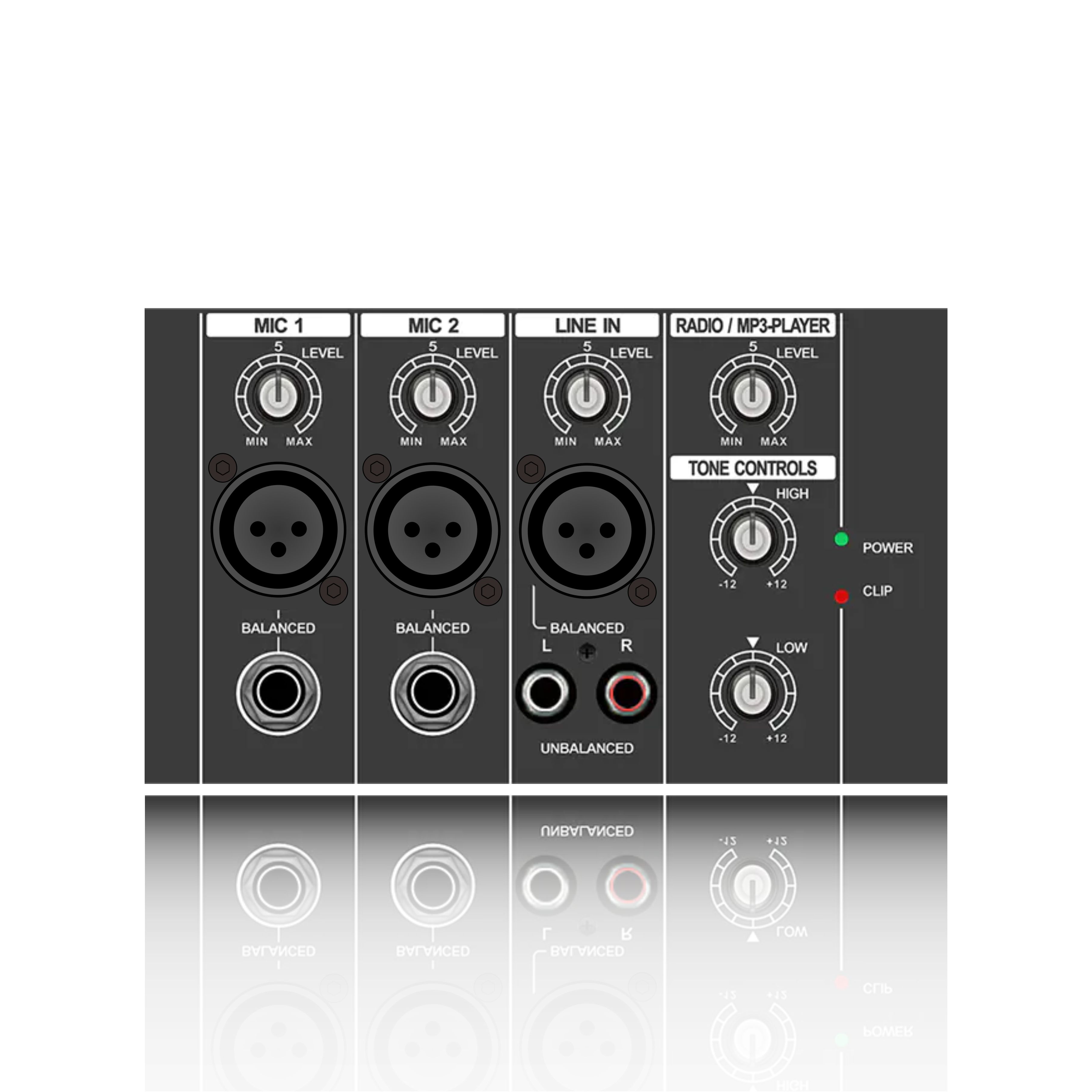 Wholesale PL1: Treble and Bass EQ Control Horizontal Analog Functinal Module forAs China PL1: Treble and Bass EQ Control Horizontal Analog Functinal Module for Class AB Amplifier suppliers and company, Zhenhai Huage p...View Product →
Define the speaker load, cooling budget, efficiency target, and service model first. The amplifier class follows from those decisions, not the other way around.
Frequently Asked Questions
Which is better: Class D or Class AB?
Each wins in different situations. Class D offers higher efficiency, less heat, and compact size, and it is excellent for subwoofers and high-power PA builds. Class AB gives you a simple linear circuit that is easy to service and is still favored for midrange and treble in many designs.
Are Class D amplifiers as good as Class AB for sound quality?
Modern Class D designs with good feedback and output filtering measure close to or better than many Class AB amplifiers in noise and distortion. At normal listening levels, most listeners cannot tell them apart; preference becomes a matter of system voicing and speaker matching.
What does Class AB mean in an amplifier?
Class AB is a linear amplifier topology where a push-pull pair of transistors conducts for more than half of the signal cycle. It combines Class A linearity with Class B efficiency, reaching typical efficiencies of 50 to 65 percent.
How efficient is a Class D amplifier compared with Class AB?
Class D typically reaches 80 to 92 percent efficiency, while Class AB reaches 50 to 65 percent. In a 500 W amplifier, that difference can mean dissipating about 60 W instead of 300 W at full output, which explains the much smaller heat sinks in Class D products.
Is a Class D amplifier good for a subwoofer?
Yes. Subwoofers require large power reserves and produce heavy low-frequency currents. The high efficiency, low idle loss, and small footprint of Class D make it the dominant choice in active subwoofer modules, often configured in BTL to deliver 500 W or more into a single driver.
Why do some people prefer Class AB amplifiers?
Class AB circuits are linear, generate low distortion without heavy feedback, and produce a harmonic profile that many listeners find natural. They also tolerate difficult speaker loads well. The preference is subjective, but it is why Class AB continues to appear in studio monitors and audiophile amplifiers.