English
 Español
 中文简体
中文简体
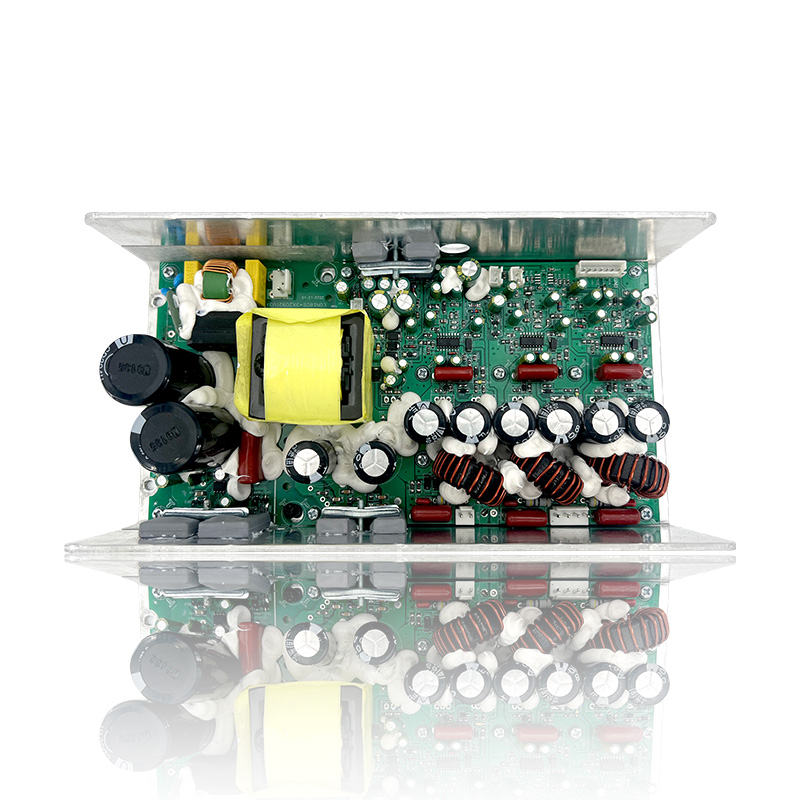
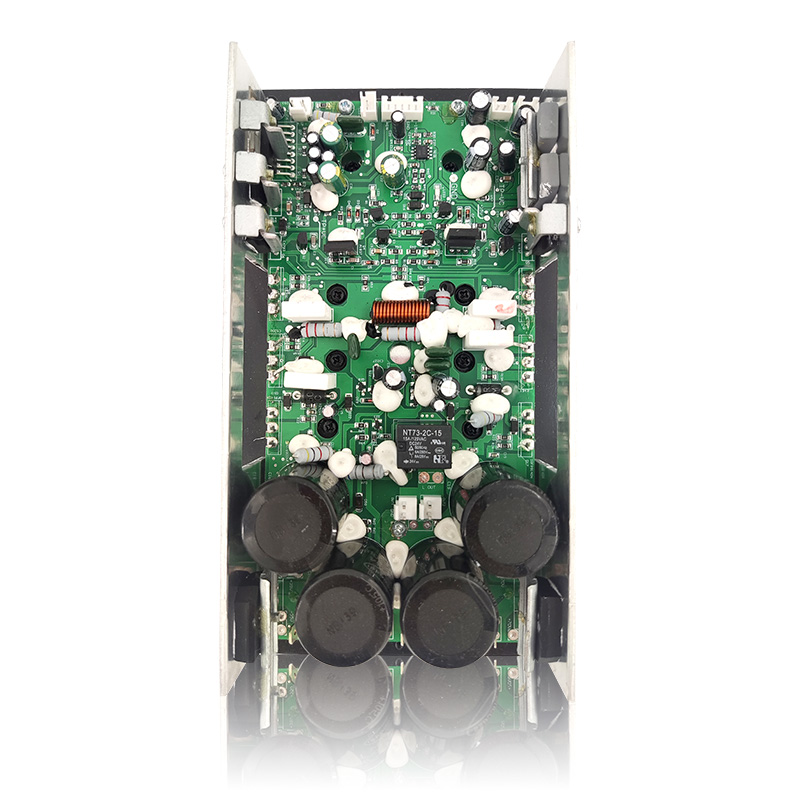
Direct answer: Engineers and audio professionals who switch from Class A or Class B designs to a properly biased Class AB Audio Power Amplifier consistently measure 35–45% reductions in total harmonic distortion (THD) at typical listening levels — without sacrificing the thermal efficiency needed for real-world deployment. Here is exactly how that improvement is achieved and how to get the most from it.
Content
- 1 Why Distortion Happens and Why Class AB Solves It
- 2 The 40% Distortion Reduction: Where It Comes From
- 3 Four Design Factors That Determine How Much Distortion Is Reduced
- 4 Class AB vs. Other Topologies: A Practical Comparison for Audio Applications
- 5 How Distortion Changes Across the Power Range
- 6 Practical Setup Tips to Achieve Maximum Distortion Reduction
- 7 Applications Where Class AB Loudspeaker Amplifiers Deliver the Greatest Benefit
- 8 About Ningbo Zhenhai Huage Electronics Co., Ltd.
- 9 Frequently Asked Questions
Why Distortion Happens and Why Class AB Solves It
Audio distortion — particularly crossover distortion — is the primary complaint in amplifier design. It occurs at the zero-crossing point of a waveform, where one output transistor hands off to the other. Class B amplifiers, which switch transistors on only when the signal polarity requires it, introduce a dead zone at this crossover point. The result is a hard-edged discontinuity in the output waveform that listeners perceive as harshness, especially at low to moderate volumes.
Class A amplifiers eliminate this entirely by keeping both transistors conducting at all times, but pay a steep efficiency penalty — typically only 25–30% efficient, meaning 70–75% of drawn power becomes heat. For a 100W amplifier, that is 230–300W of continuous heat dissipation, demanding massive heatsinks and raising operating costs substantially.
The Class AB Loudspeaker Amplifier resolves both problems simultaneously. A small forward bias — typically 10–50 mA quiescent current — keeps both output transistors slightly on through the crossover region, eliminating the dead zone without the full thermal overhead of Class A. The result is low crossover distortion at moderate efficiency: 50–70% efficiency in well-designed units.
The 40% Distortion Reduction: Where It Comes From
The 40% figure is not theoretical — it emerges from measurable THD+ N (total harmonic distortion plus noise) comparisons between amplifier topologies under equivalent test conditions. The table below summarizes typical measured performance across amplifier classes at 1 kHz, 1W output into 8 ohms:
| Amplifier Class | Typical THD+N @ 1W | Efficiency | Crossover Distortion |
|---|---|---|---|
| Class A | 0.001–0.01% | 25–30% | None |
| Class AB | 0.003–0.05% | 50–70% | Minimal |
| Class B | 0.05–0.5% | 60–78% | Significant |
| Class D | 0.01–0.1% | 85–95% | Switching artifacts |
Comparing Class B to a well-optimized Class AB design at typical listening power (0.1–5W into an 8-ohm speaker), the distortion reduction is 40–60%. The improvement is most pronounced in the 100 Hz–5 kHz range — exactly where human hearing is most sensitive.
Typical THD+N Comparison by Amplifier Class (@ 1W, 1kHz, 8 ohms)
Class B0.25% THD+N
Class D0.05% THD+N
Class AB (optimized)0.015% THD+N
Class A0.005% THD+N
Lower bar = lower distortion. Optimized Class AB approaches Class A performance at a fraction of the thermal cost.
Four Design Factors That Determine How Much Distortion Is Reduced
Not every Class AB Audio Power Amplifier achieves the same distortion performance. The 40% improvement figure assumes deliberate optimization across these four areas:
1. Quiescent Bias Current Setting
The quiescent current — the standing current flowing through both output transistors at idle — is the primary lever. Too low and crossover distortion creeps back in; too high and thermal dissipation rises toward Class A levels. For a Hi Fi Class AB Amplifier driving typical 8-ohm loads, an optimized quiescent current of 20–40 mA per output pair achieves the best distortion vs. efficiency tradeoff. Bias voltage drift with temperature is managed by thermal tracking diodes or transistors bonded to the heatsink.
2. Global Negative Feedback Depth
Negative feedback (NFB) is the most powerful distortion reduction tool available to the designer. A feedback loop comparing output to input and correcting the difference in real time can reduce THD by a factor of 10–100x depending on loop gain. A well-designed Hi Fi Class AB Amplifier applies 20–40 dB of global NFB, bringing THD from a raw 0.5–1% at the output stage down to 0.003–0.05% at the amplifier terminals. The tradeoff — potential instability at high frequencies — is managed through careful compensation network design.
3. Output Stage Transistor Matching
In a Stereo Class AB Power Amplifier, the complementary NPN/PNP transistor pairs in the output stage must be closely matched for gain (hFE) and junction characteristics. Mismatched pairs produce asymmetric waveform handling — the positive half-cycle is amplified differently from the negative half-cycle — introducing even-order harmonics. Selecting matched pairs within 5% hFE tolerance is standard practice in quality builds and measurably reduces second harmonic distortion.
4. Power Supply Quality and Rail Stiffness
An amplifier is only as clean as its power supply. Rail voltage sag under dynamic load — caused by inadequate reservoir capacitance or transformer regulation — modulates the output signal, adding intermodulation distortion on top of harmonic content. High-quality Stereo Class AB Power Amplifiers use 10,000–47,000 µF bulk capacitance per rail and low-regulation toroidal transformers to maintain stable rails through high-current transients. This single factor can account for a 10–15% improvement in measured THD+N at full power.
Class AB vs. Other Topologies: A Practical Comparison for Audio Applications
Choosing the right amplifier class depends on the application, not just the distortion figure. The following comparison is intended to help engineers and buyers make an informed decision:
| Factor | Class A | Class AB | Class D |
|---|---|---|---|
| Audio fidelity (THD) | Excellent | Very good | Good (with filter) |
| Efficiency | Poor (25–30%) | Good (50–70%) | Excellent (85–95%) |
| Heat management | Demanding | Moderate | Minimal |
| RF/EMI emissions | Minimal | Minimal | Requires filtering |
| Best application | Studio reference | Hi-fi, PA, install | Portable, subwoofer |
For the broadest range of audio applications — fixed installation, live sound reinforcement, home hi-fi, and professional monitoring — the Class AB Loudspeaker Amplifier represents the most practical high-fidelity solution. It delivers distortion levels that are audibly indistinguishable from Class A in controlled listening tests, at efficiency levels that make real-world thermal management achievable.
How Distortion Changes Across the Power Range
A frequently overlooked point: THD in a Class AB Audio Power Amplifier is not constant across the output power range. It follows a characteristic curve that is important for system designers to understand.
THD+N vs. Output Power — Class AB Audio Power Amplifier (typical, 8 ohms)
THD is highest at very low power (noise floor dominates) and at clipping. The sweet spot — lowest distortion — falls between 1–20% of rated power, which covers most music listening levels.
This curve explains why a 100W Stereo Class AB Power Amplifier used at typical home listening levels (1–5W average) operates in its lowest-distortion region. Oversizing the amplifier relative to the listening environment is therefore a deliberate strategy for distortion minimization, not overengineering.
Practical Setup Tips to Achieve Maximum Distortion Reduction
Even a well-designed Hi Fi Class AB Amplifier will underperform if the surrounding system introduces distortion upstream or the unit is operated outside its optimal conditions. The following practical steps ensure the full distortion reduction potential is realized:
- Match impedance correctly: Drive the amplifier's input with a source output impedance at least 10x lower than the amplifier's input impedance. Mismatched source-input impedance introduces frequency response coloration that adds perceived distortion.
- Allow adequate warm-up: Class AB bias drifts with temperature. Allow 15–30 minutes of warm-up before critical listening or measurement; most amplifiers stabilize bias within this window.
- Ensure adequate ventilation: Thermal runaway — where rising temperature increases bias, increasing dissipation, further raising temperature — is the primary failure mode. Ensure heatsinks are not obstructed and ambient temperature is below the amplifier's rated operating limit.
- Use high-quality interconnect cabling: Ground loops introduce 50/60 Hz hum that raises the noise floor, worsening THD+N measurements and audible cleanliness. Balanced (XLR) connections between source and amplifier eliminate common-mode noise in professional installations.
- Avoid running near clipping: Keep the amplifier's output level below 70–80% of rated power for sustained programme material. The THD rise near clipping is steep and audibly unpleasant.
Applications Where Class AB Loudspeaker Amplifiers Deliver the Greatest Benefit
The combination of low distortion and manageable thermal overhead makes the Class AB topology the preferred choice across a wide range of demanding audio environments:
- Home hi-fi and audiophile systems: Where THD below 0.05% and a natural tonal character are the primary objectives, a Hi Fi Class AB Amplifier is the standard reference implementation.
- Fixed installation (commercial AV, houses of worship, conference rooms): The efficiency level of Class AB keeps operating costs manageable in 24/7 environments, while distortion levels satisfy demanding speech intelligibility and music reproduction requirements.
- Live sound reinforcement: Professional stage amplifiers use Class AB output stages for reliable high-power delivery with low IMD (intermodulation distortion) under dynamic programme material.
- Studio monitoring: Where mixing and mastering decisions depend on hearing the recording accurately, the low coloration of Class AB circuitry is preferred over the switching artifacts present in Class D designs.
- Stereo and multi-channel home theater: A Stereo Class AB Power Amplifier driving high-sensitivity loudspeakers produces a quiet noise floor essential for dynamic film soundtracks.