English
 Español
 中文简体
中文简体
Content
- 1 The Direct Answer: How To Choose The Right Sound System Amplifier
- 2 Understanding Sound System Amplifiers And How They Fit Into An Audio Setup
- 3 Matching Amplifier Power To Your Speakers And Room Size
- 4 Comparing Amplifier Classes And Their Efficiency Characteristics
- 5 Heat Output, Rack Space And Ventilation Planning
- 6 Channels, Control And Integration Features To Check
- 7 Side By Side Comparison Of Common Amplifier Topologies
- 8 Which Applications Use Which Type Of Sound System Amplifier
- 9 Choosing A Sound System Amplifier Manufacturer Or Supplier
- 10 About Ningbo Zhenhai Huage Electronics Co., Ltd.
- 11 Frequently Asked Questions About Sound System Amplifiers
- 11.1 Q1. What is a sound system amplifier
- 11.2 Q2. How does an amplifier work
- 11.3 Q3. Why do speakers need an amplifier
- 11.4 Q4. What size amplifier do I need
- 11.5 Q5. What products can you provide
- 11.6 Q6. Can you do customized products
- 11.7 Q7. How is product quality managed
- 11.8 Q8. Do you offer OEM production
The Direct Answer: How To Choose The Right Sound System Amplifier
The right sound system amplifier is the one sized to your speaker load, matched to the environment it will run in, and equipped with the control features your setup actually needs. For a small meeting room or retail space, a compact Class D amplifier with modest channel count usually covers the job with headroom to spare. For a conference hall, worship space, or multi-zone commercial installation, a multi-channel PA system amplifier with DSP control gives more flexibility to route and tune different zones independently. For large venues and outdoor events, a higher power professional amplifier with a robust thermal design becomes the more practical choice, since it needs to sustain output over long periods without stress.
- Power and impedance - confirm your speaker load before comparing wattage specs
- Room size and use case - match output headroom to the space, not just the speaker count
- Amplifier class - weigh efficiency and heat output against tonal preference
- Control and integration - check for DSP, zoning, and remote monitoring if the install is complex
Understanding Sound System Amplifiers And How They Fit Into An Audio Setup
A sound system amplifier takes a low level audio signal from a mixer, source player, or microphone preamp and raises it to a level strong enough to drive a loudspeaker. Without this stage, a speaker driver simply cannot move enough air to produce usable volume, since the raw line level signal carries almost no current. The amplifier sits between the source and the speaker in the signal chain, and its output power, channel configuration, and control set largely define what the rest of the system can do.
Modern amplifiers for commercial and installed sound generally fall into a handful of topology families. Class AB designs have been the long standing reference for balanced tonal performance in fixed installations. Class D designs use high frequency switching to convert power far more efficiently, which keeps the chassis smaller and the heat output lower, making them common in compact commercial audio amplifier products and portable PA gear. Digital and hybrid amplifiers add onboard signal processing, letting a single chassis handle equalization, crossover, and zone routing without a separate processor.
Picking between these families is less about chasing the highest number on a spec sheet and more about matching the amplifier's power, efficiency, and control set to the room, the speakers, and how the system will actually be operated day to day.
Matching Amplifier Power To Your Speakers And Room Size
Amplifier power needs scale with room volume, expected background noise, and how far sound needs to travel before it reaches the last row of listeners. A small meeting room rarely needs more than a modest power reserve, while an outdoor event with ambient noise and open air dispersion needs considerably more headroom to maintain clarity at distance.
Relative Power Headroom Needed By Room Size
Relative power headroom index by venue type, 0 to 100. Illustrative pattern for planning purposes, actual needs vary with speaker sensitivity and layout.
| Venue Type | Approx Room Size | Power Range | Suggested Amplifier Type |
|---|---|---|---|
| Small meeting room | Up to 50 sqm | Low power range | Compact Class D amplifier |
| Retail or restaurant space | 50 to 150 sqm | Low to medium power range | Multi-zone Class D amplifier |
| Conference hall or worship space | 150 to 400 sqm | Medium power range | Multi-channel PA system amplifier |
| Large venue or auditorium | 400 to 1000 sqm | Medium to high power range | High power professional amplifier |
| Outdoor event or open area | Open dispersion | High power range | High power Class D or digital amplifier |
Comparing Amplifier Classes And Their Efficiency Characteristics
Amplifier class affects three things that matter for installers and buyers alike: efficiency, heat output, and physical size. Class A designs run their output devices constantly active, giving low distortion but very low efficiency and considerable heat, which is why they rarely appear in commercial sound reinforcement today. Class AB designs improve efficiency substantially while keeping a tonal character that many engineers still prefer for certain applications. Class D designs switch the output stage at high frequency, commonly reaching efficiency figures well above traditional analog designs, which is why a Class D power amplifier supplier can often fit far more output power into a shallow rack space than an equivalent analog unit.
Commonly Cited Efficiency Range By Amplifier Class
Commonly cited efficiency range by amplifier class, based on general electronic engineering reference figures.
Heat Output, Rack Space And Ventilation Planning
Heat output runs inversely to efficiency, so the class that draws the most power for a given output also generates the most heat that ventilation has to remove. This matters directly for rack planning, since a room full of Class A or older Class AB amplifiers needs meaningfully more airflow and rack spacing than a room using modern Class D units of similar total power.
A professional power amplifier supplier will usually publish thermal figures alongside power specs, and it is worth checking these before finalizing a rack layout, particularly for installations in enclosed equipment closets without dedicated cooling.
Relative Heat Output Index By Amplifier Class
Relative heat output index for illustration, lower value indicates less heat generated per unit of output power.
Channels, Control And Integration Features To Check
Channel count and control flexibility usually matter as much as raw power once a system grows past a single room. A commercial audio amplifier intended for multi-zone retail or hospitality use benefits from independent volume and routing per channel, so background music in a dining area can run separately from paging in a kitchen or entrance. A PA system amplifier manufacturer targeting worship, education, or conference markets often builds in onboard DSP for equalization, crossover, and priority ducking, so a paging announcement can automatically lower background music without a separate processor in the rack.
- Independent channel routing for multi-zone spaces
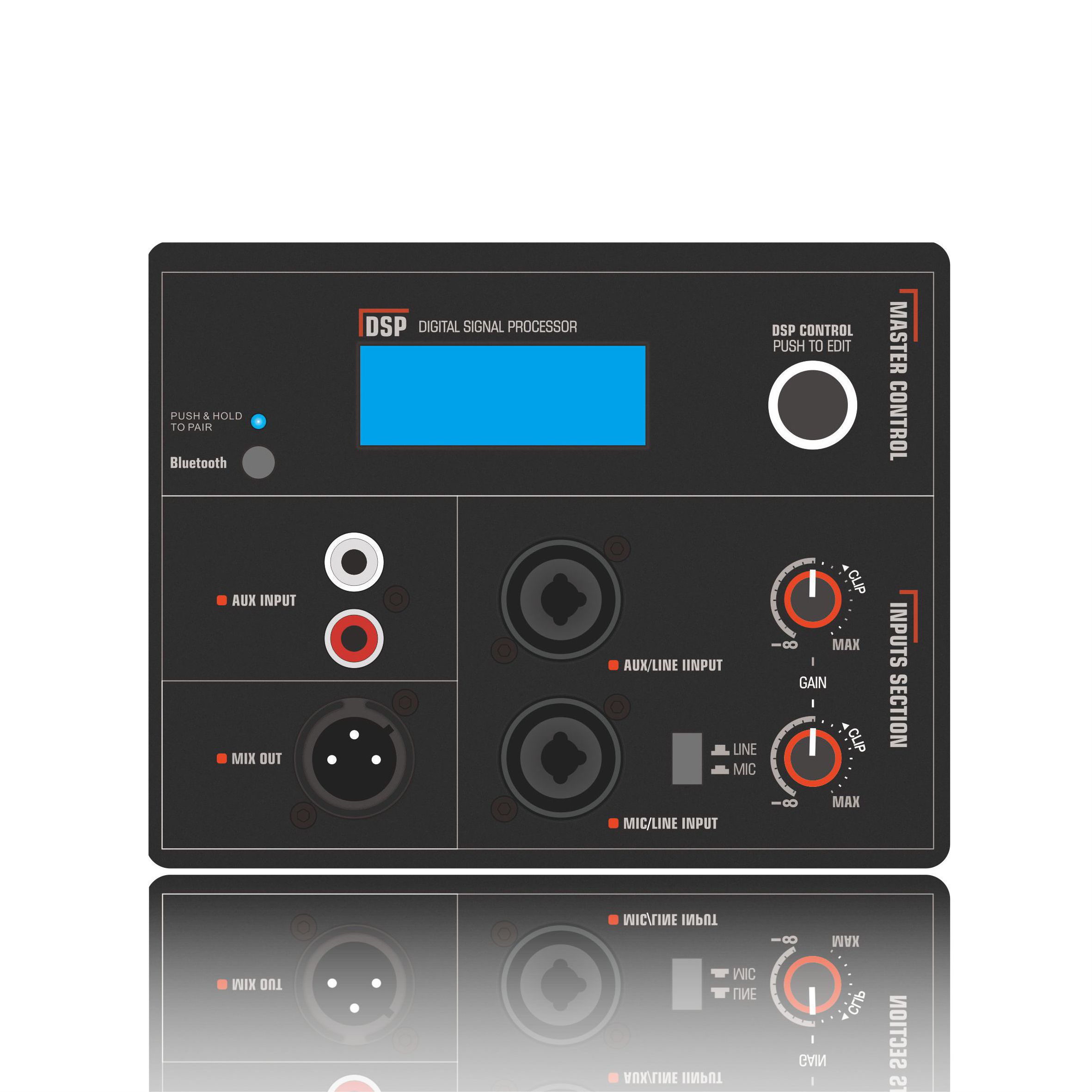
- Onboard DSP for equalization and crossover settings
- Priority ducking for paging and announcement channels
- Remote monitoring or network control for larger installations
- Protection circuitry for thermal, short circuit, and overload conditions
Side By Side Comparison Of Common Amplifier Topologies
Class D Class AB Digital / Hybrid
| Amplifier Class | Typical Efficiency | Heat Output | Best Suited For |
|---|---|---|---|
| Class A | Low | High | Rarely used in commercial sound reinforcement |
| Class AB | Moderate | Moderate | Balanced tonal character for fixed installations |
| Class D | High | Low | Compact commercial audio amplifier and portable PA use |
| Digital / Hybrid | High | Low to moderate | Integrated DSP control for multi-zone systems |
Which Applications Use Which Type Of Sound System Amplifier
An industrial or commercial project rarely needs just one amplifier type. The same underlying Class D or digital platform, configured differently, tends to show up across several settings that all need reliable, unattended audio reinforcement.
Retail And Hospitality Worship And Education Conference And Meeting Rooms Transportation Hubs Stadiums And Outdoor Venues Live Sound And Touring Broadcast And Studio Public Address And Paging
Transportation hubs and paging systems tend to favor rugged, high channel count amplifiers with priority ducking, while live sound and touring applications lean toward high power density Class D units that keep rack weight manageable for frequent transport.
Choosing A Sound System Amplifier Manufacturer Or Supplier
Once the amplifier category is narrowed down, the working relationship with a sound system amplifier manufacturer shapes how smoothly a project moves from specification to installed system. A capable professional power amplifier supplier should be able to walk through channel count, impedance load, and control requirements before recommending a model, rather than pointing only at a general catalog. A Commercial Sound System Amplifier Manufacturer that also produces mixers and microphones in house often gives integrators an easier path to matched components across a full signal chain.
Working with a China Sound System Amplifier Manufacturer that runs its own SMT production and assembly lines generally means shorter lead times for both standard models and customized units. For buyers evaluating an OEM Power Amplifier Factory, it helps to ask about sample turnaround, how design changes are communicated back to engineering, and what testing happens before units ship, since these process details tend to affect the ownership experience more than any single spec on a datasheet.
About Ningbo Zhenhai Huage Electronics Co., Ltd.
Ningbo Zhenhai Huage Electronics Co., Ltd. is an audio company that combines research and development, production, and sales under one roof, with a long standing focus on mixers, active power amplifiers, microphones, and related electronic components. The facility includes SMT workshops, assembly lines, a research and development room, and a sound testing room, supporting production at scale alongside custom development work.
Active Power Amplifiers
Core product line covering the amplifier platforms used across commercial and installed sound projects, developed and produced in house rather than assembled from outside modules.
Mixers And Microphones
Complementary products that sit alongside the amplifier line, giving integrators matched components across the signal chain from source to speaker.
Custom Development
Engineering and production teams work from customer drawings or samples to develop products around specific requirements rather than offering only fixed catalog models.
OEM Production Support
Extended OEM production experience for a range of audio brands, backed by SMT lines and assembly capacity built for scale.
In-House Testing
A dedicated sound testing room and inspection steps at each stage of the production process, with a full check on finished units before shipment.
Responsive Communication
Inquiries are reviewed and quoted promptly, new product requests are discussed directly with the engineering team, and confirmed orders are tracked to meet agreed timing.
Frequently Asked Questions About Sound System Amplifiers
Q1. What is a sound system amplifier
A sound system amplifier raises a low level audio signal from a mixer or source device to a level strong enough to drive a loudspeaker, sitting between the audio source and the speakers in a system.
Q2. How does an amplifier work
An amplifier takes the incoming signal and uses its power supply and output stage to increase current and voltage, reproducing the same waveform at a level the speaker driver can convert into audible sound.
Q3. Why do speakers need an amplifier
Line level audio signals carry very little current, which is not enough to move a speaker cone with any real volume, so an amplifier stage is needed to supply the power a driver requires.
Q4. What size amplifier do I need
Sizing depends on speaker impedance, room size, and expected background noise level. Reviewing the speaker specification sheet alongside room dimensions gives a far more reliable starting point than guessing from wattage alone.
Q5. What products can you provide
Production is focused on mixers, active power amplifiers, microphones, and related electronic components and equipment for commercial and installed audio use.
Q6. Can you do customized products
Yes, customized development is a core part of the business, with products developed and produced according to drawings or samples that customers provide.
Q7. How is product quality managed
Each stage of production includes a corresponding inspection step, and finished products go through a full check before shipment, matched to customer requirements.
Q8. Do you offer OEM production
Yes, OEM production support has been provided for audio brands over an extended period, with engineering and production teams available to work from customer specifications.